Saturday, October 19, 2019

Domaine de la Charbonnière, an excellent producer of wines in Châteauneuf-du-Pape and wonderful family

One of many things that attracted us to Sablet, was its location in the Côtes du Rhône and proximity to world-renown wine villages such as Gigondas, Vacqueyras and Châteauneuf-du-Pape. We like all the wines from this area but our favorites are Châteauneuf-du-Papes and we go there often. Hey, its only 15 miles away.

Châteauneuf-du-Pape is a small medieval village on the side of a hill, guarded by the ruins of an ancient chateau towering above. From the chateau hill you have an outstanding view in all directions, mostly of vineyards and of the Rhône River 1.9 miles to the east. The village is between Avignon (7.5 miles to the south) and Orange (6.6 miles to the north).

Châteauneuf-du-Pape

As its name suggests, Châteauneuf-du-Pape is closely linked to several Popes. As early as 1157, faithful to Roman customs, Bishop Geoffroy of Avignon planted and cultivated a vineyard in his Châteauneuf territory. In 1308, Clement V also planted vines, thereby becoming one of the first winemakers in Châteauneuf.

Pope Jean XXII, the second of the popes to reside in Avignon, had a particular appreciation for wine from this area, and ordered the castle seen below to be built in 1317 as a summer residence, and bestowed upon the wine, the title of “Vin du Pape” (Papal Wine), the name by which it was known before it became “Châteauneuf-du-Pape”.

The back side of the tower of the Pope's castle is shown in the photo below, only ruins remain. The castle was sacked by Routiers (mercenaries who terrorized the French countryside during the 100 year war) when Jean XXII died and largely destroyed for the final time by the retreating Germans in 1944.

Pope's Castle Châteauneuf-du-Pape

There are several cafés with outdoor terraces around the center of the village. Although this is a tourist town, there are not many tourist shops as the business of Châteauneuf-du-Pape is selling wine.

The village streets are narrow, curving around the hillside or climbing up and down between the houses up to the castle. The buildings are old, but everything has been thoroughly restored.

The chateau ruins at the top of the village are accessed by walking up Rue Joseph Ducos past the front of the Town Hall to the church at Rue des Papes. Just to the left of the church, steps lead up the wide, stone step-street to the chateau.

Center of Châteauneuf-du-Pape Village

As I indicated above, we come often to Châteauneuf-du-Pape, for the wines. The sign below which you see alongside the roads that cross into the Châteauneuf-du-Pape appellation reads "Here begin the celebrated vineyards of Châteauneuf-du-Pape."

Châteauneuf-du-Pape AOC wines are made from grapes grown in the commune of Châteauneuf-du-Pape and portions of the four neighboring municipalities (Bédarrides, Courthézon, Orange, and Sorgues) in the Vaucluse.

There are 13 grape varieties permitted in Châteauneuf wines, although it's rare that most are used in one blend. Grenache is dominant in the reds, supported by Syrah, Mourvèdre, Cinsault, Counoise, Muscardin, Vaccarèse and Terret. White wines are a blend of Clairette, Roussanne, Bourboulenc, Picpoul and Picardin.

Châteauneuf-du-Pape AOC Boundary

Our favorite Châteauneuf-du-Pape winery is located just outside the village on the Route de Courthézon. We first became acquainted with Domaine de la Charbonnière and its wines when we tasted wines for the initial wine list for our Bistro Des Copains in Occidental, California and have been fans ever since.

The domaine is owned by the Maret family, daughters Véronique and Caroline and parents Michel and Mireille, and have been making wine since 1912 when Michel Maret's grandfather Eugene bought the domaine as a gift for his wife who was the daughter of a local winegrower. Michel took over in 1978 and started bottling wine-most of it sold out the winery door.

He was the one who named the estate Domaine de la Charbonnière from the name used for the area around the domaine. The name means "the area of charcoal burning".

Domaine de la Charbonnière

Véronique took over winemaking responsibilities from Michel in 2012 after starting at the domaine alongside her father, in 2009. Michel, although now retired, still drives the tractor and helps her in the cellar. Véronique and Caroline are the fourth generation of Maret's to oversee the domaine. Mother Mireille continues to manage the vineyard team.

One of the most important changes Véronique made since taking over in 2012 was the move to organic viticulture.

From left, Caroline Maret, Shirley, and Mireille Maret

The wines from Domaine de la Charbonnière have not suffered at all from the change in winemaking responsibilities, in fact they seem to be getting better with each harvest, if that is even possible. Take a look at the tasting points in the November 15, 2019 issue of "Wine Spectator Magazine".

Wine Spectator Magazine
November 15, 2019
Domaine de la Charbonnière Cuvee Vintage WS Points
Châteauneuf-du-Pape Les Hautes Brusquières 2016 96
Châteauneuf-du-Pape Vielle Vignes 2016 95
Châteauneuf-du-Pape Red 2016 94
Châteauneuf-du-Pape Mourre des Perdrix 2016 94
Châteauneuf-du-Pape White 2017 93


New barrel room at Domaine de la Charbonnière

To accommodate the growing demand for their excellent wines, they have recently finished an expansion of their barrel room.

Domaine de la Charbonnière Wood Tanks

The majority of the grapes for wine made by Domaine de la Charbonnière comes from parcels in Châteauneuf-du-Pape. They also own and make wine from parcels they own in the Vacqueyras AOC and in Côtes du Rhône, just outside the Châteauneuf-du-Pape AOC boundary. Their two different bottlings of 2016 Vacqueyras both earned 90+ points from Wine Spectator Magazine.

Domaine de la Charbonnière 2019 Châteauneuf-du-Pape Cuvée Mourre des Perdrix in Wood Tank

Steel Tanks Holding 2019 Grapes

Inox (stainless steel) tanks at Domaine de la Charbonnière

Terrace over the new barrel rooms at Domaine de la Charbonnière

Domaine de la Charbonnière estate vineyards

There are several distinct terroirs in Châteauneuf-du-Pape. Clay soils and those with galets-large round pebbles that store heat, make full-bodied, structured reds; sandy soils produce lighter, more elegant wines. The whites, which are full-bodied and aromatic, with yellow fruits and floral notes, favor the limestone soils.

One of the Châteauneuf-du-Pape vineyards with layer of stones called galets (pebbles)

The best thing about Domaine de la Charbonnière is the Maret Family, they are all charming, funny, and always have a smile to greet you, even during the middle of vendange (grape harvest). After many tastings at Domaine de la Charbonnière over the years, I can say we are friends.

We were very happy we could meet Véronique and Caroline when they were in Sonoma and Napa County a few weeks back, visiting customers with their new California importer, Grape Expectations, and take them to dinner in Sonoma.

Girl and the Fig in Sonoma California with Caroline and Véronique Maret

If you are in the Vaucluse region of France, and tasting wine is part of your trip, it is well worthwhile to visit and taste at Domaine de la Charbonnière. If you are in shops that sell special wines or in a nice restaurant, French or otherwise in the US, Canada, or UK, make sure you check to see if they have a bottle on the list from Domaine de la Charbonnière. Trust me, you will be very happy you did.

Domaine de la Charbonnière
Route de Courthézon
84230 Châteauneuf-du-Pape
Tel: +33 (0)4 90 83 74 59
contact@domainedelacharbonniere.com

If you are planning for your next vacation and it might include a visit to the south of France, check out our website about our home in Sablet which we rent by the week or for longer periods of time. www.sablethouse.com

Wednesday, October 16, 2019

"Les 3 Souquets", an Olive Oil Boutique and Santonnier Workshop Near Sablet

We have been traveling to Sablet several times a year for the past 11 years. You would think that by now, there would not be anything new left for us to discover, but that is not the case. It seems that we find someplace new every time we are in Sablet.

Sablet

"Les 3 Souquets", a santon work shop and boutique offering for sale, products from the region, including all things olives, such as fresh olives, olive oils, and tapenades, made from green and black olives, is our latest discovery.

Fortunately for us, "Les 3 Souquets" is located on D-977 (also known as Route de Vaison La Romaine) near the turnoff for Sablet. The workshop and boutique are the creation of Denis Voeux, a santonnier and owner of a small grove of olive trees, in the neighboring village of Séguret.

Les 3 Souquets

I do not know if Monsieur Voeux was a santonnier who became passionate about olive oil, or vice versa, but at "Les 3 Souquets", there is evidence of both. There are a variety of olive oils from various AOPs ("Appellation d’Origine Protégée") in France and elsewhere as well as fresh Picholine and Tanche olives available to taste and purchase.

Every year, Monsieur Voeux takes a tour of the Mediterranean Region's olive oil AOPs and chooses what he believes are the best from the most recent harvest to sell in his boutique. He also has bottles of olive oil he produces from his small grove in Séguret which falls within the Nyons AOP.

The owner of "Les 3 Souquets", Denis Voeux with Shirley

For santon newbies, santons are hand-made clay figurines that depict the colorful people, traditional trades, activities and costumes of Provence as I told you here. In Provence, they are set out at Christmas in a Provençal creche (nativity scene). I love them and have a small collection that I set out at Christmas time.

If you are fortunate enough to come to his workshop on a day that Monsieur Voeux is working on santons, you might be able to see how they are baked in a red hot oven or how he hand paints each one of them. He says he was enamored with santons from a young age and finally gave in to his love of making objects from clay and modeling them.

Every santonnier has their own style, usually the way to tell one santonniers' work from another, is by looking at the faces of the santons. One of the unusual features of Monsieur Voeux's santons, are his faces, they are all people from Monsieur Voeux's life. The first face he modeled was that of his grandfather on his mother's side of the family. Quite a few other people from his life have since joined the nativity scene. His most recent creation was a santon with a face modeled after his uncle.

Santons by Denis Voeux

In France, olive trees are planted along the arc of the Mediterranean Sea, between Nice and Perpignan, Marseille and Nyons. It is said that there are 100 different varieties of olive trees grown in France, of which 20 are important for the economy of the region. As I said earlier, Monsieur Voeux travels throughout the various olive oil AOPs to selection the best for his boutique. As you can see below, he has a large number of excellent olive oils available.

Olive oils on display at Les 3 Souquets

If you are in the area, and interested in learning about Santons or how they are made, or anything to do with olives or olive oil, make sure you stop in to visit the "Les 3 Souquets" boutique. After tasting quite a few different bottles during our visit, I bought a bottle of Monsieur Voeux's own Nyons production. It was really nicely balanced for me. Tell Monsieur Voeux that Michel from Sablet told you to stop in.

"Les 3 Souquets"
1471 Route de Vaison La Romaine
84110 Séguret
Tel: 06 18 56 57 02
denis.voeux@wanadoo.fr

Saturday, September 21, 2019

My Best Tomato Tarte Tatin ... In My Opinion.

As most of you have figured out, we love good food. So that means, we eat out quite often and gather around our table for home cooked meals as often as we can. I get ideas for dishes from a large collection of cookbooks, several cooking magazines and the Santa Rosa Press Democrat and New York Times Food sections.

The last eighteen months, Shirley and I have embarked on a mission to improve our health through a change in life style including riding bikes and a fish and plant based diet. We are not fanatics by any means, but we do eat less pasta and bread and desserts appear on our table less frequently. I have cut out red meat except for lamb occasionally when we are in the South of France.

We have enjoyed tomato tarte tatins on several occasions in Provence most recently a few weeks ago as part of a vegetarian tasting menu at Les Remparts in Venasque. After seeing a picture of a delicious looking tomato tarte tatin in a post by my friend Barbara from Cuisine de Provence, I decided I would try again to make one.

I say once again, because I made one several times a few years back and shared the recipe with all of you in a "Our House in Sablet" post. While the recipe I did then, was very tasty, I didn't think it was quite as good as the one at Les Remparts.

So I did a search of my cookbooks and on line and compared what I found to the tomato tarte tatin I made before. This is what I came up with.

Finished Tomato Tarte Tatin

I started by thinly slicing 3 medium red onions, then sautéing the onions in a skillet with 4 sliced garlic cloves, 2 tablespoons of butter and a pinch of crystallized sugar until caramelized, 10 - 15 minutes.

Sliced Red Onions

I cored and sliced 3 pounds of tomatoes, once Roma tomatoes and several times dry farmed Early Girls. I place them cut side up on rimmed baking sheet. Lightly salt and sprayed lightly with olive oil. Roasted the tomatoes for 2.5 hours at 275 degrees Fahrenheit. Turned off oven and left in oven till it cooled completely. You can roast them the night before and leave them in the oven to cool overnight.

Cored and Halved Roma Tomatoes

I preheated the oven to 425 degrees Fahrenheit. While the oven preheated, I prepared a light caramel sauce in a 12 inch cast iron skillet on the top of the stove with 1/2 cup crystallized sugar, 4 tablespoons water and 1/4 teaspoon Sherry vinegar. I then arranged the tomatoes on top of the caramel sauce, face side down.

Oven Roasted Tomatoes Arranged in 12 Inch Cast Iron Pan

I sprinkled 1 tablespoon of chopped fresh thyme leaves evenly over the tomatoes.

Oven Roasted Tomatoes with Chopped Fresh Thyme

I arranged the caramelized onions evenly over the tomatoes and then sprinkled 1/4 cup grated Parmesan cheese over the onions.

Caramelized Red Onions Over Oven Roasted Tomatoes

I rolled out a puff pastry sheet into a 13 inch round. I use store bought frozen dough, that I thaw for a couple of hours before I am ready to roll it out. I like the Dufour brand.

Store Bought Puff Pastry Cut Into 13 Inch Round

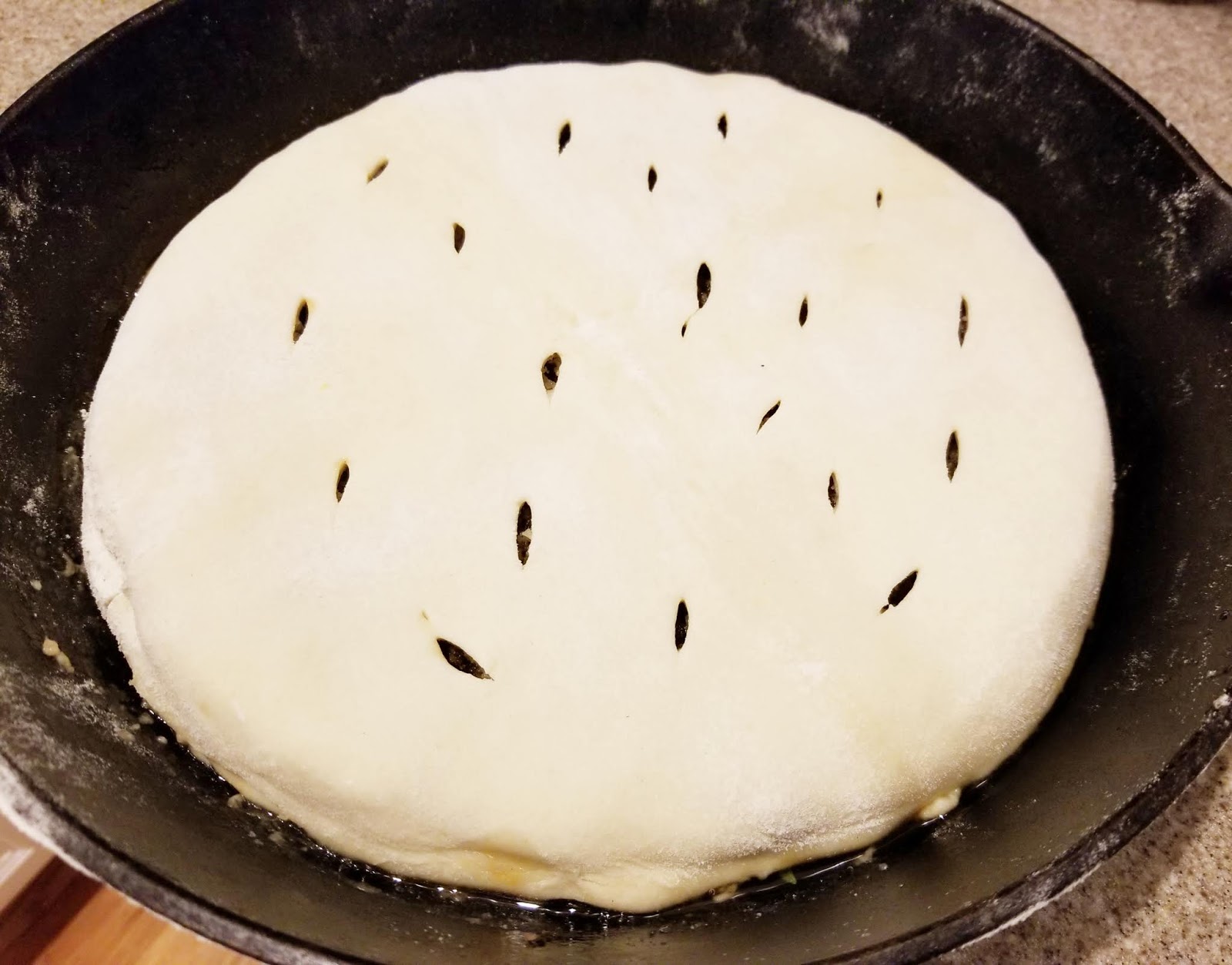
I drape the dough over the cast iron skillet and tuck the edges down into pan. I cut slits in top of pastry.

Puff Pastry Laid Over Oven Roasted tomatoes and Onions

Baked for 25-30 minutes until crust is puffed and golden brown and delicious. Removed from oven and let cool for 5 minutes.

Golden Brown and Delicious Out of Oven

Placed large plate (larger than the cast iron skillet) on top of skillet. You have to carefully flip over. You can return any tomatoes that are stuck to skillet back to tarte tatin.

Flipped Over onto Serving Plate

This was so good. It was as good or better than the one we ate at Les Remparts.

Ingredients

3 pounds medium size tomatoes. On a couple of occasions, I used different color tomatoes.
3 medium red onions
4 cloves garlic
1 Tablespoon chopped Thyme leaves
1/4 cup grated Parmesan cheese
14 ounces puff pastry. You will have extra. Freeze the leftover for another dish.
2 Tablespoons butter
1/2 cup crystallized sugar
4 Tablespoons water
1/3 teaspoon Sherry vinegar

Directions

1. Thinly slice 3 medium onions.

2. Caramelize the onions with 4 sliced garlic cloves in 2 tablespoons of butter and a pinch of crystallized sugar. 15 - 20 minutes.

3. Core tomatoes and slice in half. Place cut side down on rimmed baking sheet. Lightly salt and spray lightly with olive oil.

4. Roast tomatoes in 275 degree Fahrenheit oven for 2 1/2 hours. Cool completely. You can do this over night.

5. Preheat oven to 425 degrees Fahrenheit.

6. Prepare caramel in 12 inch cast iron pan with 1/2 cup crystallized sugar, 4 tablespoons water and 1/4 teaspoon Sherry vinegar.

7. Arrange roasted tomatoes on top of caramel, face side down. Sprinkle 1 tablespoon of Thyme leaves over tomatoes.

8. Arrange caramelized onions evenly over tomatoes. Sprinkle grated Parmesan cheese over onions.

9. Roll puff pastry sheet out and cut out 13 inch round and drape over cast iron skillet. Tuck edges of pastry into pan. Cut slits on top of pastry.

10. Bake for 25 - 30 minutes until crust is puffed and golden brown and delicious.

11. Remove from oven and let cool for 5 minutes.

12. Place large plate on top of skillet and carefully flip over. Return any tomatoes that are stuck to skillet back to tarte tatin.

You can serve warm or at room temperature. It is delicious the next day.

Bon appetit.

Wednesday, August 28, 2019

Walk through beautiful Grignan and lunch at Bistrot du Chapouton at La Ferme Chapouton

We have made several visits to Grignan in the Drôme Provençale, an area that falls between the Rhône River and the Alps north of the Vaucluse. A few weeks ago with friends Steve and Mary, we decided to go to Grignan, to try a new restaurant that was recently awarded a Bib Gourmand designation by Michelin.

Our route took us past olive groves and fields with row after row of lavender which one or two weeks earlier, must have been a sea of purple and buzzing honey bees. Grignan sits on a large rocky peak crowned by a huge castle, formerly owned by Adhémar de Monteil.

Construction of the Grignan castle which can be seen from quite a distance, began in the 12th century, but it wasn't until the 13th century that the Adhémar family expanded it to a huge fortress. In the 17th century, François Adhémar de Monteil transformed the fortress into a luxurious residence.

Grignan Castle in the distance beyond the cemetery

We usually find parking in the car park across the road from this pretty restaurant at Place de Castellane.

A pretty restaurant near the Grignan car park at Place de Castellane

Attractive shop display

Grignan became renowned in France during the 17th century when Marie de Rabutin-Chantal, the Marquise de Sévigné, a French aristocrat, famous for writing letters, wrote about Grignan and the surrounding area in her letters; Most were written to her daughter Françoise, who was married to François Adhémar de Monteil, Comte (Count) de Grignan.

Madame de Sévigné caught a "fever" and died in April 1696 in Grignan and is buried in the Collégiale Saint-Sauveur Church. She is revered in France as one of the great icons of French literature.

The fountain shown in the photograph below was built in 1840 at Place de l'Horloge in the center of Grignan. The statue of Madame de Sévigné was added to the fountain in 1857.

Fountain with Statue of Madame de Sévigné

The Hotel de Ville or town hall was built in 1857 in neo-classical style on the site of 16th century market halls and butcher shops.

Grignan Town Hall

Madame de Sévigné travelled three times to Grignan in order to spend time with her daughter and son-in-law: a 14-month stay beginning in 1672; another 14-month stay beginning in 1690 taken before a quick trip to Brittany; and a third stay of 22 months leading up to her death in 1696. Madame de Sévigné spent a little less than four years total in the part of France which filled so much of her heart and letters.

Place de l'Horloge

Tricot tower or belfry

We have dined at Le Poème de Grignan when we visited Grignan on previous occasions. While Le Poème is very charming and the food has been excellent, their outdoor dining space is limited to a couple of tables on the narrow street which runs in front of the restaurant, so I decided that since it was a beautiful day, we should try Bistrot du Chapouton since their website touted their terrace.

La Ferme Chapouton is located just outside of the village walls and offers a hotel and Bistrot with indoor and outdoor seating. They also have a gastronomic restaurant with 1 Michelin star called La Clair de la Plume located about 400 meters away from La Ferme in the village. Julien Allano, a native of Avignon, is the Chef de cuisine for Clair de la Plume and the Bistrot du Chapouton. The Clair de la Plume was awarded a Michelin star in 2015 and the Bistrot a Bib Gourmand in 2019.

Bistrot du Chapouton at La Ferme Chapouton

La Ferme Chapouton is located in a building dating from 1760. The hotel offers 9 rooms and a great view of the castle of Grignan and Mount Ventoux.

The entrance to Bistrot du Chapouton

We were seated at a terrace table just next to the large, grassy lawn. Everyone at our table decided to start with a house aperitifs, my selection is shown below. I don't like beer of any kind but nevertheless, I chose the aperitif with some white beer. While it wasn't bad, it wasn't my favorite of all time, by any means.

House aperitif with Cointreau, white beer and lemon syrup

The daily 3-course menu offered a choice of two starters, and two main courses. One of the choices for starter (entrée in French) is shown below.

Ceviche style marinated tuna, cucumber, celery, lemon and ginger with mustard greens

The other entrée was a really good tomato pineapple gazpacho.

Tomato pineapple gazpacho, served with creamy herb goat cheese made in Grignan

Since it was a beautiful day, and we were dining "en pleine air" (outside) as the French would say, we went with a local rosé. A tasty, light pink blend of Cinsault (60%), Grenache (30%), and Syrah (10%) produced by Domaine Rozel.

Domaine Rozel Insouciance Grignan-les-Adhémar Rosé 2017

The choices for main courses (plat in French) for the €32.50 three-course menu were Seared Tuna with eggplant and zucchini and the Supreme of Chicken shown below. I chose the chicken, which was perfect and the others chose the tuna.

Roast chicken breast with summer truffle sauce and vegetables

To complete our meal, the chef offered a selection of desserts including a cherry tart, strawberry tart, pana cotta with coconut, lemon mousse cake, and a selection of sorbets and ice creams. We went the light route in our opinions, and chose sorbets and ice cream.

The Grignan castle, which can be seen from the Bistrot du Chapouton terrace, was ruined in 1793 during the French revolution. It was rebuilt in the early 20th century by Madame Fontaine who spent her entire fortune restoring the castle to its former grandeur. The castle now belongs to the Department of the Drôme.

Grignan Castle in the distance over the umbrellas

In order to save steps for the others, I walked back across Grignan to the car park to get our car.

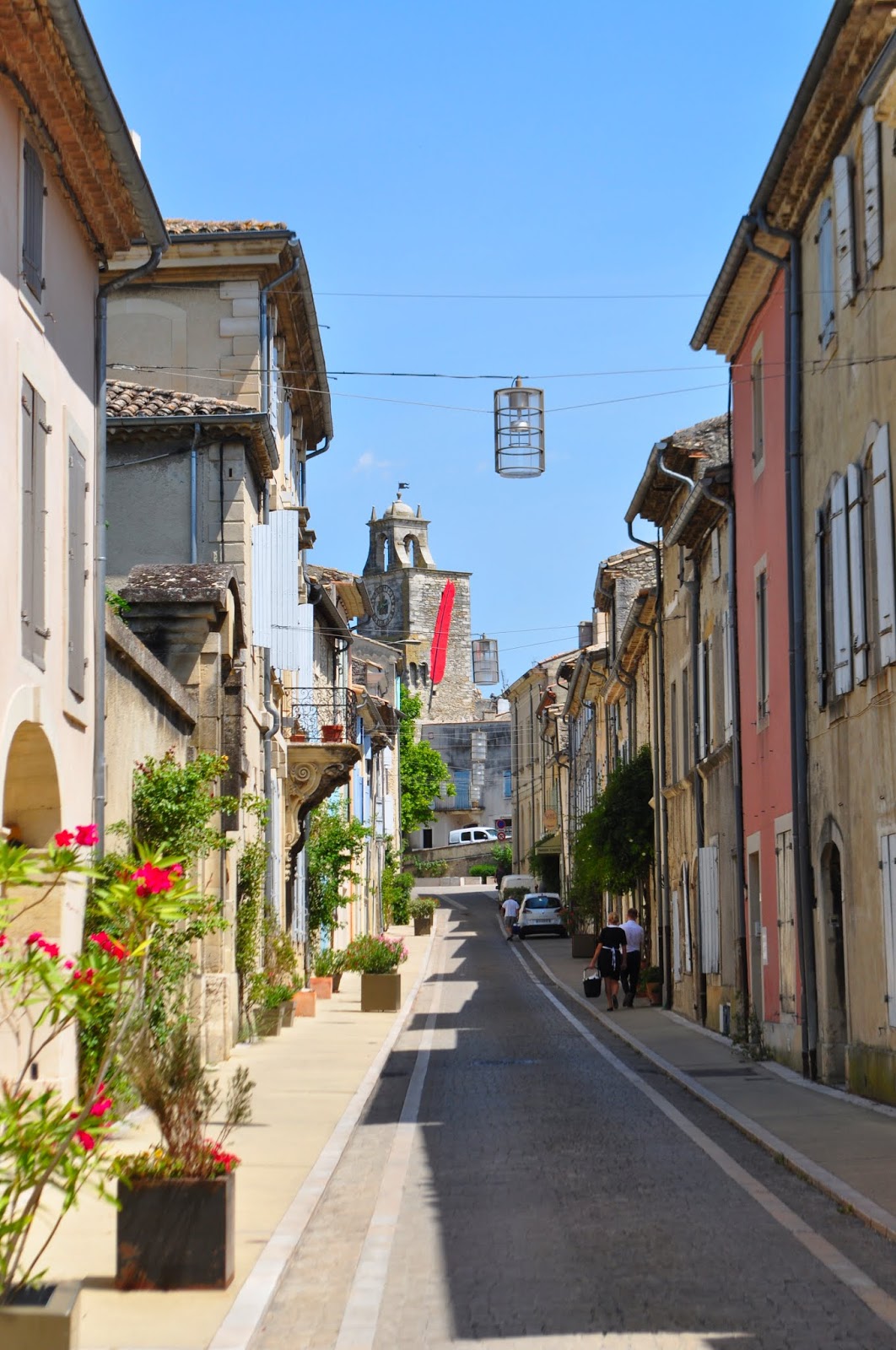
Grignan Street

Another view of Tricot Tower

The defensive walls of Grignan were built in the 13th century. The circular protective wall included a dozen defensive towers and six gates. The Tricot tower, also known as the belfry, with its arched passageway through the wall was extended upward in 1600 so the first public clock could be installed.

Tricot tower or belfry

Rue St. Louis

The Collégiale Saint-Sauveur Church (Collegiate Church of the Holy Savior) seen below, is located under the castle terrace. The church was constructed between 1535 and 1539 at the request of Louis Adhémar. The Renaissance façade is flanked by two square towers and a beautiful Gothic rose window. Inside is an impressive 17th-century altar and organ loft. On the floor in front of the altar is a marble funerary stone marking the sealed entrance to the tomb of Madame de Sévigné.

Collegiate Church of the Holy Savior

The top of Grignan Castle from the Car Park


Bistrot du Chapouton at La Ferme Chapouton
200 Route de Montélimar
26230 Grignan
France
Tel: +33(0)4 75 00 01 01
Website:https://chapouton.com