Showing posts with label Drôme Provençale. Show all posts

Friday, February 18, 2022

Visit to Grignan, a Plus Beaux Villages de France and Lunch at Long Time Favorite Eatery Le Poeme de Grignan Restaurant

We often make visits to Grignan in the Drome Provencale, an area that falls between the Rhone River and Alps north of the Vaucluse. Since we were last there in the summer of 2019, Grignan was added to the list of Plus Beaux Villages de France.

So on a overcast Sunday in January, we drove to Grignan for a walk-about and lunch at Le Poeme de Grignan Restaurant. Our route took us past olive groves and fields with rows of lavender, which come summer will magically transform into a sea of purple and buzzing honey bees. 

Grignan sits on large rocky hilltop topped by a castle. Construction of the castle began in the 12th century, but it wasn't until the 13th century that the Adhemar family expanded it to a huge fortress. In the 17th century, Francois Adhemar de Monteil transformed the fortress into a luxurious residence.

The castle was completely ruined in 1793 during the French Revolution. Early in the 20th century, a Madame Fontaine spent her entire fortune restoring the castle to its former glory. Today the castle is owned by the Department of the Drome. You can see interior pictures of the castle on my post here.

The Castle and Village of Grignan

Located under the castle terrace is the Collegiate Church of the Holy Savior. The church seen in the right side of the picture below was built between 1535 and 1539. The Renaissance facade is flanked by two square towers and a Gothic rose window. 

Closer View of Castle and Collegiate Church of the Holy Savior

The Lavoir du Mail seen in the picture below is a 19th century wash house with a circular basin inside 16 Doric columns. The lavoir is named after the game of mail that was popular then: a game using a wooden ball and a mallet.

Lavoir du Mail (wash house)

Grignan village square

Grignan became renown in France during the 17th century when Marie de Rabutin-Chantal, the Marquise de Sevigne, a French aristocrat, famous for writing letters, wrote about Grignan and the surrounding area in letters to her daughter. 

Madame de Sevigne caught a "fever" and died in April 1696 in Grignan. She is buried in the Collegiate Church of the Holy Savior. She is revered in France as one of the great icons of French literature. 

The fountain shown in the photograph below was built in 1840 at Place de l'Horloge in the center of Grignan.

Fountain topped by statue of Madame Sevigne

We walked into Le Poeme Restaurant and were asked "avez vous reserve", did we have reservations? "Yes" I said, and immediately we were asked to present our Passe Sanitaires to prove we were fully vaccinated and boosted.  We noted that since we had last dined at Le Poeme, the restaurant's interior had been nicely updated.

Shirley at Le Poeme with complimentary bowl of black olives from Nyons

As is our custom, we passed on aperitifs and went directly to the wine list. I chose a red from the Grignan-les-Adelmar AOC which surrounds Grignan from Domaine du Chardon Bleu. It was 100% Syrah, more typical of Northern Rhone wines than the Southern Rhone wines we are use to.

Me and my wine selection


Amuse Bouche of Mushroom Soup and Duck Breast

In France, it is common for chefs to serve an "Amuse Bouche" to diners to enjoy while waiting for their food orders to arrive. It is a way of saying "welcome" and pampering them with something special. The Amuse Bouche at Le Poeme was delicious and more extravagant than most.

The pictures which follow show our meal as presented to us at our table.

Vegetable Soup with Truffles and Morel Mushrooms for Shirley

Scallops with Sunchoke and Potato Puree with Truffles for me

Filet of Bar (Sea Bass) with Rice, and Spinach in Red Wine Sauce for Shirley 

Veal with Root Vegetables, Mushrooms and Haricots Verts for me

We shared a dessert to finish our meal. 

Yuzu Lemon Souffle with Vanilla Ice Cream and Strawberry Sorbet and Mango

When we walked in, there was only one single gentleman seated in the restaurant. By the time, we left, all the tables were filled with diners enjoying Sunday lunch. 

We highly recommend that you always make reservations in advance for restaurants. We have seen time and again that restaurants with open tables throughout the time we are there will none-the-less turn away diners who arrive without reservations. 

Grignan is a very pretty village and lots to explore as recognized by the Les Plus Beaux Villages de France association. There are several nice restaurants in Grignan, of which Le Poeme is our favorite.

Le Poeme de Grignan Restaurant
8 Rue Saint-Louis
26230 Grignan
France
Tel: +33 4 75 91 10 90
www.poemedegrignan.com

Sunday, January 2, 2022

Nyons Market and Excellent Lunch at La Charrette Bleue Restaurant

We arrived in Sablet last Tuesday after being away for 5 months. We arrived too late to shop at the weekly market in Vaison-la-Romaine, which as faithful readers know, is our very favorite market in Provence. 

So on Thursday, we headed to Nyons (28 kms) on the north side of Vaison la Romaine in the Department of the Drome so we could wander around the bustling Provençal market that takes place in the center of town every Thursday morning throughout the year.

Nyons sits in a natural basin on the right bank of the Eygues river, surrounded by hills and small mountains, which provides shelter from wind. The town gets an unusual amount of sunshine, earning Nyons the nickname "Little Nice" for its great climate.

Probably the most famous historical monument in Nyons, is the "Roman Bridge," a single arch bridge across the Eygues river built in Romanesque style between 1341 and 1409. Until the 19th century, the bridge was the main access road into Nyons.


Roman Bridge, Nyons

The olive tree in the roundabout in the center of Nyons is a reminder that olives are celebrated in Nyons year-around with the Festival of Pitted Olives the weekend before Christmas, the Festival of New Olive Oil, the first Sunday in February, and Fête des Olivades, the weekend which follows Bastille Day.

We walked through the Saint Jacques gate, the only gate intact from the medieval defensive walls, to "Place des Arcades" and "Place de la Liberation" where the market was underway. "Place des Arcades" dates from the 14th century when it was set aside for markets and fairs in Nyons. The square gets its name from the arcades that surround the square.

Saint Vincent's Church with Saint-Césaire monastery and two nearby cemeteries formed the religious center of Nyons in the Middle Ages. Most of the modern-day Saint Vincent's Church dates from the beginning of the 17th century.

The bell tower of Saint Vincent Church

The most visible monument is the Randonne Tower topped by pyramid arches on which stands a statue of Virgin Mary. The tower was erected around 1280, and at the time was used as a keep and military prison for the castle. In the 19th century it was converted to a chapel and renamed "Notre-Dame de Bon-Secours".

Randonne Tower, Nyons

After we completed our shopping and visits to an olive mill and the Roman Bridge, we headed north to La Charette Bleue Restaurant, a roadside restaurant where we have enjoyed some excellent meals over the years.

The restaurant is located 8 kms northeast of Nyons on the road toward Gap in the small village of Les Pilles. Although it was a bit chilly, we had warm vests and chose to sit in the sun on the terrace in front of the restaurant. 

We perused the menu while we nibbled on little toasts topped with black olive tapenade. I went with the "Menu Decouverte", 3 courses for 35 euros and Shirley opted to go a la carte. My first course was a gratin of mussels. 
 

Cassolette of shelled Mussels in a garlic and parsley butter gratin

Shirley's first course was a warm flan of fresh goat cheese with mixed greens tossed in olive oil topped with an onion fougasse.


Warm flan of fresh goat cheese with mixed greens tossed in olive oil and onion fougasse


After debating between Fletan (Halibut) and Merlan (Whiting), Shirley opted for the Filet of Merlan that was pan sauteed, topped with onion beignets and fresh vegetables, and served with a lemon grass sauce.

Filet of Merlan

I was immediately drawn to the Canette de Canard (young female duck) pan roasted on the skin side. It was perfectly cooked rose just as requested. 


Pan roasted Canette de Canard

I chose the Opera cake and asked our server to bring two forks so we could share. Shirley wanted just coffee to finish. 


Opera Cake

We weren't up to a whole bottle of wine for lunch so chose one of the restaurant's half-bottle selections from Domaine du Moulin from Vinsobres. It was delicious and if you come across it on a wine list or store shelf, don't hesitate to choose it. 
Domaine du Moulin Vinsobres

This was an excellent meal, service was attentive, and we felt very safe/comfortable sitting outside on the terrace despite the pandemic swirling around the area. We agreed that we would try to return for another meal before we head back to US.

La Charrette Bleue
Route de Gap
26110 Condorcet
Tel: 04 75 27 72 33
Website: Restaurant Nyons - Charrette Bleue | Cuisine Régionale Créative (lacharrettebleue.net)


Sunday, February 12, 2017

Le Poème de Grignan Restaurant, a worthwhile trip through the Drôme Provençale

We have been to Grignan in the Drôme Provençale several times, an area that falls between the Rhône River and the Alps north of the Vaucluse. So when we were in Sablet last fall with friends Steve and Mary, we took a day trip to Grignan and ate lunch at Le Poème de Grignan, one of our favorite restaurants.

We drove past olive groves and fields with row after row of lavender which a few months earlier must have been a sea of purple and buzzing honey bees. Grignan sits on a large rocky peak crowned by a huge castle, formerly owned by Adhémar de Monteil.

The defensive walls of Grignan were built in the 13th century. The circular protective wall included a dozen defensive towers and six gates. The Tricot tower seen below, also known as the belfry, with its arched passageway through the wall was extended upward in 1600 so the first public clock could be installed.

Tricot tower or belfry

The fountain seen below was built in 1840 at Place de l'Horloge. The statue of Madame de Sévigné was added in 1857.

Grignan became renowned in France during the 17th century when Marie de Rabutin-Chantal, the Marquise de Sévigné, a French aristocrat, famous for writing letters, wrote about Grignan and the surrounding area in her letters; Most were written to her daughter Françoise, who was married to François Adhémar de Monteil, Comte (Count) de Grignan.

Madame de Sévigné caught a "fever" and died in April 1696 at Grignan and is buried in the Collégiale Saint-Sauveur Church. She is revered in France as one of the great icons of French literature.

Place de l'Horloge

The medieval village is a labyrinth of picturesque, winding cobblestone streets and shaded squares.

Grignan street

In the middle ages, Le Four Banal (The communal bake house) indicated that it belonged to the local lord and that there was an obligation to pay a fee for baking, called "vingtain" or twentieth part removed when the bread was baked. The bake house was abandoned at the French Revolution and transformed into a house in the 19th century. It then fell partially into ruin in the 20th century.

Le Four Banal (The communal bake house)

Le Poème de Grignan is in an old village house on a narrow street in the historic center of Grignan. We originally found the restaurant in the 2012 Michelin Guide to Bonne Petite Tables, a listing of restaurants awarded a "Bib Gourmand" for being a "pleasurable" restaurant.

Le Poème de Grignan Restaurant

We opened the restaurant door and walked down the steps into a small dining room with maximum capacity for 22 diners seen below. The restaurant is owned by Valerie Dodane who greets you and serves in the dining room and her husband Hervé who does all the cooking. They have been in business for 17 years.

Le Poème de Grignan Dining Room

We started off with a house aperitif of blackberries and wine that we enjoyed with an amuse bouche consisting of asparagus cream topped with black olive, green olive, and sun-dried tomato tapenade. It was accompanied by a tasty parmesan cheese cracker.

Amuse Bouche and House Aperitif

We chose a red wine off the wine list from Domaine des Auzières Roaix, a winery located in Roaix which is just 7 km north of our home in Sablet.

Domaine des Auzières Roaix

We all elected to go with a three course menu consisting of a starter, either Gambas with prosciutto and tomato soup seen below

Gambas (shrimp) with prosciutto and tomato soup

or a Tomato goat cheese tart with tomato soup.

Tomato goat cheese tart with tomato soup

For main course, we had a choice of Grilled rumsteak with puree of celery root and pumpkin, fresh vegetables and a red wine sauce seen below

Grilled rumsteak with puree of celery root and pumpkin, fresh vegetables and a red wine sauce

of Grilled Scottish salmon with potatoes and ratatouille and beurre blance sauce.

Grilled Scottish salmon with potatoes and ratatouille and beurre blanc sauce

To finish, we had a choice of a Fig and pear phyllo dough purse with vanilla ice cream seen below

Fig and pear phyllo dough purse with vanilla ice cream

or Profiteroles with vanilla ice cream and chocolate sauce and red fruit seen below.

Profiteroles with vanilla ice cream and chocolate sauce and red fruit

This was a wonderful meal. A couple things, you should make reservations, as I said the dining room is quite small, and don't go if you are in a hurry. The meal takes place at a leisurely pace because Valerie and Hervé work alone. The food and service are great and worth the 40 minute trip from Sablet.

Le Poème de Grignan Restaurant
Rue Saint Louis
26230 Grignan
Tel: 04 75 91 10 90
www.lepoemedegrignan.fr

Monday, October 31, 2016

Lavender fields in Vaucluse and nearby Drôme Provençale

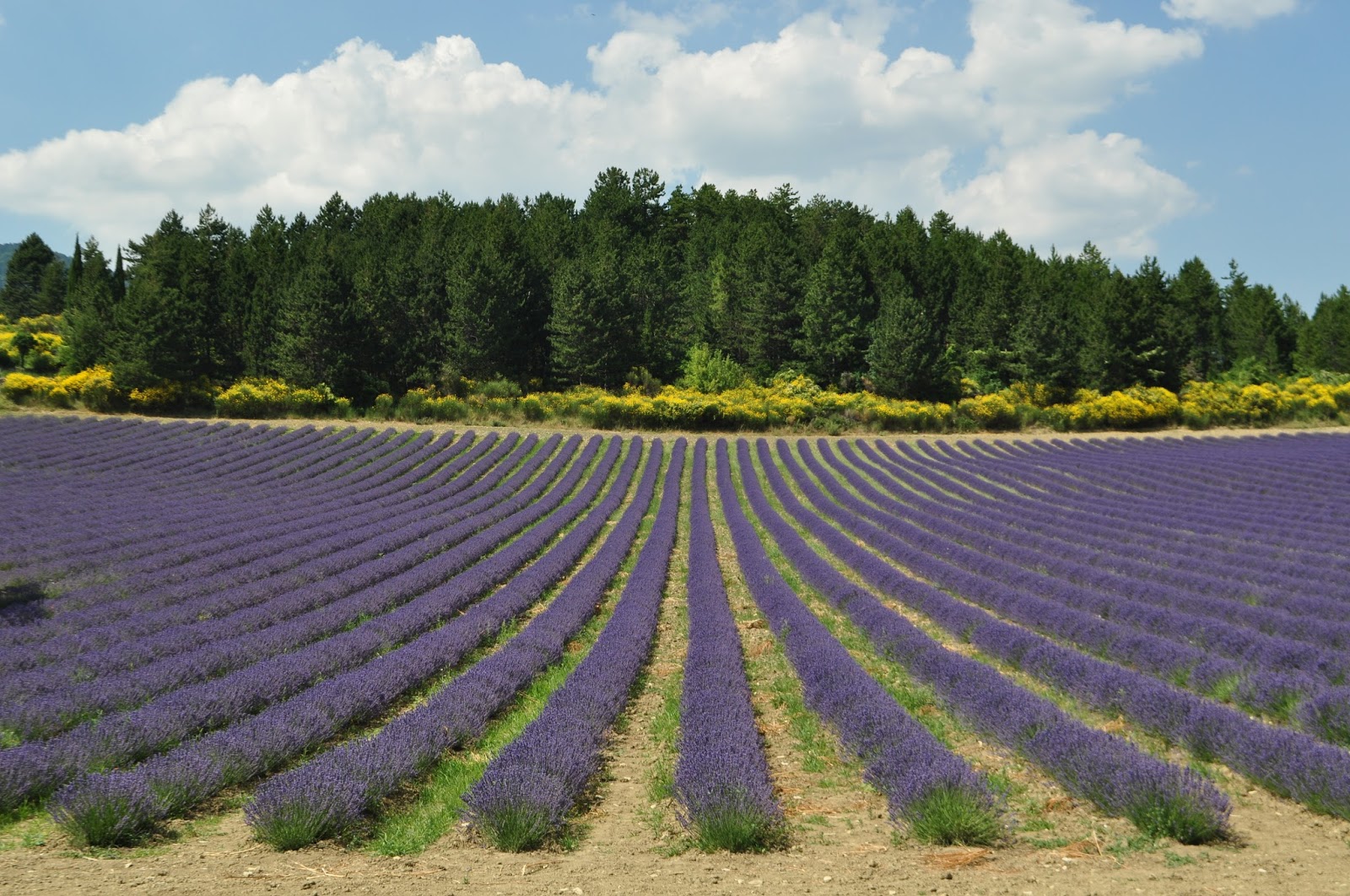
It's a toss up between coquelicots (red poppies) and lavender but probably no other scent or sight says Provence better than the pungent aroma of a purple field of lavender growing in mounded rows under a brilliant blue summer sky.

We were lucky that it was lavender season when we were in Sablet last summer with our daughter Tricia, husband Alvin and grandkids Avery and Caedon. The pictures which follow show the lavender fields we found during outings to the Drôme Provençale area west of Nyons, the Sénanque Abbey and to Sault.

Three species of lavender grow in Provence: true lavender (lavande) is found high up in dry, rocky soil. Aspic which grows lower down is similar to lavande except it has broader leaves and its branches hold a number of stems. And less refined, lavandin is a hybrid of lavande and aspic.

Lavande is most highly regarded by perfume makers for its sweet essential oils, though aspic and especially lavandin are more productive and therefore more common - ending up in laundry and household products.

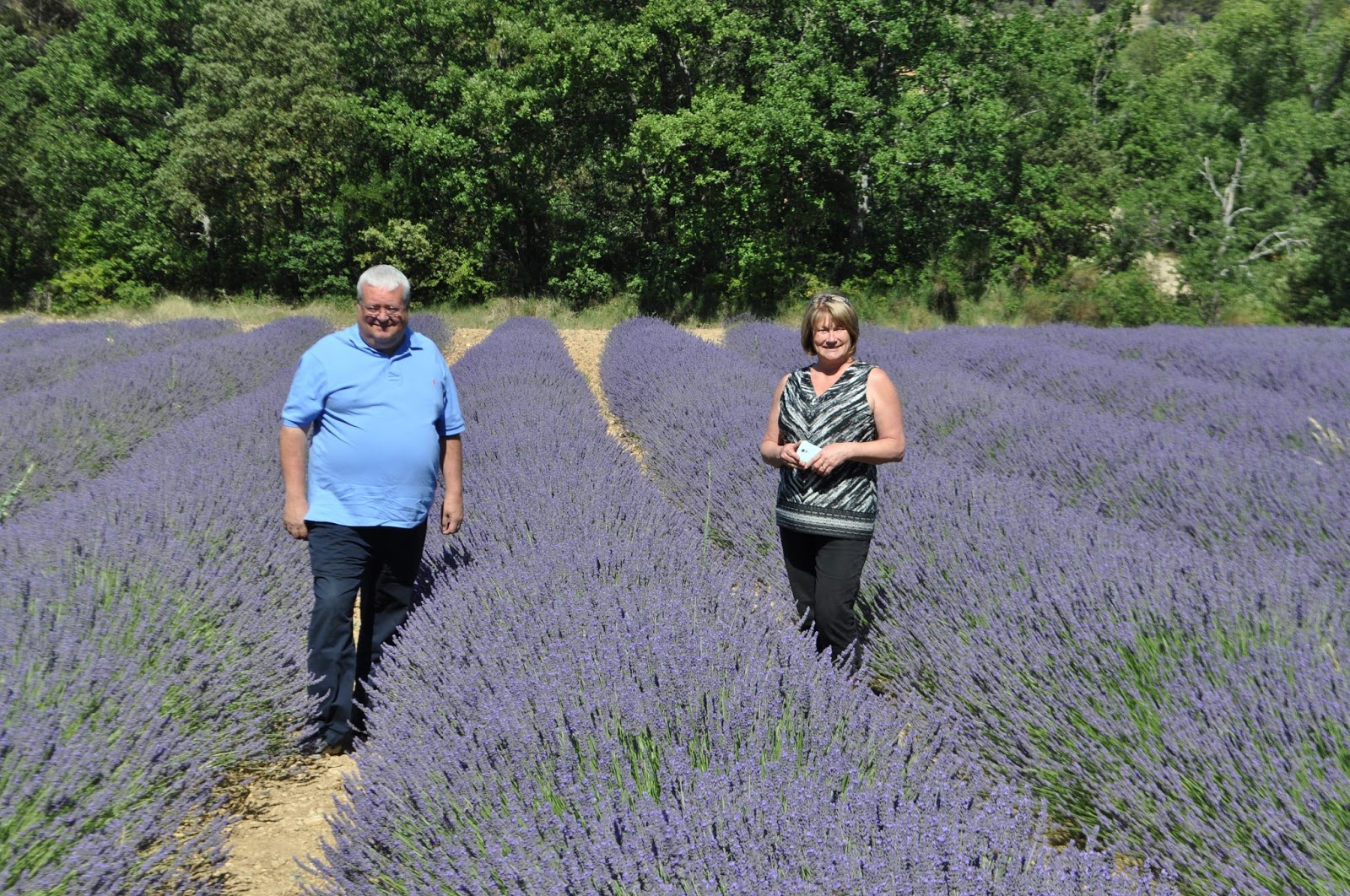
Lavender field in the Drôme Provençale

Me and my love in a lavender field in the Drôme Provençale

Alvin and Tricia in a lavender field in the Drôme Provençale

The Sénanque Abbey is a beautiful Cistercian abbey located in the deep Senancole valley a short distance north of Gordes and well worth a visit anytime you are in the area. But the best time to go is when the lavender fields that stretch out from the Abbey are in full bloom.

The Sénanque Abbey was founded in 1148 under the patronage of Alfant, bishop of Cavaillon, and Raymond Berenger II, Count of Provence, by Cistercian monks who came from Mazan Abbey in the Ardeche. In the 13th and 14th centuries, the Abbey reached its greatest height, operating four mills, seven granges and possessing large estates in Provence

During the Wars of Religion, the quarters for the lay brothers were destroyed and the Sénanque Abbey was ransacked by Huguenots. At the French Revolution, the Abbey's lands were nationalized, the one remaining monk was expelled and Sénanque itself was sold to a private individual.

The site was repurchased in 1854 for a new community of Cistercian monks of the Immaculate Conception, under a rule less stringent than that of the Trappists. The community was expelled in 1903 and departed to the Order's headquarters, Lerins Abbey on the island of St. Honorat, near Cannes. A small community returned in 1988.

Sénanque Abbey

The Sénanque Abbey is an active community with a handful of elderly monks. The monks grow the lavender and tend to honey bees to earn income for living and upkeep of the Abbey.

Lavender field near Sénanque Abbey

The Sénanque Abbey along with two other early Cistercian abbeys in Provence, Silvacane Abbey and Le Thoronet Abbey, are sometimes referred to as the "Three Sisters of Provence"

Sénanque Abbey

Lavender field near Sénanque Abbey

Lavender field on the way to Sault

Lavender fields on way to Sault

Lavender field on way to Sault

Lavender field on way to Sault

Lavender field on way to Sault

Lavender field on way to Sault

Lavender field on way to Sault

Lavender field on way to Sault

Lavender field on way to Sault

Lavender field on way to Sault

Lavender field on way to Sault

Lavender field on way to Sault

Lavender field on way to Sault

Lavender field on way to Sault

Lavender field on way to Sault

Another view of same lavender field

Lavender field near Sault

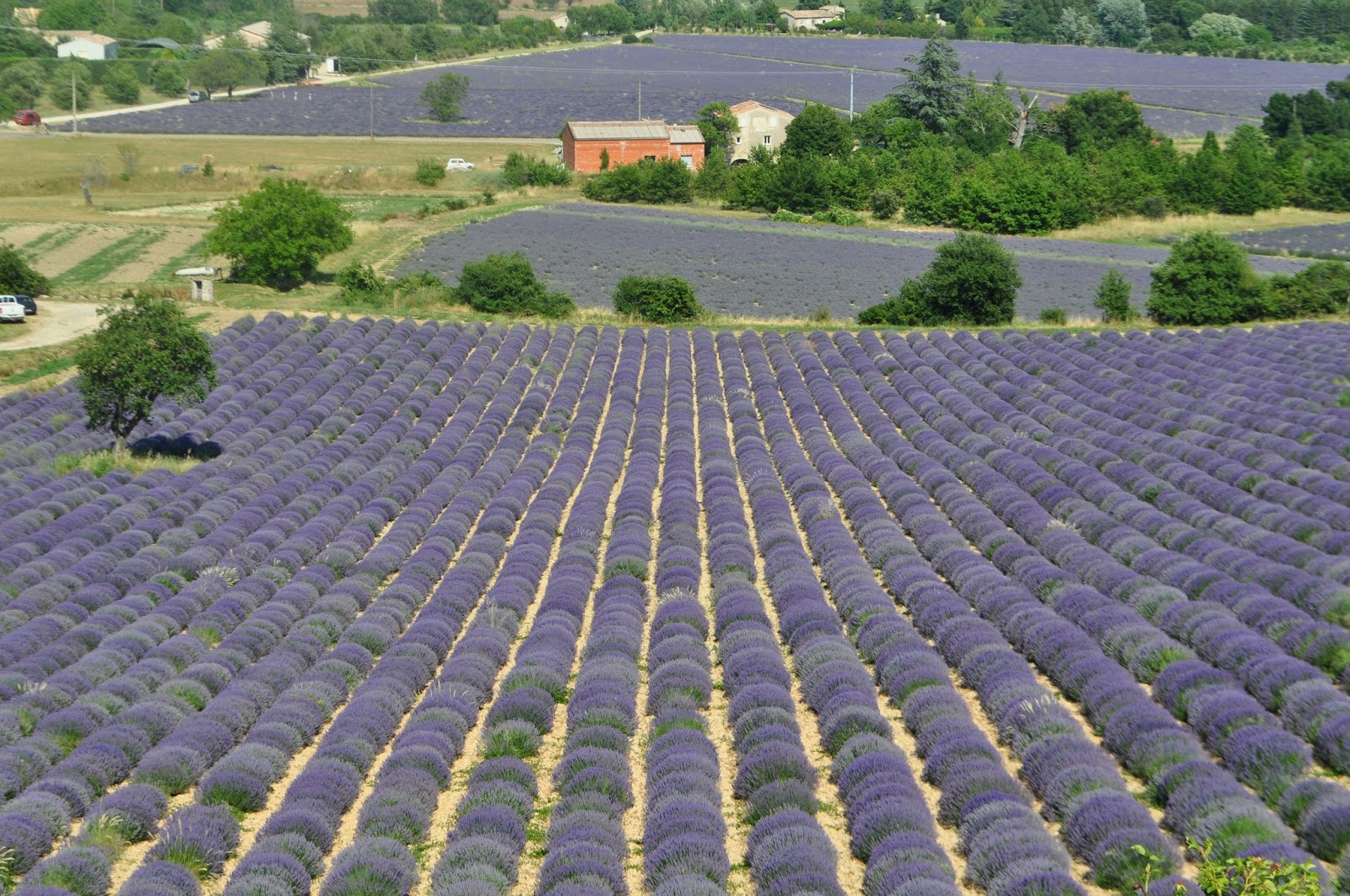
View of the patchwork of lavender fields visible from Sault

Sault is an old fortified village that sits on a ridge overlooking a large valley dotted with lavender fields about one hour from Sablet. The name Sault comes from "Saltus" referring to the forests that covered the area.

Lavender field below Sault

Lavender field near Sault

Lavender field near Sault

Shirley in lavender field near Sault

Lavender field near Sault

Lavender fields near Sault

Lavender fields with Sault in distance

Close up of previous lavender field near Sault

We don't get to be in Sablet during the summer every year so we miss out on the lavender most years, which is obviously a mistake.