Blogs are a wonderful way to make friends with people that you wouldn't otherwise ever meet as all of you who have blogs well know. The best is when you get a chance to meet one of your cyber friends or a reader of your blog in person.
I have had the chance to do this several times including a day last year when we met up with Sherry Long and her husband in Saint-Rémy-de-Provence. Sherry is the author of Dog Trots Globe: To Paris and Provence, which tells the story of Chula, a Sheltie who shares her dog's eye view of France.
If you have not read the book, you should, as it is absolutely charming. You will follow Chula as she sniffs her way around boulangeries, lavender fields, and big outdoor markets of Provence. In Paris, she trots across the Seine, stands on her hind legs in awe of the Eiffel Tower, and attends opening night at a gallery.
As I was saying, last year Sherry and I got to emailing back and forth and discovered that she and her husband live in Northern California and also have a home in Saint-Rémy-de-Provence and we agreed that we would meet for lunch as we were going to be in Provence at the same time. Unfortunately, Chula was not going to be there.
On the appointed day, we headed off to Saint-Rémy, which is about 60 kms south of Sablet, at the foot of the Alpilles Mountains. The birthplace of Nostradamus in 1503, Saint-Rémy is most associated with Vincent Van Gogh, who after cutting off his ear in 1888, committed himself to an asylum there, during which time he painted olive trees, irises and the nearby Alpilles on more than 150 paintings.
We have not spent any time in Saint-Rémy since we were there with some of our Bistro Des Copains employees on a market day in January when an icy cold Mistral was blowing, making it impossible for us to stay outdoors and we retreated to one of the few cafés open that day. Since it was again market day, we went early so we could walk around Saint-Rémy before meeting Sherry and her husband.
The Vielle Ville (old town) is encircled by a ring of plane tree-shaded boulevards. The most visible remains of Saint-Rémy's 14th-century defensive wall are the portes like this Portail Saint-Paul still in use today as the southern entrance into the center of town.
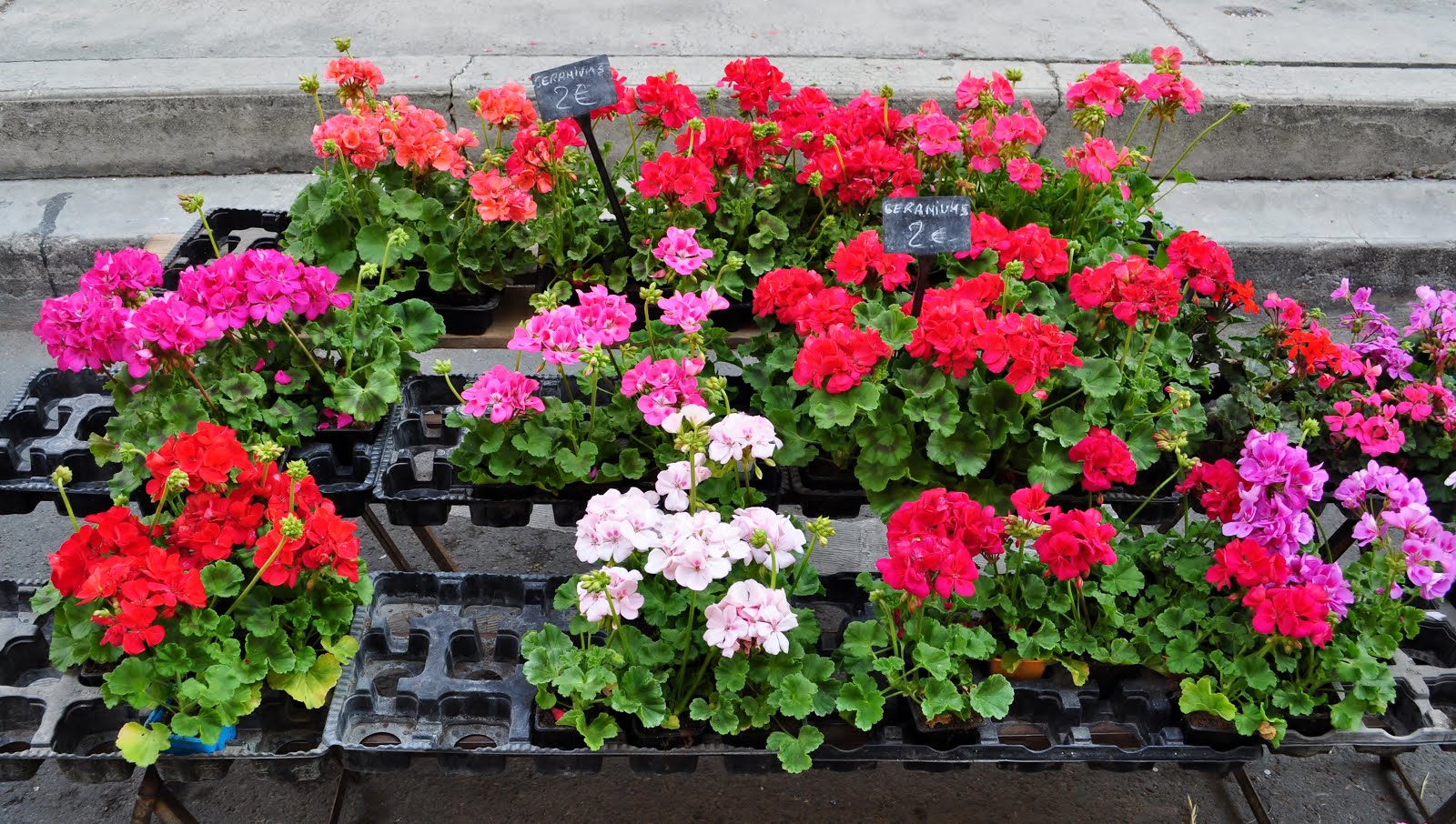
Here are a couple of pictures of what we saw as walked around Saint-Rémy, As I said, it was Wednesday, market day in Saint-Rémy so we walked through the market stalls to see what was offered for sale including this pretty display.
Flowers
A display of items for sale to tourists.
An old stone arch entryway.
The old town is full of narrow streets with restaurants, cafés, tourists shops, trendy boutiques and art galleries.
Sherry had made reservations for lunch at Le Bistrot du Paradou, a favorite foodie destination for many years but a place we had not been. So I was most excited about finally going there.
Le Bistrot du Paradou is located about 12 kms southwest of Saint-Rémy in the tiny village of Paradou.
The restaurant is located in a traditional building, shaded by ancient plane trees. Although Mireille and Jean-Louis Pons who ran this lively bistrot for many years are no longer a presence there, the kitchen is still overseen by longtime chef Vincent.
A pretty mural next to the entrance to Le Bistrot du Paradou.
The dining room is country bistro in style: stone walls, wood-beams on the ceiling, zinc-topped tables, a large bar and black and white photos of celebrities on the walls.
The restaurant offers only a daily set menu that cost €42 at lunch when we were there, higher in the evening, and includes starter, main course, cheese, choice of desserts, wine and coffee.
The menu varies by the season and by the day of the week with choices including tête de veau, lamb, spit roast Bresse chicken, cassoulet and aioli. They don't advertise it but the kitchen usually has options available for diners who have food allergies or dietary preferences.
Wine is included with your meal and a bottle of Mont-Redon Côtes du Rhône was set on our table and a second one later when we had finished the last delicious drop.
Dishes are served family style. The starter that day was a frisée salad with croutons, lardons and hard boiled eggs with a tasty vinaigrette.
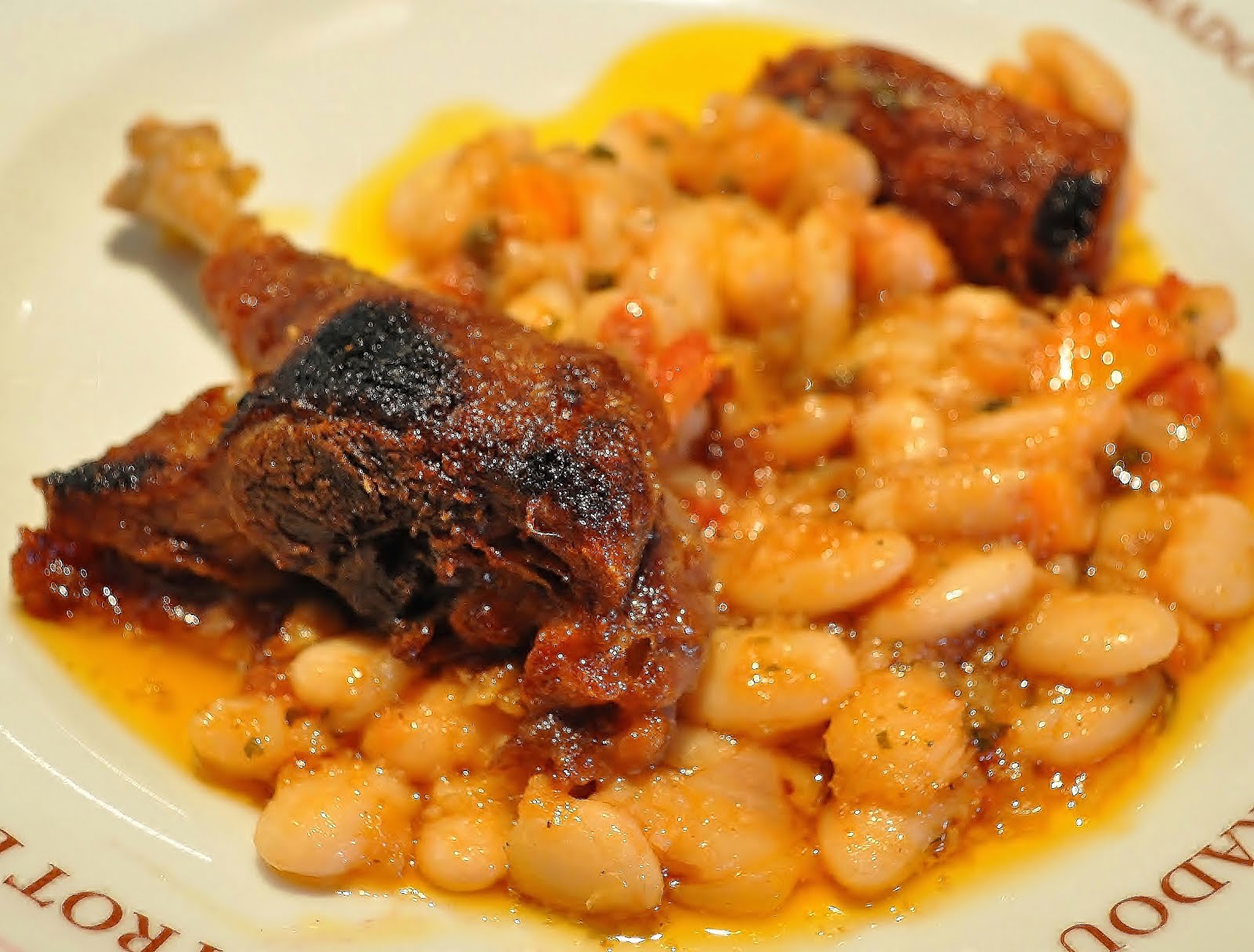
Being Wednesday, the main course offering was cassoulet. A big cassole, a conical earthenware container, glazed inside, the traditional vessel used for making cassoulet, filled to the brim with cassoulet was set in the middle of our table. The aroma which came out of that steaming dish made your mouth water.
We helped ourselves to plates of white beans, duck confit, meat and sausages in a rich tomato sauce. We all spooned second and third portions of this delicious dish on our plates.
Shirley is mostly vegetarian and the kitchen was happy to accommodate her with this tasty plate of Provençal vegetables.
When we exhausted our ability to eat anymore cassoulet, our table was cleared and a wicker platter of cheese was brought to the table for us to serve ourselves as many as we wanted to try.
Dessert choices included this chocolate mousse; and
ice cream. We finished with espressos.
As we headed back to Sablet, we passed this field with sheep. It reminds me that we must be in Provence when a Fête de la Transhumance takes place in Saint-Rémy on Pentecote Monday (50 days after Easter).
By the end of May, when there is little rainfall, the grass can no longer feed the sheep and water becomes scarce, these sheep and thousands more begin their journey towards the high mountain pastures. Today carried by truck, this trip, done by foot in the past, involved more than 10 days of walking.
At the Saint-Rémy Fête de la Transhumance, more than 3000 sheep from the Alpilles as well as goats and donkeys, accompanied by their shepherds in traditional costume along with their sheep dogs, parade twice around the boulevards that ring the old town center.
It was wonderful to meet Sherry and her husband and get the chance to try Le Bistrot du Paradou. We still have not really explored Saint-Rémy so we will return and dine at Le Bistrot du Paradou.
While it's not inexpensive to dine there, I think it's relatively good value given the quality, multiple courses, good wine and friendly service that comes with your meal. Reservations are definitely recommended, especially in high season. You may wish to check to see what will be served that day.
Le Bistrot du Paradou
57 Avenue de la Vallée des Baux
13520 Paradou
Tel: 04 90 54 32 70
No website
We have a beautiful stone village house located in the heart of the medieval village of Sablet in the Vaucluse region of Provence France. Dating from the 17th century, the house was renovated by an Italian stone mason with all of the comforts of a modern home while retaining its authentic Provençal character and charm. On this blog, we share experiences from our visits along with those of our families and friends to Sablet and the South of France.
Showing posts with label Cassoulet. Show all posts
Sunday, January 13, 2013
Sunday, March 21, 2010
Le Languedoc, Carcassonne
As you probably know, I am co-proprietor of a small French bistro called Bistro Des Copains in the small Northern California town of Occidental; we are located about 68 miles north of San Francisco.
About six months after opening, we decided to close the Bistro and take a three week holiday, sort of like a French restaurant's "fermeture annuelle". It was January and we had survived the year end holidays; January is traditionally a very slow time for tourism in the wine country.
My partner in the Bistro and I decided to take our chef and one of our servers to France so they could experience the food, wine, people and culture of France since they had never been to France before.
Since we opened the Bistro, our favorite rosé wine has been the delicious Gris de Gris produced by Domaine de Fontsainte from five varietals of grapes from Corbières. Year after year, this wine has all of the best characteristics of a great rosé; color, crispness and dry.
It is easy for me to get off track when I start to talk and think about this wine so I will come back to this in a future post. When I started to research our trip, I saw that Boutenac where Domaine de Fontsainte is located, is only about 45 km from the medieval city of Carcassonne.
We were determined to visit Domaine de Fontsainte and given its proximity, we decided that we should also visit Carcassonne. Carcassonne is a fortified town in the Aude Department of Languedoc-Roussillon.
It is separated into the fortified Cité de Carcassonne and the more expansive lower city, the ville basse. The fortress which was thoroughly restored in 1853, was added to the UNESCO list of World Heritage Sites in 1997.

Besides its history and beauty and location along the Canal du Midi, Carcassonne is also known for its cassoulet. Cassoulet is a rich slow-cooked stew or casserole containing meat (typically pork sausages, pork, goose, duck and sometimes lamb) and white beans (haricots blancs or lingots).
The dish is named after its traditional cooking vessel, the cassole, a deep, round, earthenware pot with slanting sides. Numerous regional variations exist, the best known being the cassoulets from Castelnaudary, Toulouse and Carcassonne.
As I have written before, I generally plan out our trips quite thoroughly before we go so that we hopefully have positive experiences whereever we go. On some trips, this means we are not very spontaneous; but I digress again.
As I was planning for the trip with our bistro crew, I checked with a variety of sources including local vintners about where we should go in Carcassone to eat a good traditional cassoulet. Numerous people told me we should go to Le Languedoc restaurant.

The traveling party from Bistro Des Copains; Tricia Stagg, Chef Melissa Gonyea, me and my partner in Bistro Des Copains, Cluney Stagg at our table at Le Languedoc. Unfortunately, my wife Shirley couldn't stay as long as the rest of us.

Among the dishes we tried was a tasty offering of moules gratinés prepared by chef Didier Faugeras.

We also tried the chef's version of onion soup gratinés.

And the "pièce de résistance", highlight, and reason for coming to Le Languedoc was cassoulet au confit de canard, the restaurant's specialty. It was the best cassoulet I have ever had. This was the first time I had ever had cassoulet served family style instead of in individual cassoles.
So while the cassoulet might not have had quite as much tasty crunchiness on top, it was a delicious, rich combination of white beans, duck confit, lamb and pork sausage. It was wonderful, so wonderful that I took seconds when it was offered.

To finish off our lunch, I had the "nougat glacé au coulis de framboise", frozen nougat with a rasberry coulis.
About six months after opening, we decided to close the Bistro and take a three week holiday, sort of like a French restaurant's "fermeture annuelle". It was January and we had survived the year end holidays; January is traditionally a very slow time for tourism in the wine country.
My partner in the Bistro and I decided to take our chef and one of our servers to France so they could experience the food, wine, people and culture of France since they had never been to France before.
Since we opened the Bistro, our favorite rosé wine has been the delicious Gris de Gris produced by Domaine de Fontsainte from five varietals of grapes from Corbières. Year after year, this wine has all of the best characteristics of a great rosé; color, crispness and dry.
It is easy for me to get off track when I start to talk and think about this wine so I will come back to this in a future post. When I started to research our trip, I saw that Boutenac where Domaine de Fontsainte is located, is only about 45 km from the medieval city of Carcassonne.
We were determined to visit Domaine de Fontsainte and given its proximity, we decided that we should also visit Carcassonne. Carcassonne is a fortified town in the Aude Department of Languedoc-Roussillon.
It is separated into the fortified Cité de Carcassonne and the more expansive lower city, the ville basse. The fortress which was thoroughly restored in 1853, was added to the UNESCO list of World Heritage Sites in 1997.
Besides its history and beauty and location along the Canal du Midi, Carcassonne is also known for its cassoulet. Cassoulet is a rich slow-cooked stew or casserole containing meat (typically pork sausages, pork, goose, duck and sometimes lamb) and white beans (haricots blancs or lingots).
The dish is named after its traditional cooking vessel, the cassole, a deep, round, earthenware pot with slanting sides. Numerous regional variations exist, the best known being the cassoulets from Castelnaudary, Toulouse and Carcassonne.
As I have written before, I generally plan out our trips quite thoroughly before we go so that we hopefully have positive experiences whereever we go. On some trips, this means we are not very spontaneous; but I digress again.
As I was planning for the trip with our bistro crew, I checked with a variety of sources including local vintners about where we should go in Carcassone to eat a good traditional cassoulet. Numerous people told me we should go to Le Languedoc restaurant.
The traveling party from Bistro Des Copains; Tricia Stagg, Chef Melissa Gonyea, me and my partner in Bistro Des Copains, Cluney Stagg at our table at Le Languedoc. Unfortunately, my wife Shirley couldn't stay as long as the rest of us.
Among the dishes we tried was a tasty offering of moules gratinés prepared by chef Didier Faugeras.
We also tried the chef's version of onion soup gratinés.
And the "pièce de résistance", highlight, and reason for coming to Le Languedoc was cassoulet au confit de canard, the restaurant's specialty. It was the best cassoulet I have ever had. This was the first time I had ever had cassoulet served family style instead of in individual cassoles.
So while the cassoulet might not have had quite as much tasty crunchiness on top, it was a delicious, rich combination of white beans, duck confit, lamb and pork sausage. It was wonderful, so wonderful that I took seconds when it was offered.
To finish off our lunch, I had the "nougat glacé au coulis de framboise", frozen nougat with a rasberry coulis.
Subscribe to:
Posts (Atom)