Showing posts with label La Fourchette Restaurant. Show all posts

Sunday, August 9, 2015

A visit to the historical sights in Avignon and a lovely lunch at La Fourchette

My first memory of Avignon is trying to get from the TGV station south of town on the road leading to the A7 in Le Pontet to go to Sablet. Since that day, we have returned to Avignon many times to visit the town's many historical sites, shopping and dining. It is always one of the places we take all our guests.

Last May was no exception when friends Melissa, the former chef at our Bistro des Copains and Debbie, one of our lead servers visited Sablet. On the morning of the day they were leaving for Paris for their return home, we headed to Avignon to see the sights and eat at La Fourchette Restaurant.

Avignon is 40 km southwest of Sablet, snuggled inside ancient walls along the Rhône River. The largest town in the Vaucluse, Avignon is very old, full of history, art, music and activity. You can spend hours wandering the narrow streets inside the fortified walls without getting bored.

Avignon is well known for its Festival d'Avignon, the annual festival of dance, music and theater founded in 1947. There are really two festivals that take place: the more formal "Festival In", which presents plays inside the Palace of the Popes and the more bohemian "Festival Off", known for its presentation of largely undiscovered plays and street performances.

14th century Bell Tower of the Hôtel de Ville

Near the Palais des Papes is the Opera-Theater seen below, built in 1825 on Place de l’Horloge. Rebuilt in 1847 after a fire, the Opera House offers music, dance, theater and opera performances throughout the year.

Opera-Theater of Avignon

There are two statues in front of the Opera-Theater in Avignon. One is of Pierre Corneille, a French tragedian, and one of the three great seventeenth-century French dramatists, along with Molière and Racine.

Pierre Corneille statue in front of Opera-Theater of Avignon

The other statue is of Jean-Baptiste Poquelin, known by his stage name Molière, a French playwright and actor who is considered to be one of the greatest masters of comedy in Western literature.

Statue of Molière in front of the Opera-Theater of Avignon

Next to the Opera-Theatre on Place de l'Horloge is the neo-classical town hall known as the Hôtel de Ville built in the 19th century as a replacement for an older building. Only the 14th century clock tower remains from the original structure. The Gothic clock tower, which gave the square its name, was incorporated into the construction of the later Hôtel de Ville.

The City of Avignon sets up a traditional Provençal crèche with santons, in Provençal it means "little saint" in the Hotel de Ville every year. A santon is a small hand-painted, terracotta nativity scene figurine produced by artisans in workshops in Provence. The santons represent various characters from Provençal village life such as the baker, the winemaker, and a farmer's wife with eggs.

Hôtel de Ville

Near the Hôtel de Ville is a bust of Frédéric Mistral, a French writer and lexicographer of the Occitan language. Mistral received the 1904 Nobel Prize in Literature "in recognition of the fresh originality and true inspiration of his poetic production, which faithfully reflects the natural scenery and native spirit of his people, and, in addition, his significant work as a Provençal philologist".

Bust of Frédéric Mistral near Hôtel de Ville

La Fourchette Restaurant, a restaurant owned by Philippe and Danièle Hiély since 1982 is on Rue Racine.

La Fourchette Restaurant

Chef Hiély offers a printed three-course menu with quite a few options for both starter and main course plus a long list of daily specials for 35 €.

Friend Debbie and Shirley at La Fourchette Restaurant

Our starters included:

Papeton d'Aubergine

Lentils de Puy with cured salmon and gravlax sauce

Our main course selections included:

Daube de Boeuf

Gratin of Macaroni

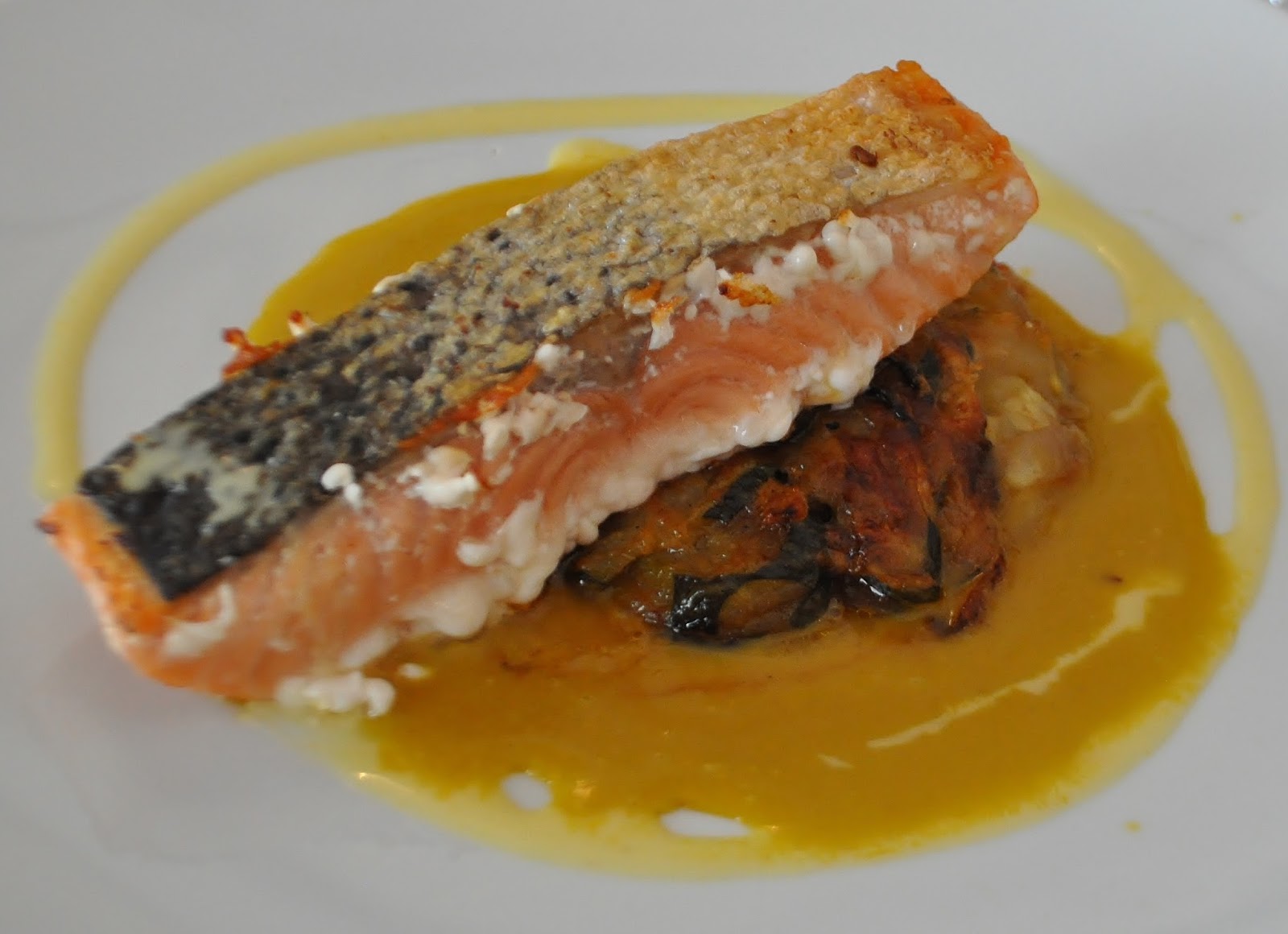
Salmon with curry sauce and zucchini

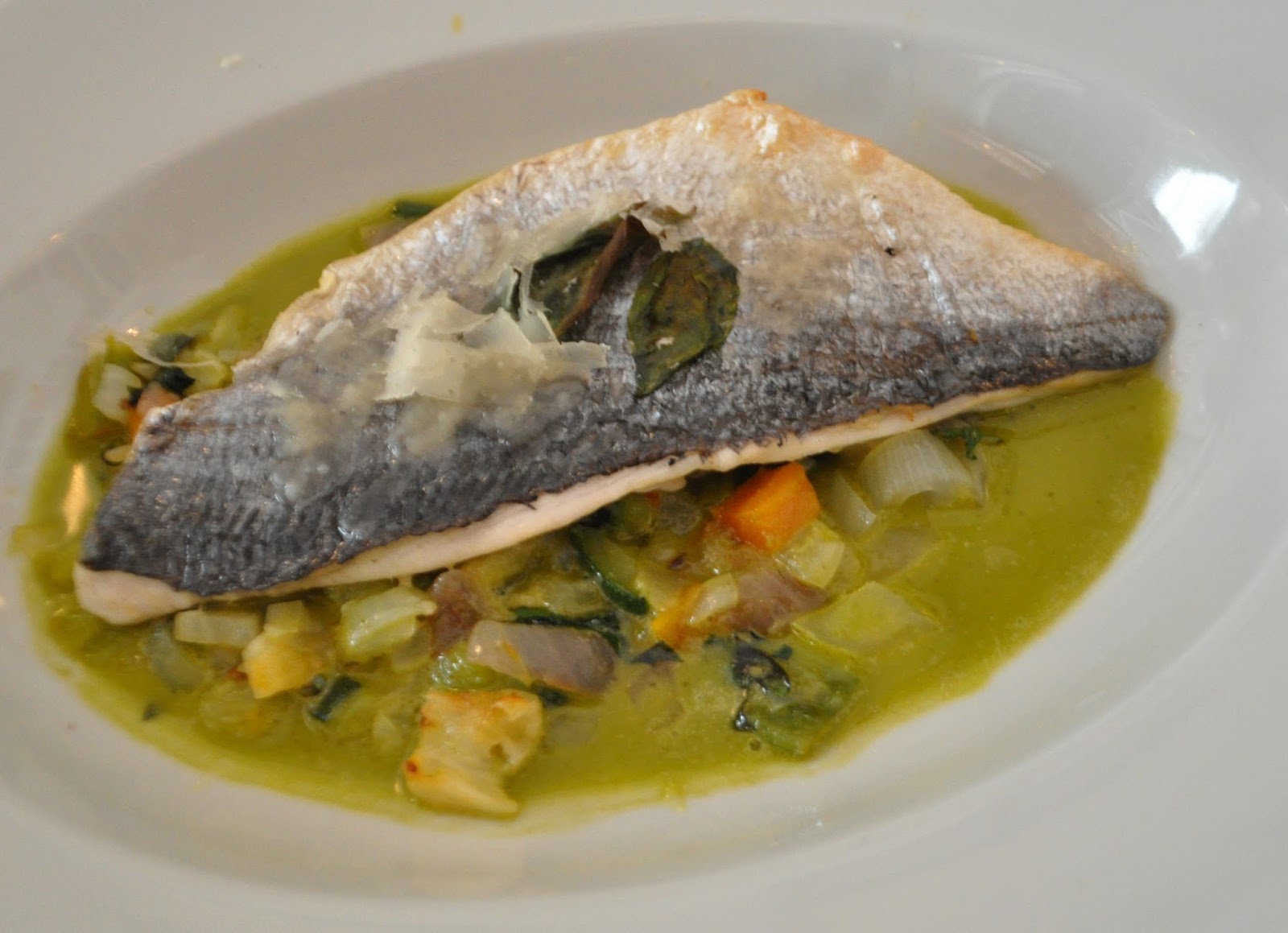
Filet of Daurade with basil sauce and Parmesan

Desserts included:

Profiterole with ice cream and chocolate sauce

Yummy chocolate sauce being dribbled on the profiterole

Ice cream with Chantilly cream

Nougat Glacé

As we walked back to the car, we passed the "Belle Epoque" carousel at the top end of the Place de l'Horloge and of course we couldn't resist using the carousel as a backdrop for a cute picture.

Our friends Melissa and Debbie enjoy the "Belle Epoque" carousel in Avignon

Murals on wall of shopping arcade in Avignon

I should mention that the Place de l'Horloge is filled with cafes catering to tourists. While it is appealing to sit under one of the umbrellas and watch the world go by, it is better to save the experience for a café break, rather than lunch since we have not found any of the cafes to serve great food.

Place de l'Horloge Cafes

The Popes' Palace is a historical palace in Avignon, one of the largest and most important Medieval Gothic buildings in Europe. One time fortress and palace, the papal residence was the seat of Western Christianity during the 14th century. Six papal conclaves were held in the Palace, leading to the elections of Benedict XII in 1334, Clement VI in 1342, Innocent VI in 1352, Urban V in 1362, Gregory XI in 1370 and Antipope Benedict XIII in 1394.

The Palace is actually made up of two buildings: the old Palace of Benedict XII which sits on the impregnable rock of Doms, and the new Palace of Clement VI, the most extravagant of the Avignon popes. Not only is the final combination the largest Gothic building of the Middle Ages, it is also one of the best examples of the International Gothic architectural style.

Palais des Papes

Statue of Christ on the cross in front of Notre-Dame des Doms Cathedral

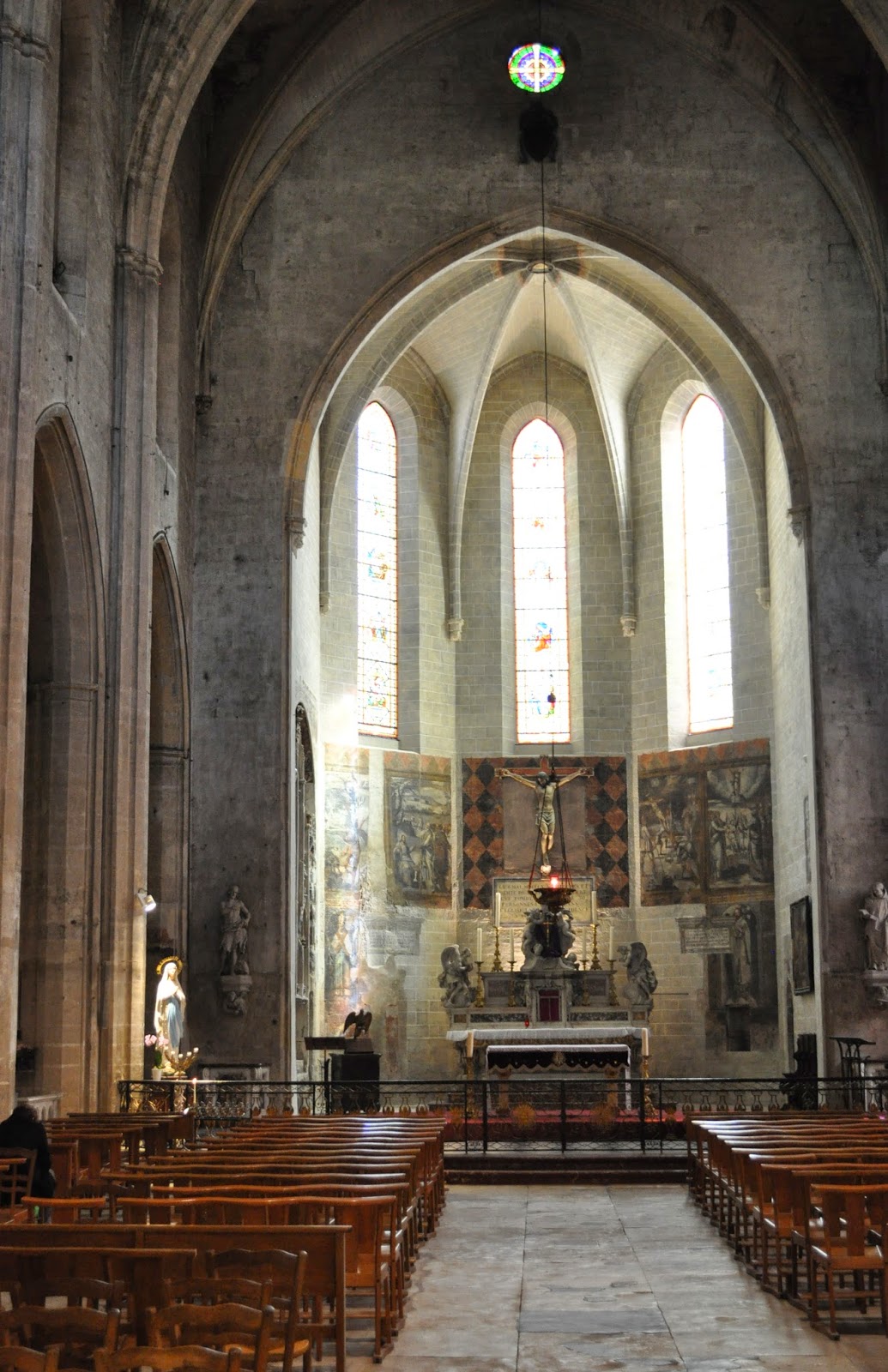
Notre-Dame des Doms Cathedral is a Romanesque building, mainly built during the 12th century. The most prominent feature of the cathedral is the 19th century gilded statue of the Virgin which surmounts the western tower. The mausoleum of Pope John XXII (1334) is one of the most beautiful works within the cathedral, it is a noteworthy example of 14th-century Gothic carving.

Notre-Dame des Doms Cathedral

The menu at La Fourchette has enough options that you are guaranteed to find several starters and main course offerings that appeal to your palate. So go and enjoy when you are in Avignon. I would encourage you to make reservations before you go.

La Fourchette Restaurant
17, Rue Racine
84000 Avignon
Tel: 04 90 85 20 93
web: www.la-fourchette.net/index.html

Sunday, September 14, 2014

Visit to Avignon and Lunch at La Fourchette Restaurant

Avignon is 40 km southwest of Sablet, snuggled inside ancient walls along the Rhône River. The largest town in the Vaucluse, Avignon is very old, full of history, art, music and activity. You can spend hours wandering the narrow streets inside the fortified walls without getting bored. One day while Shirley and friend Kari were shopping for kids clothes, I wandered off to see what I could find.

Avignon is well known for its Festival d'Avignon, the annual festival of dance, music and theater founded in 1947. There are really two festivals that take place: the more formal "Festival In", which presents plays inside the Palace of the Popes and the more bohemian "Festival Off", known for its presentation of largely undiscovered plays and street performances.

The Palais des Papes ("Papal Palace") almost dwarfs the cathedral. The palace is an impressive monument and sits within a square of the same name. The palace was begun in 1316 by John XXII and continued by succeeding popes through the 14th century, until 1370 when it was completed.

Pope's Palace

Avignon is commemorated by the French song, "Sur le Pont d'Avignon" ("On the bridge of Avignon"), which describes folk dancing. The song dates from the mid-19th century when Adolphe Adam included it in the opera "Le Sourd ou l'Auberge Pleine" which was first performed in Paris in 1853. The opera was an adaptation of an 1790 comedy by Desforges.

The bridge in the song is the Saint-Bénézet bridge over the Rhône River of which only four arches (out of the initial 22) now remain. The bridge was built between 1171 and 1185, with a length of some 2950 feet, but was destroyed during the siege of Avignon by Louis VIII of France in 1226. It was rebuilt but was damaged frequently during floods and had to be continually repaired. Several arches were already missing before the remainder was abandoned in 1669.

Saint-Bénézet Bridge

The defensive walls were built by the popes in the 14th century and still encircle Avignon. They are one of the finest examples of medieval fortification in existence. The walls are of great strength and are surmounted by machicolated battlements flanked at intervals by 39 massive towers and pierced by several gateways, three of which date from the 14th century.

Avignon Defensive Wall

Notre-Dame des Doms Cathedral is a Romanesque building, mainly built during the 12th century. The most prominent feature of the cathedral is the 19th century gilded statue of the Virgin which surmounts the western tower. The mausoleum of Pope John XXII (1334) is one of the most beautiful works within the cathedral, it is a noteworthy example of 14th-century Gothic carving.

Notre-Dame des Doms Cathedral

Keep your eyes raised as you walk around so you don't miss the murals on building facades representing the Festival d'Avignon and statues of the virgin perched on corners of buildings around Avignon.

Building Mural Representing the Festival d'Avignon 

Building Mural Representing the Festival d'Avignon

Jean-Baptiste Poquelin, known by his stage name Molière, was a French playwright and actor who is considered to be one of the greatest masters of comedy in Western literature.

Statue of Molière in front of the Opera-Theater of Avignon

Near the Palais des Papes is the Opera-Theater seen below, built in 1825 on Place de l’Horloge. Rebuilt in 1847 after a fire, the Opera House offers music, dance, theater and opera performances throughout the year.

Opera-Theater

Next to the Opera-Theatre on Place de l'Horloge is the neo-classical town hall (Hôtel de Ville) built in the 19th century as a replacement for an older building. Only the 14th century clock tower (Tour de l'Horloge) remains from the original structure. The Gothic clock tower, which gave the square its name, was incorporated into the construction of the later Hôtel de Ville.

The City of Avignon sets up a traditional Provençal crèche with santons (Provençal: "little saint") in the Hotel de Ville every year. A santon is a small hand-painted, terracotta nativity scene figurine produced by artisans in workshops in Provence. The santons represent various characters from Provençal village life such as the baker, the winemaker, and the farmer wife with eggs.

Avignon Town Hall

Statue of Virgin Mary Perched on Corner of Building

Statue of Virgin Mary Perched on Corner of Building

The penitent brotherhoods were at their peak during the 16th and 17th centuries. The brothers were expected to help each other, do public penance, and perform good deeds. The brotherhood they belonged to was identified by the color of their sackcloth and the hood that covered their heads during processions. Each brotherhood had its own chapel. This is the chapel of the white penitents.

Chapelle des Pénitents Blancs

The Collégiale Saint-Didier Church seen below is a 14th century Gothic church in the middle of Avignon. The current church was built over a period of three years and four months and consecrated on 20 September 1359. It stands on the site of a much older church which may date back to the 7th century though the first texts mentioning the church date back to 1068.

Collégiale Saint-Didier

Entrance to Collégiale Saint-Didier

Inside, the altar is adorned by the stunning "The Bearing of the Cross", sculpted by Francesco Laurana for King René in 1478.

Interior of Collégiale Saint-Didier

As planned, we met up for lunch in front of La Fourchette Restaurant, a restaurant owned by Philippe and Danièle Hiély since 1982.

La Fourchette Restaurant

La Fourchette Dining Room

Chef Hiély offers a three-course menu with quite a few options for both starter and main course for 35 €. Friend Kari pauses for a picture while we wait for entrées (first course) to be brought to our table.


Kari

We are happily seated below at one of our favorite restaurants.

Shirley and Your's Truly

First courses;

Seafood Gratin with Greens

Salad of Green Lentils from Puy with Smoked Salmon with Gravlax Sauce

Main courses;

Scallops with Mango Sauce and Fennel Puree

Salmon fillet with a Cream of Red Pepper Sauce

Daube Avignonnaise

Desserts;

Café Gourmand

Profiterole

As we walked back to the car, we passed the "Belle Epoque" carousel at the top end of the Place de l'Horloge.


La Fourchette Restaurant is one of our favorite restaurants in the Vaucluse. The menu is relatively large for Provence and you know there is always going to be something you like on the menu. I am sure we will dine there when we are in Provence in a few weeks.

La Fourchette Restaurant
17 Rue Racine
84000 Avignon
Tel: 04 90 85 20 93
www.la-fourchette.net

Have a great week! Chat soon.