Sunday, May 30, 2021

Our Last Day in Beautiful Sablet in Provence

We could never have imagined that it would be more than a year and half before we might return to Sablet when we awoke on Sunday morning, October 13, 2019. Like the rest of the world, we couldn't imagine that a world-wide pandemic was about to strike that would change lives forever. 

So as is our routine on the last day of a sojourn in Sablet, we had breakfast on the terrace, returned our personal belongings to storage, emptied  trash cans and refrigerator and tidied up so the housekeepers wouldn't have to when they come to ready the house for the guests who follow. 


Shirley at Front Door

We never leave Sablet without going to pay visits to our friends who are propriétaires d'entreprise (business owners) to say good bye and fais la bise (kiss on each cheek) before we head to the TGV train station in Avignon. I snapped pictures at each stop that day.


Le Pain Medieval Boulangerie

Our first stop is at Le Pain Medieval Boulangerie to say au revoir (good bye) to the young baker Julien and his mom Jeannine. We usually have to wait in line because there is often a line out the door and cars double-parked in front with motors running while the owner dashes into the bakery to get a freshly baked baguette or some other baked treats.

Julien and his Mom

Next stop is at Votre Marché which is owned by dear friends Alain and Mimi.  Over the years we have owned our house in Sablet, I can say without a doubt, no business has undergone a more substantial and positive change than Votre Marché. 

From the previous store, with largely empty shelves, the Marché is now stocked with a large assortment of items, canned goods, wines and spirits, dairy products, cheese, charcuterie, and lots of fresh fruits and vegetables.   

Chez Mimi et Alain Market

Dear Mimi does her best to encourage Shirley to "speak French Shirley". While speaking is still a challenge, especially when put on the spot, Shirley understands a great deal of what is said during conversations. I can say that she can now se débrouiller (handle herself) when she goes shopping on her own.  


Shirley and Alain and Mimi at Votre Marché.

From Votre Marché, we head to Café des Sports for a final café before we head to the train station. Unfortunately, on many Sunday mornings, including this day, the proprietor, our good and larger than life friend Bruno, is not manning the bar. So we said our "good byes" earlier. 


Shirley and Alain at Café des Sports

We have set an appointment to meet our friend Alain for coffee before we head out. Alain and his wife Danielle have become friends and we always look forward to spending time together at the bar. 


A Final Coffee at Café des Sports Before Departure

Having said our good byes, with sad hearts, we head to our car and the trip to Avignon. If we had known how long it would be before we might get back to Sablet, I am sure we would have been a lot more sad, more likely in full depression.

We are thankful that Shirley and I have been able to avoid become infected with COVID-19 and we are vaccinated and hope to return to Sablet in July. I can't put into words how much I love Sablet, our home there and all of our very special friends who have opened their hearts and homes to us interlopers. 

So we will remain optimistic, and say a bientot (see you soon). 😘

Wednesday, May 19, 2021

A Visit to Uzès is a Great Idea After a Visit to Nearby Pont du Gard

Loyal readers who follow my musings about Provence know that visits to the Pont du Gard are a regular part of our annual visits to the South of France. However, after you have walked out to the Roman acqueduct and walked across the bridge and hiked to the top of the hill on the other side to marvel at its beauty, the question inevitably arises about what are we going to do for the rest of our day. Visits to the Pont du Gard do not require a full day unless you are going to paddle a kayak down the Gardon river which by the way is great fun.

Many times, we head to nearby Uzès, a short 15 minute drive. Uzès is a well-preserved medieval town in the Gard department set on a promontory above the Alzon River. The old town is encircled by boulevards shaded by plane trees that have replaced the medieval defensive walls. Inside, there is a maze of small streets and shaded squares lined with beautiful old houses and mansions from the 17th and 18th century.

Cobblestone street to center of Uzès with Bermonde Tower in background


In the mid-16th century, many citizens of Uzès were Calvinist and the town was the 5th largest Protestant town in the kingdom. Religious wars resulted in the destruction of all the churches and of the temple that Uzès had at the time. In 1685, the revocation of the Edict of Nantes caused many to leave for Protestant countries in Europe, or their colonies.

 
Clock and belfry on top of the St-Etienne church tower


Starting in the 15th century, Uzès produced woolen, twill and cloth, then stockings and finally silk, until a mulberry tree disease deprived the town of its textile industry, which provided employment for 2000 people. This decline took the town with it, despite the development of the pottery industry and the licorice factory at the end of the 19th century.

Clock and belfry on top of the St-Etienne church tower


In the 20th century, Uzès gained a new lease on life when its town center was classified as a “protected zone” in January 1965. Ever since, Uzès has been upgrading and improving the town: roads have been paved, electricity cables hidden, facades renovated and the “protected zone” has been enlarged from 29 acres in 1965 to 101 acres today.
 
Pretty Uzès Shop


The Duché is the defensive feudal castle standing in the center of Uzès old town. Uzès is the "First Duchy of France", France's oldest and most-important ducal peerage. Uzès was made a Duché in 1565. The current owner of the castle, Jacques de Crussol, is the 17th Duke of Uzès. He grew up in the castle but these days, he actually lives in Paris but makes a point of coming to Uzès once a month, and spends most of the summer at the castle. Just like the Queen of England, his family’s flag flies over the castle when he is in residence.

Bermonde Tower (castle keep)


The Saint-Théodorit Cathedral seen below, was formerly a Catholic cathedral, but is now a parish church, named in honor of Saint Theodoritus. It was the seat of the Bishops of Uzès until the diocese was abolished under the Concordat of 1801 and its territory passed to the Diocese of Avignon. 

The cathedral was destroyed during the Albigensian Crusades, rebuilt, and destroyed again in the 16th century Wars of Religion and rebuilt again in the 17th century before it was gutted during the French Revolution. In the 19th century, a new west front was added. 

The Fenestrelle Tower avoided destruction in 1621 and is the only part of the cathedral which survives from the Medieval structure. The tower is built in the style of the Medieval Italian Lombard towers, and is the unique example in France of a round clock tower.

Saint-Théodorit Cathedral and Fenestrelle Tower


Uzès passageway to Place aux Herbes


Saturday morning, a huge traditional Provençal market fills the Place aux Herbes to overflowing with fruits, vegetables and flowers, but also jams and honey, ceramics and linens, pots and pans, clothes and shoes. There’s another, smaller version on Wednesday mornings too. 

The square itself, large and asymmetrical, is planted with plane trees around its central fountain and surrounded by medieval houses transformed in the 17th and 18th centuries, perched above stone arcades housing shops, restaurants and cafés.

Place aux Herbes

If you are looking for a place to have a tasty meal after the market, we really like Les Terroirs which is located off of Place aux Herbes.
 
Les Terroirs - 5 Place aux Herbes

Saturday, March 7, 2020

Go visit the Pont du Gard if for no other reason, this "masterpiece" has been standing for 2000 years!

Our favorite Roman ruin in the South of France is the Pont du Gard, the aqueduct bridge that crosses the Gardon River about 60 km (37 miles) from our house in Sablet, between the towns of Remoulins and Uzès.

The Pont du Gard is part of a 50 km (31 mile) aqueduct constructed by the Romans in the middle of the 1st century to bring fresh water from the Eure spring near Uzès, to the Roman city of Nîmes where it supplied running water to fountains, baths and private homes around the city.

The Pont du Gard has three tiers of arches; It is 274 meters (899 ft) in length and stands at a height of 48.8 m (160 ft). Its width varies from 9 m (30 ft) at the bottom to 3 m (9.8 ft) at the top. The three levels of arches are recessed, with the main piers in line one above another.

As you walk out to the Pont du Gard, look for the ancient olive trees on the Left Bank along the path from the Visitor Center. The plaque by one of the trees says it was born in 908 and lived in Spain till 1985 when the Counsel General of the Gard adopted the tree and planted it here in 1988.

1,000 year old Olive tree near the Pont du Gard

Make sure you check out the construction of the bridge, take in the view up or down the river valley, wander across to the far side, explore down along the river and climb up the steps to the upper trail where you have great views of the bridge and surrounding area.

Pont du Gard

The Pont du Gard was constructed largely without the use of mortar or clamps. Most of the stones were extracted from the Estel quarry located approximately 700 meters (2,300 ft) downstream, on the banks of the Gardon River. The stones were cut to fit perfectly together by friction and gravity, eliminating the need for mortar.

The builders left inscriptions on the stonework conveying various messages and instructions. Many blocks were numbered and inscribed with the required locations, such as fronte dextra or fronte sinistra (front right or front left), to guide the builders

Underside of Pont du Gard archway with Roman Numeral placement markings

Shirley at Pont du Gard

The straight-line distance from the spring near Uzès to the town of Nîmes is only about 20 km (12 mi), but the mostly underground aqueduct was built along a winding route measuring around 50 km (31 mi) to circumvent the southernmost foothills of the Massif Central, known as the Garrigues de Nîmes. This was the only practical way to transport water from the spring to the town.

Pont du Gard from right bank of Gardon River

The Romans needed a way to get the water that would flow through the aqueduct across the Gardon River so they built the Pont du Gard with a water channel to complete the aqueduct and get water to its destination in Nîmes.

A view of the Pont du Gard from the left bank of the Gardon River

It is estimated that the aqueduct supplied Nîmes with around 40,000 cubic meters (8,800,000 imp gal) of water a day that took nearly 27 hours to flow from the spring to the town.

A view of the water channel at the top of the Pont du Gard from the left bank of the Gardon River

As I noted earlier, the Pont du Gard was built to carry water from the aqueduct across the Gardon River. Several of the River's tributaries are also called Gardon. The Gardon River rises in the Cévennes mountain range and flows for 133 km into the Rhône River at Beaucaire, from where it flows into the Mediterranean Sea.

View of the Gardon River towards Uzès from Pont du Gard

The Pont du Gard is one of the most popular tourist attractions in France and is open all year round, though the restaurant and some indoor areas close for part of the winter. You can stay there after dark (exact closing times vary depending on the season), when the bridge is illuminated in summer.

As I told you here, a fun way to view the Pont du Gard is from a canoe or kayak on the Gardon River on a hot summer day. There are several companies around Collias that will rent canoes and provide transportation to your point of departure and from your point of arrival.

The Pont du Gard was added to UNESCO's list of World Heritage sites in 1985. The description on the list states: "The Roman architects and hydraulic engineers who designed this bridge created a technical as well as an artistic masterpiece."

Shirley and friends in front of Pont du Gard

When we go, we park in the lot on the Rive Gauche (Left Bank) which is the main entry and parking lot. The main visitor center is on this side, where you walk through to access the Pont du Gard. There is a small charge for parking and they have recently instituted a fee for visiting the Pont du Gard.

The visitors' center is where the ticket machines and information center are located. Here too are restrooms, snack bar, souvenir shops, book store and audio-guides for your visit (available in several languages).

If you have comments or questions about the Pont du Gard, or elsewhere in Provence, please leave your comments below or send me an email at my address below.

If you are thinking about a trip to the South of France including spending time in Provence, we invite you to visit our website. Our house is available for rent by the week or more. We still have some weeks open in April, June, and August. You can reach us for further information by sending an email to chcmichel@aol.com.

Sunday, March 1, 2020

A fall visit to Cassis, a picturesque village along the Mediterranean Sea

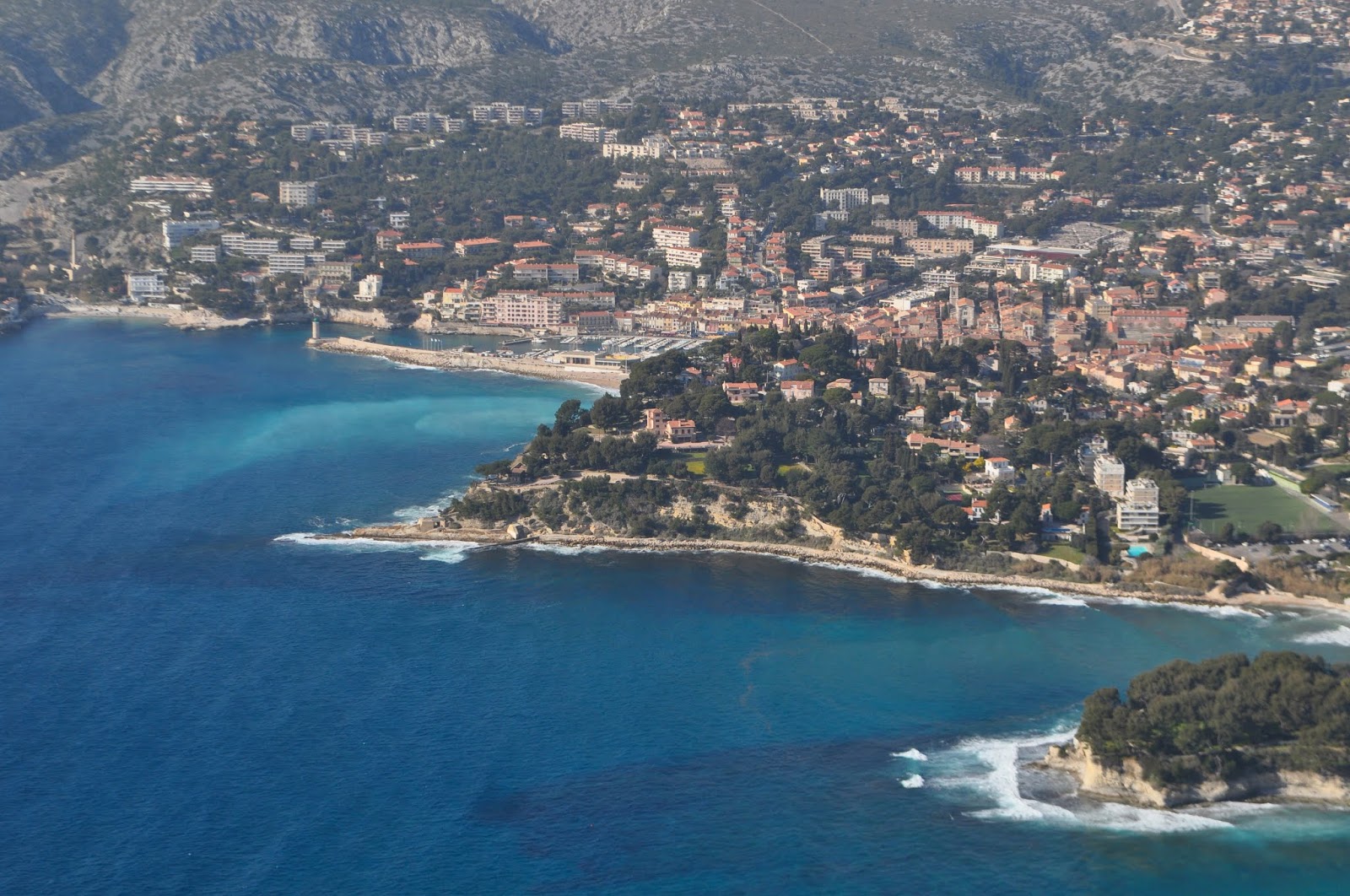
Cassis is a picturesque town a little over 1 and 1/2 hours from Sablet snuggled at the bottom of a steep bowl of land along the Mediterranean Sea between calanques (little coastal fjords with tall cliffs), about 25 km east of Marseille.

Cassis is on a steep hillside with vineyards and pastel-colored houses that tumble down to a seaside port lined with more pastel-colored houses, shops and restaurants with 8,000 inhabitants.

The area where Cassis now sits was first occupied between 500 and 600 BC by people from Liguria, a region of north-western Italy, who built a fortified habitation at the top of Baou Redon. These people lived by fishing, hunting, and farming.

If you go, I recommend you try to get to Cassis early in the morning since parking is often a challenge. From time to time, we have to park in a remote lot (Relais des Gourgettes) and hike or ride the navette (shuttle bus) to the port.

Port area where Quai des Baux and Quai Saint-Pierre meet

Cassis remains a small fishing port but the fishing boats now share the harbor with yachts and a collection of boats that tourists can book for visits to the nearby calanques. You will see traditional wooden fishing boats known as pointus tied up along the Quai des Baux.

Pointus, traditional wooden fishing boats tied up along Quai des Baux

The port is lined with tourist shops, terrace cafés and restaurants which offer a variety of food and prices. It's always great fun to watch people stroll down Quai des Baux while you soak up the sun in front of one of the cafes that line the port.

Restaurants along Quai des Baux

The fishermen sell their morning's catch quayside on tables near their boats. The selection changes daily as choice is selon arrivage (dependent on what they catch) that day.

Fisherman selling his morning catch quayside on the Quai des Baux

Over the years, many artists and writers have been attracted to Cassis. Frédéric Mistral, the Nobel Prize-winning author and defender of Provençal language and traditions, took a great fancy to Cassis, even though he was not a native of the town.

The writer famously declared, in Provençal, "Qu'a vist Paris, se noun a vist Cassis, pou dire, ‘n'ai rèn vist'." "He who has seen Paris but not Cassis can say, ‘I haven't seen anything'."

Cassis harbor

The Mediterranean coast near Cassis is known for the calanques ("fjords"), a series of white limestone rocks scored through with deep valleys that extend for almost 20 km (12.4 miles) along the Mediterranean between Cassis and Marseille.

A fun activity for Cassis visitors is a boat trip out to the calanques. There is a kiosk on Quai Saint-Pierre that sells tickets for all the charter boats that line the Cassis port for trips out to 3, 7 or 13 calanques. It takes about 45-minutes for a boat tour out and back to see 3 of the closest calanques.

Port Miou seen in the picture below is the closest calanques and easiest to reach from the center of Cassis. The Romans used Port Miou as a harbor. In fact, its name comes from the Latin portus melior: the best port. It's the deepest and most sheltered of the calanques between Cassis and Marseille.

The calanque of Port-Miou

Port Pin is the smallest and most intimate of the three calanques of Cassis. It is surrounded by Aleppo pine trees typical of this part of the Mediterranean.

The calanque of Port-Pin with its sandy beach surrounded by Pine trees

Port Pin boasts a small sand and shingle beach and the water here - emerald or turquoise depending on the light - is very clear and perfect for swimming.

A tourist boat leaving the calanque of Port-Pin

Limestone rock formation at the entrance to one of the calanques

En Vau is the most spectacular of the three calanques closest to Cassis and also the most difficult to get to. Extremely steep, it's popular with rock-climbers, there is a little shingle beach.

Entrance to En Vau calanque

Entrance to Cassis harbor

There are four public beach areas in Cassis. The Grand Mer beach is the main beach near the center of town and consists of sand and pebbles.

Cafes and houses along Quai Jean Jacques Barthélémy

Besides its stunning location and the calanques, Cassis is also famous for its wine. When you exit off the A50 auto route, the road down to Cassis is a winding road that goes past vineyards planted on steep hills between olive groves and country houses above Cassis.

The wineries of Cassis produce red, white and rosé wines but it's the white wines for which the appellation is best known. We like Cassis white and rosé wines a lot.

By the way, don't confuse the wines of Cassis with crème de cassis, a sweet black currant liqueur, a specialty of Burgundy which takes its name from black currants (cassis), not this town.


We have visited Cassis many times but never drove the route des Crêtes. So when Shirley and I went to Cassis last fall, we decided to drive to La Ciotat by way of the route des Crêtes and go back to Sablet that way.

The route des Crêtes (a generic term meaning "road across the crests"), is a 15 km (9 miles) stretch of road, that takes you between Cassis and La Ciotat, with 360 degree views over some of the most superb scenery in Provence along the way.

The route des Crêtes is closed to traffic (and hikers) on days of very strong wind and/or when fire risk is high. There are road signs as you approach it from Cassis and La Ciotat that will let you know if the road is open.
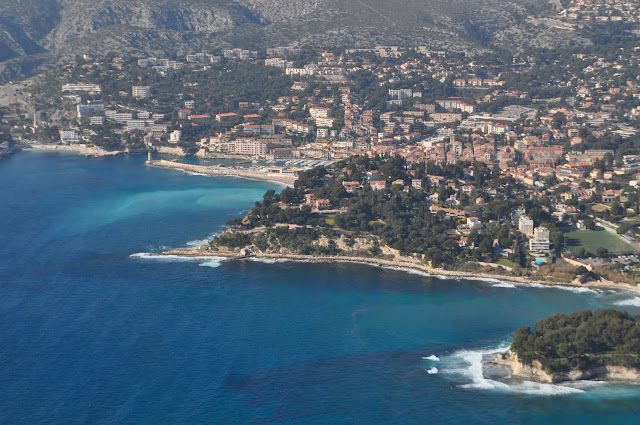
On the route des Crêtes between Cassis and La Ciotat

If you have comments or questions about Cassis, or elsewhere in Provence, please leave your comments below or send me an email at my address below.

If you are thinking about a trip to the South of France including spending time in Provence, we invite you to visit our website. Our house is available for rent by the week or more. We still have some weeks open in April, June, and August. You can reach us for further information by sending an email to chcmichel@aol.com.

Saturday, February 22, 2020

Tuesday morning at the Vaison-la-Romaine weekly market, our favorite time in the week

We plan our days in Sablet around the Tuesday morning market in Vaison-la-Romaine. Tuesday mornings, rain or shine, always finds us leaving the house early for the trip to Vaison-la-Romaine.

If you don't know, Vaison-la-Romaine is a quick 6 mile trip down a winding road and then left around the round-about across the Ouvèze River. Vaison-la-Romaine is divided by the Ouvèze River into two parts; on the left bank is the old medieval town with the Castle of the Counts of Toulouse at the highest point shown in the photograph below and on the right bank is the ancient Roman colony and modern town.

We try to get to the market shortly after 8:30 in the morning. Yes, I know it is early to be out and about while you are on vacation. But take my advice, it will be much easier to find parking. By 10:00, it will be difficult to find any parking, let alone a convenient spot close to the market area.

Also, by 10:00, the streets will be crowded with people trying to make their way through the market and it's not so much fun in my opinion. So we get through the market and retire to one of the Cafés that line Place Montfort for a petit Café, hopefully with friends.

Vaison-la-Romaine medieval upper town

After we park, usually near Notre-Dame-de-Nazareth Cathedral, we walk along the north side of the Cathedral past a very large field of Roman ruins which border the path to the main market area. I am embarrassed to say we don't give much more thought to these ruins as we walk pass them than we do to walking past houses in our California neighborhood.

Path to market area along La Villasse ruins

What makes these Roman ruins unique in my opinion is that they are ruins of a village with streets and shops and houses, rather than individual ruins like the Arena in Nîmes or at the Pont du Gard, the Roman aqueduct bridge built in the first century AD, so you get a sense of the overall layout of the town.

La Villasse

The Roman ruins in Vaison-la-Romaine are spread over two sites; Puymin adjacent to the Office of Tourism with its Musée Théo Desplans (museum) and Théâtre Antique (Roman theater) built in the first century AD and La Villasse which we pass on our walk up to the market.

These are ruins of shops along the central street of La Villasse. The Romans were very practical and built one street for chariots and a parallel footpath for pedestrians covered by a portico (many of the columns remain in place) to shelter the stalls and people from the sun and bad weather.

La Villasse

Public bath in La Villasse


One of the best things about owning or renting a house in Provence, in my opinion, is the chance to cook some of the amazing produce, seafood, cheese and meats you find at the various weekly markets as you travel around Provence. And let me tell you, the weekly market in Vaison-la-Romaine is one of the biggest and best.

By contrast when you stay in a hotel or similar accommodation, you will walk through markets, and look, sniff and drool about the possibilities that lie before you on those artfully displayed tables. You will undoubtedly buy a few things for a snack or picnic, but you won't experience the satisfaction that comes from eating a home-cooked meal on your terrace with ingredients bought at that's morning market.

Cours Taulignan in Vaison-la-Romaine

The weekly market is a kaleidoscope of colors and smells of Provence with up to 450 vendors in the summer (pottery, arts and crafts, food stalls of all kinds, local fruits and vegetables, linens, soap, regional specialties, clothing) and spreads out over Place Montfort, the main square in the center of town and nearby streets.

Most of the fish, meat, cheese, fruit and vegetable sellers set up their stands on Cours Taulignan or on one of the cross streets. The market is an ancient tradition dating all the way back to 1483.

The photographs which follow show a few of the offerings on display when we were at the market last fall. To confirm the obvious, the offerings at the market change from season to season, ensuring that you have the freshest and most seasonal ingredients to cook.

Garlic strings from the Tarn

There are several vendors selling olives and tapenades

Even though it was October, we were able to find some nice fresh, tasty tomatoes, that were the base for several salads during our sejour in Sablet.

Last of the season's tomatoes

Olive oils and tapenades

Fresh Cèpes, Porcinis or by whatever name you call them are delicious. Don't touch!

Other varieties of mushrooms

Figs and prunes

Fennel, Eggplants and Peppers

Several cheese vendors set up shop at the market every week. Full disclosure, I don't buy from any of them since I am partial to the cheese that Josiane Deal sells at her wonderful shop called Lou Canesteou just a few steps away on Rue Raspail off Place Montfort, the town's main square.

Freshly-made artisan cheese

Our favorite fishmonger. He also comes to Sablet on Friday mornings

There are a number of butchers you can check out

You have to have spices for cooking. In Provence, spices are not sold in the market in little jars or packages. Buy only what you are going to use for a week or two as there is no reason to use stale spices since you don't have to buy a jar which might last 6 months or more.

Spices are displayed, uncovered, on tables like these and sold in sachets based on how much you want

There are olive groves every where so it is not surprising that there are kitchen utensils and dishes made from olive wood for sale in the market.

Utensils made from olive wood

Hand painted images of the Provence countryside. If you have been to our house, you will probably recognize the artist.

If you want to learn to cook some typical Provençal dishes from seasonal ingredients at the market, I recommend you contact our friend Barbara. Barbara is a contemporary art critic turned chef/cooking instructor at Cuisine de Provence cooking school she runs out of her beautiful home in Vaison-la-Romaine. Quite a few of our guests have taken classes and so have I and she is recommended in Rick Steves' guide to "Provence and the French Riviera".

If you have comments or questions about Vaison-la-Romaine, or elsewhere in Provence, please leave your comments below or send me an email at my address below.

If you are thinking about a trip to the South of France including spending time in Provence, we invite you to visit our website. Our house is available for rent by the week or more. We still have some weeks open in April, June, last part of July and August. You can reach us for further information by sending an email to chcmichel@aol.com.