Showing posts with label Sault. Show all posts

Thursday, July 22, 2021

The Hunt for Lavender Fields

As I told you in my previous post about my favorite things in Provence, one of them is finding purple fields of lavender under a brilliant blue summer sky. So of course, our first outing after arriving back in Sablet after our long absence due to the pandemic, was to go to Sault to see if we could find lavender fields that had not been cut. 

From previous visits, we know that the town of Sault is famous for its many fields of lavender spread around the town. The town spreads out along a ridge above lavender fields in the north-east part of the Vaucluse department about one hour from Sablet. The name Sault comes from "Saltus" referring to the forests that covered the area.


Sault

Sault is know for its lavender festival held every year on the 15th of August where games, competitions, or any activities that have to do with lavender, are held. 


War Memorial in Sault


Center of Sault

The area around Sault is also home to many fields of spelt, the ancient form of wheat grown by the Gauls and now popular with chefs and highly appreciated for its nutritional value and taste.

Church of Notre Dame de la Tour in Sault.

Sault is also popular with cyclists because of its proximity to Mont Ventoux. The climb from Sault is considered to be the easiest route to the top of Mont Ventoux with an average gradient of 4.4%.


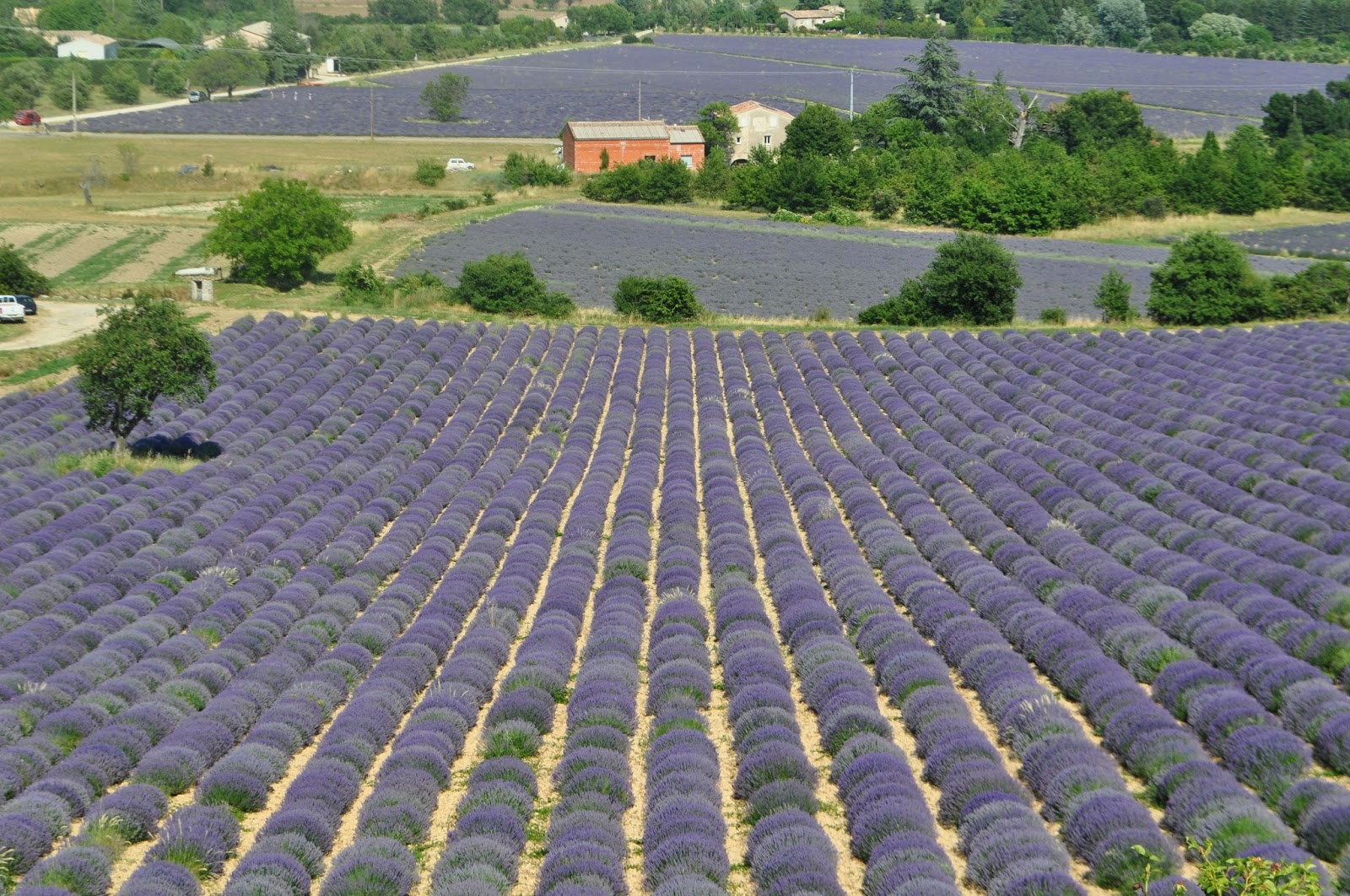
View of Patchwork of Lavender Fields near Sault

We were worried that because harvest starts mid-July that we might have missed the lavender season for this year. But fortunately as you can see in the pictures which follow, we found plenty of lavender. 


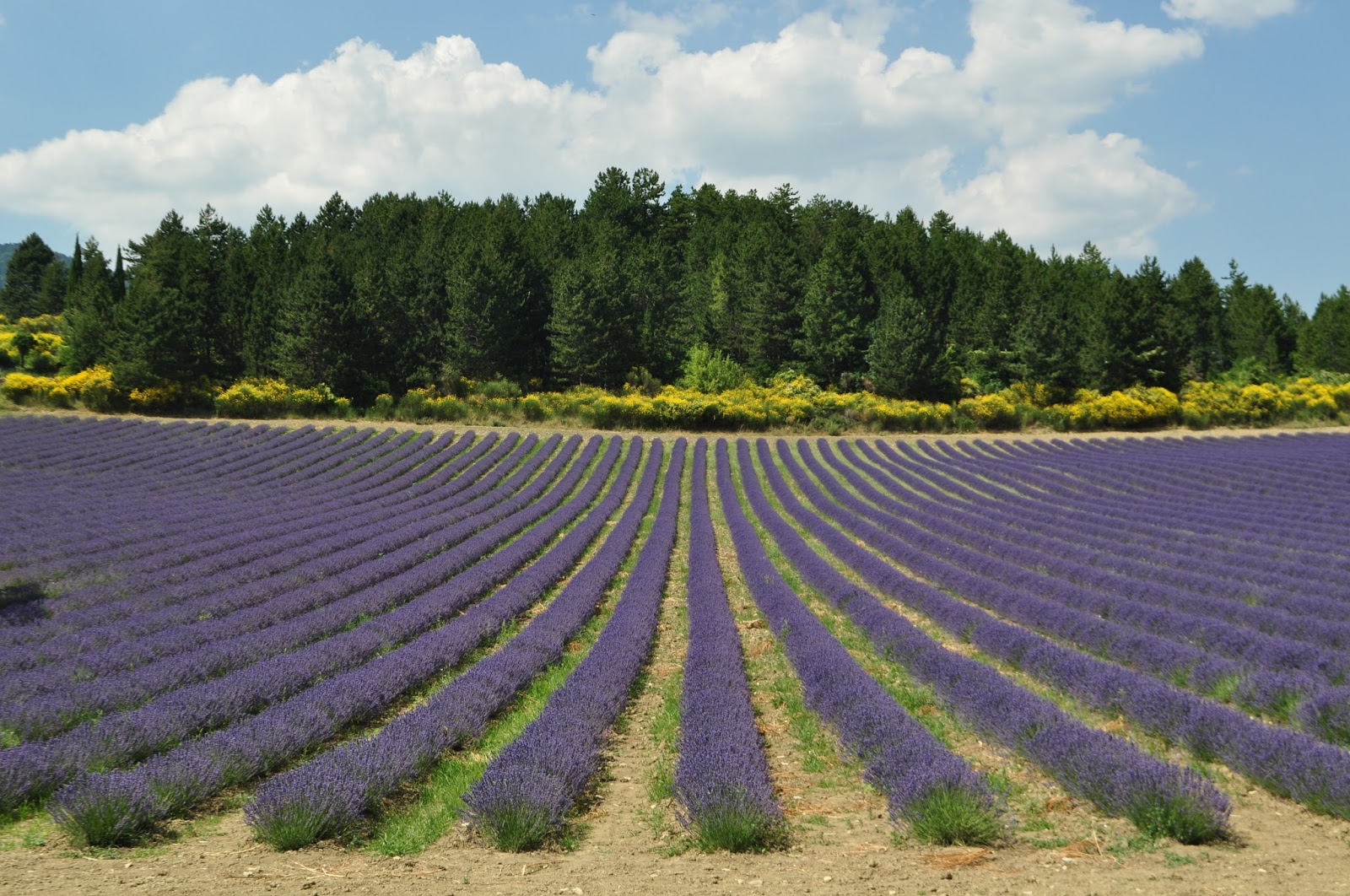
Lavender Field 


Lavender Field


Lavender Field


Lavender Field

Aurel is a perched village between Sablet and Sault with a joined 12th century church and 13th century chateau at the top of the village. There are also a lot of lavender fields around Aurel. 


Aurel


Lavender Field near Jonquières


Mont Ventoux from the Road to Sault

Sunday, November 18, 2018

Le 6 à Table Restaurant, Caromb

As wife Shirley tells everybody, "Michel is a list person". And yes, when it comes to restaurants and most anything that is related to food or wine, I'm usually drawn to places which are on a list of "best" in the area. That is why we headed to Caromb to meet friends one evening a few months ago to dine at Le 6 à Table Restaurant, a new addition to the Bib Gourmand restaurants in the Michelin Guide.

Caromb is a small village located about 20 kms from Sablet between Mont Ventoux and the Dentelles de Montmirail. Caromb is memorable for me as the location of a restaurant called Le Four à Chaux where we and our Bistro des Copains team who were lodged in nearby Mormoiron dined the first night of a memorable trip to Provence back in January 2007.

Entrance to Caromb

There are quite a few fountains in Caromb, many from the 18th and 19th centuries. The most well known is the Fountain du Portail du Rieu, on the main road in the village in front of the Medieval entry, and popular with the many cyclists who pedal by on their way to or from Mont Ventoux.

Center of Caromb

Le 6 à Table is located in the center of Caromb across from the church. It is owned by chef Pascal Poulain and his wife Claire. The name comes from its location at 6 Place Nationale. As I mentioned at the beginning of the post, the first place we ever dined in Provence was called Le Four à Chaux. In an interesting coincidence, the restaurant where the chef first cooked was Le Four à Chaux which at the time was owned by his father.

Le 6 à Table Restaurant

We arrived with friends Robert and Barbara of Vaison-la-Romaine culinary school Cuisine de Provence and shown to our table in the dining room. After catching up, we perused the wine list and were delighted to find a wine from Corinna Faravel's Domaine Martinelle on the list. In another bit of coincidence, wine from Martinelle appeared on Bistro Des Copains' wine list from time to time.

Domaine Martinelle Beaumes De Venise

After we ordered wine, the chef sent out his amuse bouche for the evening, a little bite of Chèvre from Le Barroux with cherry tomato. An amuse bouche of some type, sometimes as simple as olives or tapenade almost always accompanies a meal in a French restaurant. The term literally means "mouth amuser" and serves to prepare guests for the meal and/or offer a preview of the chef's cooking style. I just posted on Facebook about my family's tie to Le Barroux. You might want to check it out.

Amuse Bouche of Chèvre from Le Barroux with cherry tomato

What follows are photographs of a starter and main course and the desserts.

Starter of Provence asparagus with Salmon eggs and Sabayon sauce

Shirley was happy to see a Spelt risotto accompanied the fillet of fish. Until we started spending time in Sablet, we had never encountered Spelt, an ancient grain cultivated on the plateau of Sault (1 hour from Sablet) and harvested in August. It was plentiful in the Roman era, it was only rediscovered by the general public about thirty years ago. You find it frequently on restaurant menus around Sablet. It has a sweet, nutty chewiness that we love.
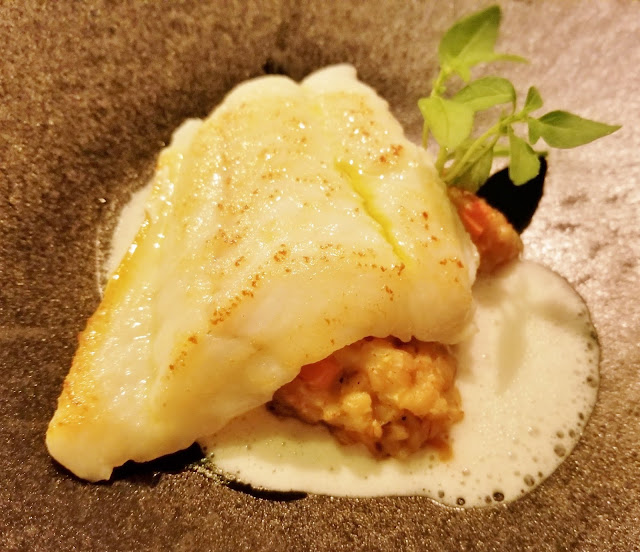
Fillet of wild Barbue (species of fish in the Turbot family) with Spelt risotto

Molten chocolate cake with strawberry sorbet

Mille Feuille with strawberries and coconut ice cream

We had a wonderful time at Le 6 à Table, a convivial evening with dear friends, excellent wine and delicious and beautifully presented food. I highly recommend you plan to dine here if you happen to be spending time in or around Sablet. You won't regret it.

Le 6 à Table
6 Place Nationale
84330 Caromb
Tel: +33 4 90 62 37 91
website: http://pascal-poulain.com/

Monday, October 31, 2016

Lavender fields in Vaucluse and nearby Drôme Provençale

It's a toss up between coquelicots (red poppies) and lavender but probably no other scent or sight says Provence better than the pungent aroma of a purple field of lavender growing in mounded rows under a brilliant blue summer sky.

We were lucky that it was lavender season when we were in Sablet last summer with our daughter Tricia, husband Alvin and grandkids Avery and Caedon. The pictures which follow show the lavender fields we found during outings to the Drôme Provençale area west of Nyons, the Sénanque Abbey and to Sault.

Three species of lavender grow in Provence: true lavender (lavande) is found high up in dry, rocky soil. Aspic which grows lower down is similar to lavande except it has broader leaves and its branches hold a number of stems. And less refined, lavandin is a hybrid of lavande and aspic.

Lavande is most highly regarded by perfume makers for its sweet essential oils, though aspic and especially lavandin are more productive and therefore more common - ending up in laundry and household products.

Lavender field in the Drôme Provençale

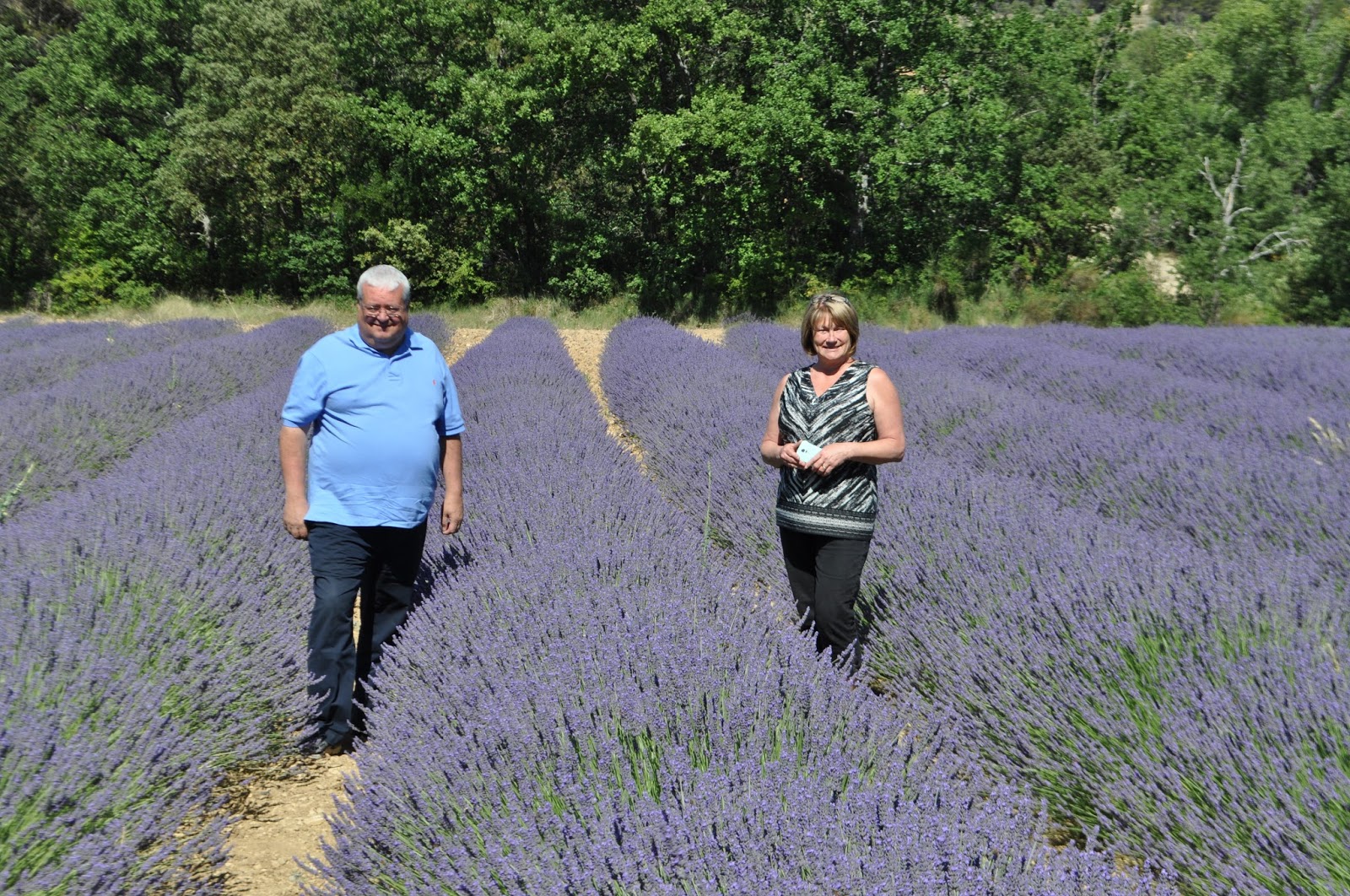
Me and my love in a lavender field in the Drôme Provençale

Alvin and Tricia in a lavender field in the Drôme Provençale

The Sénanque Abbey is a beautiful Cistercian abbey located in the deep Senancole valley a short distance north of Gordes and well worth a visit anytime you are in the area. But the best time to go is when the lavender fields that stretch out from the Abbey are in full bloom.

The Sénanque Abbey was founded in 1148 under the patronage of Alfant, bishop of Cavaillon, and Raymond Berenger II, Count of Provence, by Cistercian monks who came from Mazan Abbey in the Ardeche. In the 13th and 14th centuries, the Abbey reached its greatest height, operating four mills, seven granges and possessing large estates in Provence

During the Wars of Religion, the quarters for the lay brothers were destroyed and the Sénanque Abbey was ransacked by Huguenots. At the French Revolution, the Abbey's lands were nationalized, the one remaining monk was expelled and Sénanque itself was sold to a private individual.

The site was repurchased in 1854 for a new community of Cistercian monks of the Immaculate Conception, under a rule less stringent than that of the Trappists. The community was expelled in 1903 and departed to the Order's headquarters, Lerins Abbey on the island of St. Honorat, near Cannes. A small community returned in 1988.

Sénanque Abbey

The Sénanque Abbey is an active community with a handful of elderly monks. The monks grow the lavender and tend to honey bees to earn income for living and upkeep of the Abbey.

Lavender field near Sénanque Abbey

The Sénanque Abbey along with two other early Cistercian abbeys in Provence, Silvacane Abbey and Le Thoronet Abbey, are sometimes referred to as the "Three Sisters of Provence"

Sénanque Abbey

Lavender field near Sénanque Abbey

Lavender field on the way to Sault

Lavender fields on way to Sault

Lavender field on way to Sault

Lavender field on way to Sault

Lavender field on way to Sault

Lavender field on way to Sault

Lavender field on way to Sault

Lavender field on way to Sault

Lavender field on way to Sault

Lavender field on way to Sault

Lavender field on way to Sault

Lavender field on way to Sault

Lavender field on way to Sault

Lavender field on way to Sault

Lavender field on way to Sault

Another view of same lavender field

Lavender field near Sault

View of the patchwork of lavender fields visible from Sault

Sault is an old fortified village that sits on a ridge overlooking a large valley dotted with lavender fields about one hour from Sablet. The name Sault comes from "Saltus" referring to the forests that covered the area.

Lavender field below Sault

Lavender field near Sault

Lavender field near Sault

Shirley in lavender field near Sault

Lavender field near Sault

Lavender fields near Sault

Lavender fields with Sault in distance

Close up of previous lavender field near Sault

We don't get to be in Sablet during the summer every year so we miss out on the lavender most years, which is obviously a mistake.