Blogs are a wonderful way to make friends with people that you wouldn't otherwise ever meet as all of you who have blogs well know. The best is when you get a chance to meet one of your cyber friends or a reader of your blog in person.
I have had the chance to do this several times including a day last year when we met up with Sherry Long and her husband in Saint-Rémy-de-Provence. Sherry is the author of Dog Trots Globe: To Paris and Provence, which tells the story of Chula, a Sheltie who shares her dog's eye view of France.
If you have not read the book, you should, as it is absolutely charming. You will follow Chula as she sniffs her way around boulangeries, lavender fields, and big outdoor markets of Provence. In Paris, she trots across the Seine, stands on her hind legs in awe of the Eiffel Tower, and attends opening night at a gallery.
As I was saying, last year Sherry and I got to emailing back and forth and discovered that she and her husband live in Northern California and also have a home in Saint-Rémy-de-Provence and we agreed that we would meet for lunch as we were going to be in Provence at the same time. Unfortunately, Chula was not going to be there.
On the appointed day, we headed off to Saint-Rémy, which is about 60 kms south of Sablet, at the foot of the Alpilles Mountains. The birthplace of Nostradamus in 1503, Saint-Rémy is most associated with Vincent Van Gogh, who after cutting off his ear in 1888, committed himself to an asylum there, during which time he painted olive trees, irises and the nearby Alpilles on more than 150 paintings.
We have not spent any time in Saint-Rémy since we were there with some of our Bistro Des Copains employees on a market day in January when an icy cold Mistral was blowing, making it impossible for us to stay outdoors and we retreated to one of the few cafés open that day. Since it was again market day, we went early so we could walk around Saint-Rémy before meeting Sherry and her husband.
The Vielle Ville (old town) is encircled by a ring of plane tree-shaded boulevards. The most visible remains of Saint-Rémy's 14th-century defensive wall are the portes like this Portail Saint-Paul still in use today as the southern entrance into the center of town.
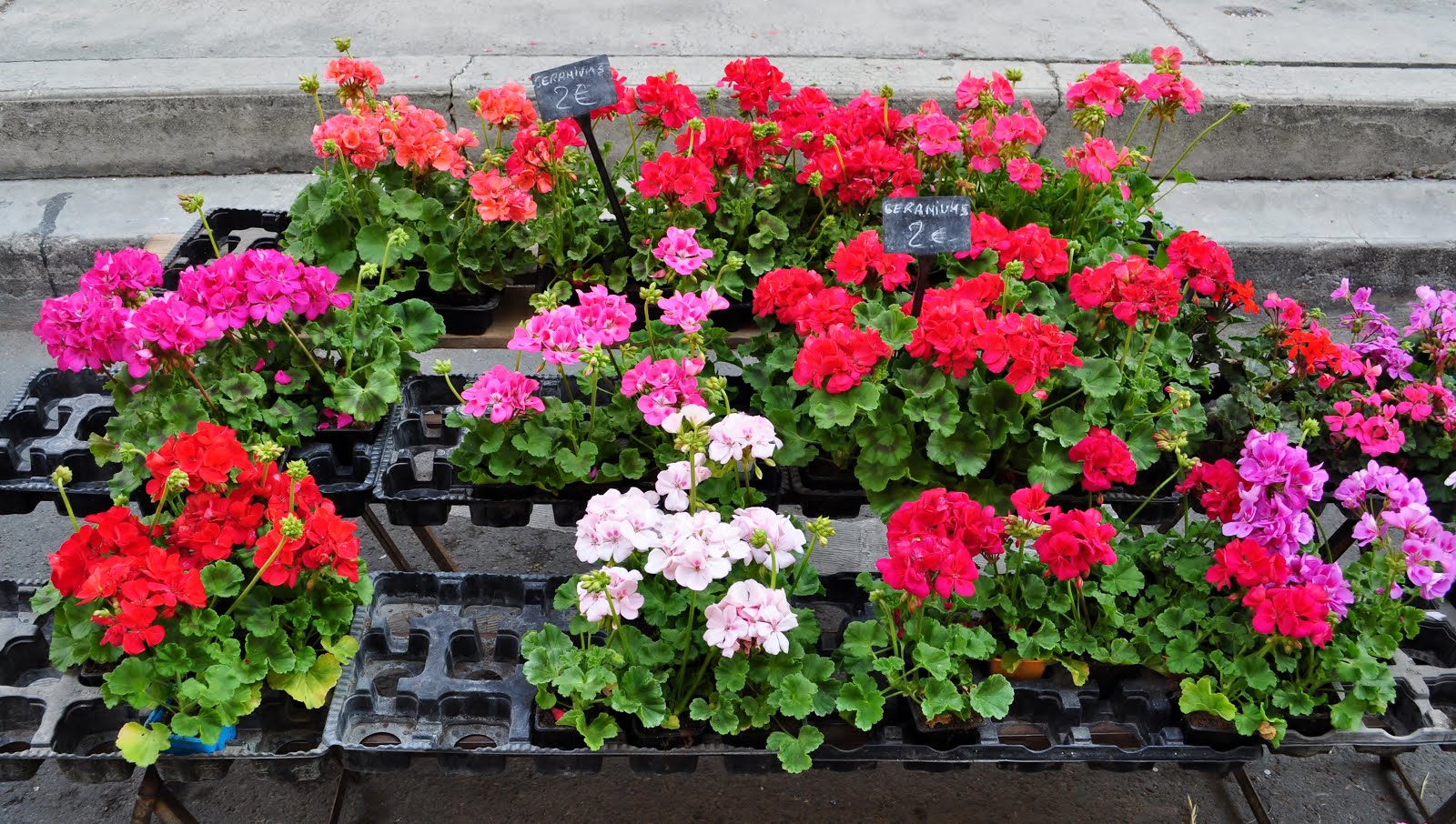
Here are a couple of pictures of what we saw as walked around Saint-Rémy, As I said, it was Wednesday, market day in Saint-Rémy so we walked through the market stalls to see what was offered for sale including this pretty display.
Flowers
A display of items for sale to tourists.
An old stone arch entryway.
The old town is full of narrow streets with restaurants, cafés, tourists shops, trendy boutiques and art galleries.
Sherry had made reservations for lunch at Le Bistrot du Paradou, a favorite foodie destination for many years but a place we had not been. So I was most excited about finally going there.
Le Bistrot du Paradou is located about 12 kms southwest of Saint-Rémy in the tiny village of Paradou.
The restaurant is located in a traditional building, shaded by ancient plane trees. Although Mireille and Jean-Louis Pons who ran this lively bistrot for many years are no longer a presence there, the kitchen is still overseen by longtime chef Vincent.
A pretty mural next to the entrance to Le Bistrot du Paradou.
The dining room is country bistro in style: stone walls, wood-beams on the ceiling, zinc-topped tables, a large bar and black and white photos of celebrities on the walls.
The restaurant offers only a daily set menu that cost €42 at lunch when we were there, higher in the evening, and includes starter, main course, cheese, choice of desserts, wine and coffee.
The menu varies by the season and by the day of the week with choices including tête de veau, lamb, spit roast Bresse chicken, cassoulet and aioli. They don't advertise it but the kitchen usually has options available for diners who have food allergies or dietary preferences.
Wine is included with your meal and a bottle of Mont-Redon Côtes du Rhône was set on our table and a second one later when we had finished the last delicious drop.
Dishes are served family style. The starter that day was a frisée salad with croutons, lardons and hard boiled eggs with a tasty vinaigrette.
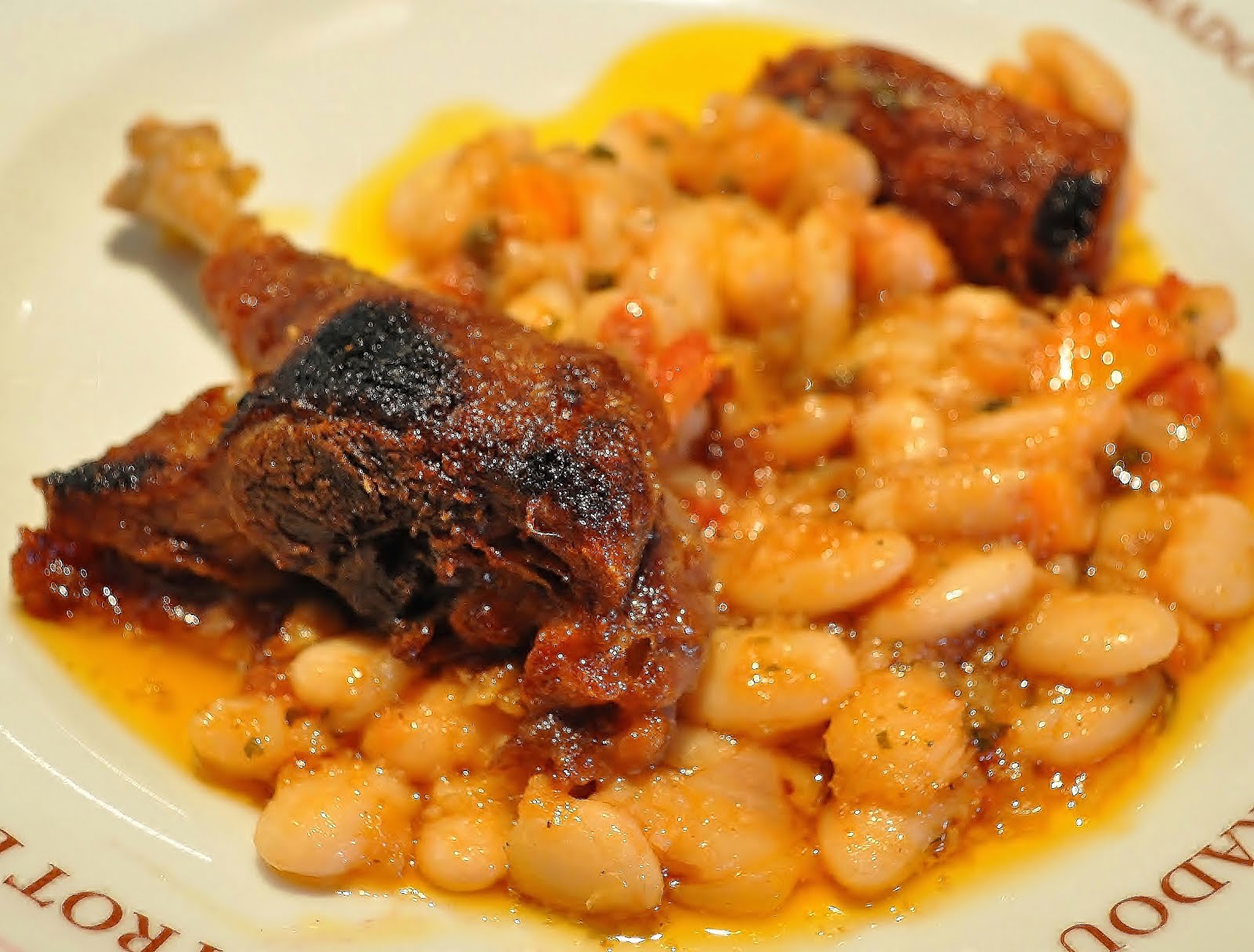
Being Wednesday, the main course offering was cassoulet. A big cassole, a conical earthenware container, glazed inside, the traditional vessel used for making cassoulet, filled to the brim with cassoulet was set in the middle of our table. The aroma which came out of that steaming dish made your mouth water.
We helped ourselves to plates of white beans, duck confit, meat and sausages in a rich tomato sauce. We all spooned second and third portions of this delicious dish on our plates.
Shirley is mostly vegetarian and the kitchen was happy to accommodate her with this tasty plate of Provençal vegetables.
When we exhausted our ability to eat anymore cassoulet, our table was cleared and a wicker platter of cheese was brought to the table for us to serve ourselves as many as we wanted to try.
Dessert choices included this chocolate mousse; and
ice cream. We finished with espressos.
As we headed back to Sablet, we passed this field with sheep. It reminds me that we must be in Provence when a Fête de la Transhumance takes place in Saint-Rémy on Pentecote Monday (50 days after Easter).
By the end of May, when there is little rainfall, the grass can no longer feed the sheep and water becomes scarce, these sheep and thousands more begin their journey towards the high mountain pastures. Today carried by truck, this trip, done by foot in the past, involved more than 10 days of walking.
At the Saint-Rémy Fête de la Transhumance, more than 3000 sheep from the Alpilles as well as goats and donkeys, accompanied by their shepherds in traditional costume along with their sheep dogs, parade twice around the boulevards that ring the old town center.
It was wonderful to meet Sherry and her husband and get the chance to try Le Bistrot du Paradou. We still have not really explored Saint-Rémy so we will return and dine at Le Bistrot du Paradou.
While it's not inexpensive to dine there, I think it's relatively good value given the quality, multiple courses, good wine and friendly service that comes with your meal. Reservations are definitely recommended, especially in high season. You may wish to check to see what will be served that day.
Le Bistrot du Paradou
57 Avenue de la Vallée des Baux
13520 Paradou
Tel: 04 90 54 32 70
No website
We have a beautiful stone village house located in the heart of the medieval village of Sablet in the Vaucluse region of Provence France. Dating from the 17th century, the house was renovated by an Italian stone mason with all of the comforts of a modern home while retaining its authentic Provençal character and charm. On this blog, we share experiences from our visits along with those of our families and friends to Sablet and the South of France.
Sunday, January 13, 2013
Sunday, January 6, 2013
My New Year's Cooking Challenge
Happy New Years!
If you are a regular reader of Our House in Provence blog, you know that I am a "foodie". I love to eat, cook, read and talk about food and restaurants. I guess that's how we ended up as co-owners of a small French bistro in Northern California called Bistro Des Copains.
I used to subscribe to almost every cooking magazine there is but I don't do that anymore except for "Saveur" and "Cook's Illustrated". In my opinion, in an effort to compete with all of the cooking shows and channels that populate daily TV, the magazines have been redesigned and content dummed down to keep their readers.
While I don't read food magazines like I used to, I love cookbooks and continue to get new ones about foods I like to eat and cook. In the dining room adjacent to our Northern California kitchen, I have two tall bookcases full of cookbooks. At last count, I had over 250 of them.
My family loves when I cook but I don't have time except for weekends and then cook only if Shirley is not working at the hospital. Although I have all these cookbooks, you probably aren't surprised that I usually do the same salads and cook the same pastas, risotto, and fish over and over.
A few weeks ago on a Saturday before Christmas, we were eating lunch and we started talking about my cookbook library and that I had requested, as usual, cookbooks for Christmas. Shirley suggested that my New Year's resolution should be to cook a new recipe out of a different cookbook every week. So 52 new recipes from 52 cookbooks during 2013.
Because I like a challenge and want to try new recipes, I have accepted Shirley's challenge as one of my New Year's resolutions. So in between my posts about our lives in Provence, I will share some of the recipes that we think are particularly good and think you should try.
For my first week, I chose recipes from "Patina Cookbook" by chef Joachim Splichal. Patina was a fabulous restaurant in Los Angeles on Melrose Avenue where I had the chance to dine a few times before it relocated to downtown Los Angeles. In addition to Patina, chef Splichal opened Pinot Blanc, a restaurant we really liked in nearby Napa Valley.
My Patina menu consisted of a first course "Salad of Corn" with sauteed potato, frisée and corn with a balsamic vinaigrette.
For our main course, I made the "Sea Bass" with creamy lentils and garlic infusion with baby carrots and pearl onions. As you can see, I substituted salmon for sea bass which I could not find. This was the best lentil dish I have ever tasted. Although it's time consuming, I will definitely make this dish again and again.
The piece de resistance though was the "Chocolate Croissant Pudding" with Wild Turkey Sauce, the best bread pudding according to Stephanie, a bread pudding aficionado, she has ever had. Served warm, it was almost like a chocolate fondant cake, all warm and gooey bittersweet chocolate inside.
Chocolate Croissant Pudding
with Wild Turkey sauce
Serves 6
Wild Turkey Sauce
1 cup milk
1/2 vanilla bean, halved lengthwise and seeds scraped out
4 large egg yolks
1/4 cup granulated sugar
1 tablespoon Wild Turkey whiskey
In a small sauce pan, combine the milk with the vanilla bean and seeds and bring just to a boil. Remove from heat and allow to infuse for 5 minutes, then strain out the vanilla pod. Whisk the egg yolks together with the sugar until the mixture is pale and thickened. Pour about a quarter of the hot milk into the egg mixture and mix until well combined, then return the yolk mixture to the pot with the rest of the milk and, over medium-low heat, stir until thickened. Do not allow the mixture to boil. Strain it through a strainer into a clean pan and add the Wild Turkey. Cool the sauce and refrigerate, covered, until chilled.
Croissants
4 croissants, cut in half horizontally
Preheat the oven to 450 degrees F(230 C). On a baking sheet, toast the croissant halves until golden, about 6 minutes, watching carefully as they burn easily. Remove from the oven and, when cool, cut the croissants up into 1/2 inch pieces and set aside. Reduce the oven to 350 degrees F (175 C).
Custard
2 cups heavy cream
1/4 vanilla bean, halved lengthwise and seeds scraped out
5 large egg yolks
1/4 cup plus 2 tablespoons granulated sugar
In a medium saucepan, heat the cream and the vanilla bean together over medium-high heat. Bring the cream to just below boiling point, then remove from the heat and allow to infuse for 5 minutes. Strain out the vanilla pod. In a medium mixing bowl, whisk the egg yolks and sugar together until the mixture is pale and thickened. Gradually whisk the warm cream into the egg yolks and then return the mixture to a clean saucepan. Over medium-low heat, bring the mixture up to just below boil, stirring all the time until thickened, and immediately remove it from the heat.
Finishing
The reserved toasted croissant pieces
8 ounces bittersweet baking chocolate, cut into 1/2 inch chunks. True confession, I used 10 ounces bittersweet baking chocolate chips.
1 tablespoon confectioners' sugar
Arrange an equal amount of toasted croissant pieces in each of six-eight ounce ramekins or ovenproof bowls (I used 10 ounce ramekins). Distribute the chocolate chunks evenly among the ramekins. Spoon the warm custard over the mixture, pressing down with a fork to be sure all the pieces of croissant are soaked in the custard, and cover each ramekin tightly with aluminum foil.
Place the ramekins in a roasting pan and pour in enough very hot water to come halfway up their sides. Bake in the hot oven for 15-20 minutes, or until just set, then pierce the foil with a toothpick to release the steam and let stand for 5 minutes before removing the rest of the foil. (Note: At this stage you could cool and refrigerate the pudding for several hours or overnight. Warm them through in a 400 degree F (205 C) oven for 4 to 5 minutes before serving.)
When you are ready to serve, dust the top of each warm pudding with a little powdered sugar and serve the the chilled sauce in a sauce boat on the side.
In the words of Jacques Pepin, I wish you happy cooking. Bonne journée mes amis et à bientôt.
If you are a regular reader of Our House in Provence blog, you know that I am a "foodie". I love to eat, cook, read and talk about food and restaurants. I guess that's how we ended up as co-owners of a small French bistro in Northern California called Bistro Des Copains.
I used to subscribe to almost every cooking magazine there is but I don't do that anymore except for "Saveur" and "Cook's Illustrated". In my opinion, in an effort to compete with all of the cooking shows and channels that populate daily TV, the magazines have been redesigned and content dummed down to keep their readers.
While I don't read food magazines like I used to, I love cookbooks and continue to get new ones about foods I like to eat and cook. In the dining room adjacent to our Northern California kitchen, I have two tall bookcases full of cookbooks. At last count, I had over 250 of them.
My family loves when I cook but I don't have time except for weekends and then cook only if Shirley is not working at the hospital. Although I have all these cookbooks, you probably aren't surprised that I usually do the same salads and cook the same pastas, risotto, and fish over and over.
A few weeks ago on a Saturday before Christmas, we were eating lunch and we started talking about my cookbook library and that I had requested, as usual, cookbooks for Christmas. Shirley suggested that my New Year's resolution should be to cook a new recipe out of a different cookbook every week. So 52 new recipes from 52 cookbooks during 2013.
Because I like a challenge and want to try new recipes, I have accepted Shirley's challenge as one of my New Year's resolutions. So in between my posts about our lives in Provence, I will share some of the recipes that we think are particularly good and think you should try.
For my first week, I chose recipes from "Patina Cookbook" by chef Joachim Splichal. Patina was a fabulous restaurant in Los Angeles on Melrose Avenue where I had the chance to dine a few times before it relocated to downtown Los Angeles. In addition to Patina, chef Splichal opened Pinot Blanc, a restaurant we really liked in nearby Napa Valley.
My Patina menu consisted of a first course "Salad of Corn" with sauteed potato, frisée and corn with a balsamic vinaigrette.
For our main course, I made the "Sea Bass" with creamy lentils and garlic infusion with baby carrots and pearl onions. As you can see, I substituted salmon for sea bass which I could not find. This was the best lentil dish I have ever tasted. Although it's time consuming, I will definitely make this dish again and again.
The piece de resistance though was the "Chocolate Croissant Pudding" with Wild Turkey Sauce, the best bread pudding according to Stephanie, a bread pudding aficionado, she has ever had. Served warm, it was almost like a chocolate fondant cake, all warm and gooey bittersweet chocolate inside.
Chocolate Croissant Pudding
with Wild Turkey sauce
Serves 6
Wild Turkey Sauce
1 cup milk
1/2 vanilla bean, halved lengthwise and seeds scraped out
4 large egg yolks
1/4 cup granulated sugar
1 tablespoon Wild Turkey whiskey
In a small sauce pan, combine the milk with the vanilla bean and seeds and bring just to a boil. Remove from heat and allow to infuse for 5 minutes, then strain out the vanilla pod. Whisk the egg yolks together with the sugar until the mixture is pale and thickened. Pour about a quarter of the hot milk into the egg mixture and mix until well combined, then return the yolk mixture to the pot with the rest of the milk and, over medium-low heat, stir until thickened. Do not allow the mixture to boil. Strain it through a strainer into a clean pan and add the Wild Turkey. Cool the sauce and refrigerate, covered, until chilled.
Croissants
4 croissants, cut in half horizontally
Preheat the oven to 450 degrees F(230 C). On a baking sheet, toast the croissant halves until golden, about 6 minutes, watching carefully as they burn easily. Remove from the oven and, when cool, cut the croissants up into 1/2 inch pieces and set aside. Reduce the oven to 350 degrees F (175 C).
Custard
2 cups heavy cream
1/4 vanilla bean, halved lengthwise and seeds scraped out
5 large egg yolks
1/4 cup plus 2 tablespoons granulated sugar
In a medium saucepan, heat the cream and the vanilla bean together over medium-high heat. Bring the cream to just below boiling point, then remove from the heat and allow to infuse for 5 minutes. Strain out the vanilla pod. In a medium mixing bowl, whisk the egg yolks and sugar together until the mixture is pale and thickened. Gradually whisk the warm cream into the egg yolks and then return the mixture to a clean saucepan. Over medium-low heat, bring the mixture up to just below boil, stirring all the time until thickened, and immediately remove it from the heat.
Finishing
The reserved toasted croissant pieces
8 ounces bittersweet baking chocolate, cut into 1/2 inch chunks. True confession, I used 10 ounces bittersweet baking chocolate chips.
1 tablespoon confectioners' sugar
Arrange an equal amount of toasted croissant pieces in each of six-eight ounce ramekins or ovenproof bowls (I used 10 ounce ramekins). Distribute the chocolate chunks evenly among the ramekins. Spoon the warm custard over the mixture, pressing down with a fork to be sure all the pieces of croissant are soaked in the custard, and cover each ramekin tightly with aluminum foil.
Place the ramekins in a roasting pan and pour in enough very hot water to come halfway up their sides. Bake in the hot oven for 15-20 minutes, or until just set, then pierce the foil with a toothpick to release the steam and let stand for 5 minutes before removing the rest of the foil. (Note: At this stage you could cool and refrigerate the pudding for several hours or overnight. Warm them through in a 400 degree F (205 C) oven for 4 to 5 minutes before serving.)
When you are ready to serve, dust the top of each warm pudding with a little powdered sugar and serve the the chilled sauce in a sauce boat on the side.
In the words of Jacques Pepin, I wish you happy cooking. Bonne journée mes amis et à bientôt.
Saturday, December 29, 2012
Every Day is Market Day in Aix-en-Provence
We probably spend more time in Aix-en-Provence than any other town or village in the South of France except for Cassis, Sablet, our home away from Northern California or nearby Vaison-la-Romaine where we go to the weekly market.
We don't go to Aix-en-Provence for historical sites or for the museums but rather we go to shop and meet up with cousin Annick who lives close by. We love the outdoor markets, pretty squares, the Cours Mirabeau, the charming old historic town, the beautiful fountains, and the 17th and 18th century mansions.
Aix is home to some art schools and several universities, including some American, attracting a young population that gives the town youthful energy. It is said that of the 142,000 people who reside in Aix, some 40,000 are students. Founded in 123 BC by the Roman consul Sextius Calvinus, residents of Aix are called Aixois.
Aix-en-Provence hosts open-air markets every day of the week: there is a produce market daily at Place de Richelme, flea markets Tuesday, Thursday and Saturday at the Palace of Justice, flower markets on Tuesday, Thursday and Saturday at Place de l'Hôtel de Ville as well as a book market on the first Sunday of each month.
On a Thursday morning in October, we were off to Aix-en-Provence with two of Shirley's co-workers who were on their first visit to Provence. We got to Aix and and found parking in one of the public parking garages near the old town. We don't seem to find the same garage so we don't have a favorite place to park; we would love a recommendation from any of you who live close by.
As it turned out, the Thursday morning Flower market was in full "bloom" at Place de l'Hôtel de Ville. If you are interested, come along on our walk around Aix-en-Provence. I will include pictures of what we saw and what caught my eye. I will also give you a head's up about a place to eat the next time you are in Aix.
The clock tower, the former belfry of Aix-en-Provence and symbol of local government power, straddles the street on Roman foundations. Erected in 1510, the tower has two clock faces,a traditional face and below that, an astronomic clock that was added in 1661. Four wooden statues symbolising the four seasons appear in turn.
The tower of Saint Sauveur Cathedral rises over the bustling street filled with pedestrians.
The Hôtel d'Estienne de Saint Jean is said to be one of the finest mansions from the end of the 17th century. It's the work of Aixois architect Laurent Vallon. The finely carved door opens into a hall with a wrought iron balustrade. The main living areas, which still have parts of the 17th century decor, have housed the Musée du Vieil Aix (Museum of Old Aix) since the 17th century.
Pansies
Cyclamen.
Sunflowers
Variety of Lillies.
Eustoma.
Roses in multiple Colors.
More roses.
The flags fly on the Hôtel de Ville (town hall).
I think these are Kalanchoes.
Pretty, but don't know what it is. Do you?
Red roses.
The Hôtel de Ville, a building in the classical style of the middle of the 17th century, looks onto a picturesque square (Place de l'Hôtel de Ville). At its side, rises the clock-tower erected in 1510.
Cyclamen
Again, I think these are a variety of different Kalanchoes.
A variety of flowering plants including Azaleas, Kalanchoes, and Cyclamens.
A vendor waits for customers to buy his large variety of flowering plants.
A variety of flowers including Azaleas and Pansies.
Olive trees for sale.
A variety of flowering plants.
The Roman base of the clock tower.
Inspiration for a flowering garden.
The fountain of l'Hôtel de Ville (town hall) was decorated by Jean Pancrace Chastel who sculpted the gargoyles which spill water from the Pinchinats. The fountain which dates from 1756 supports a Roman column.
The Hôtel de Ville.
Nearby at Place de Richelme, the daily produce market was underway.
More of the produce market.
The fish mongers had their own spot in the market.
As you walk around Aix-en-Provence, you will spot many of these sculptured heads over doorways. I can't seem to find anything about them despite searching the internet and different guide books.
A plaque on a building commemorates the liberation of Aix-en-Provence on August 21, 1944 by the US Army's 3rd Infantry Division with participation from French forces since landing on the shores of Provence.
A close-up view of the face of the astronomical clock on the tower at l'Hôtel de Ville.
You also find niches for statues of saints and other religious figures such as the Madonna and child on the corners of buildings throughout the old part of Aix-en-Provence.
One of the many narrow streets in the old historic town.
A fountain that looks like it could also serve as a watering trough.
Another street corner. I love the detail.
Another view of the clock tower at l'Hôtel de Ville.
An interesting triangle-shaped building in the old town.
An ornate door and entry way.
The fountain at Place Albertas was constructed during the 19th century. In 1912, cracks in the stone made it necessary to replace it. It was reworked identically, but with a fountain basin made by students of the Aix School of Arts and Crafts.
The Cours Mirabeau is one of the most beautiful boulevards in the South of France. Created in 1650, it is one of the most popular and lively places in Aix-en-Provence. 440 meters long (1444 feet) and 42 meters wide (138 feet), it is lined with cafés, one of the most famous being Les Deux Garçons.
The plane-tree shaded Cours Mirabeau divides Aix into two parts, the Quartier Mazarin, or "new town", which extends to the south and west, and the Ville Comtale, or "old town", which lies to the north. The Cours Mirabeau is decorated by four fountains, the most impressive of which is La Rotonde, a large fountain that functions as a roundabout at one end of the street.
In the foreground of this picture I photographed back in March, you can see a mossy stump in the center of the boulevard which is the 17th century Fontaine Moussue which is fed by hot water.
The construction of the Rotunda fountain in 1860 at the end of Cours Mirabeau was unusual for Aix-en-Provence because of its size and because it was the first to have a water basin. Three statues: Justice, Agriculture and Fine Arts adorn the fountain and recall the main activities of the town. The fountain is at the former Porte Royale, for centuries the main entrance to the town.
A statue which represents arts and sciences on the north side of the Cours Mirabeau by Aix-en-Provence born sculptor François Truphème.
Shirley and friends at the fountain at Place des Augustins.
The clocher des Augustins (Augustine bell tower) stands over Rue Espariat; it's the only remnant from the old Augustinian convent which was built about 1292. The iron belfry was added in 1677.
Another sculptured head over an Aix-en-Provence door.
Another niche on a street corner with the Madonna and child.
Another corner niche with a statue.
South of the Cours Mirabeau is the Mazarin quarter. This residential district was constructed for the gentry of Aix-en-Provence by the brother of Cardinal Mazarin in the last half of the 17th century and contains several notable buildings including the thirteenth century church of Saint-Jean-de-Malte.
The fountain of the four dolphins, generally considered to be the most beautiful fountain in Aix, by sculptor Jean-Claude Rambot is in the heart of the Mazarin quarter and dates from 1667. The fountain flows into a circular basin of Sainte Baume stone.
When we took off for Aix that morning, I had it in my mind that we would go eat lunch at Le Poivre d’Ane, a restaurant at Place Forum des Cardeurs that Tuula over at Belle Provence Travels had written about on her blog.
While my female companions browsed through shops in the old town, I walked over to Place Forum des Cardeurs to make a reservation for lunch. Unfortunately, I discovered that Le Poivre d'Ane only serves dinner. Luckily, Place Forum des Cardeurs has quite a few restaurants that line the square, I checked out the menus on all of them before making a reservation at Bistrot des Philosophes.
All the restaurants that line the Place Forum des Cardeurs have seating on the square, and Bistrot des Philosophes is no exception. Here Shirley and her friends enjoy some rosé while they wait for lunch to be served.
Our lunch choices included this shrimp dish which looks very tasty but I can't recall what it was.
A seafood pasta.
Linguine with pistou, Shirley's choice as it was vegetarian.
A tasty beef fillet.
For dessert, a chocolate fondant, or molten chocolate cake with ice cream.
Our neighbor ordered this beautiful Grand Aïoli. I thought it was an amazing sight. By the end of the meal, she had done a good job with all those vegetables.
Our food was not refined but it was very good and service was super friendly, not something you always find in restaurants on busy town squares
Bistro des Philosophes
20 Place Forum des Cardeurs
13100 Aix-en-Provence
Tel: 04 42 21 64 35
Bonne journée mes amis et à bientôt.
We don't go to Aix-en-Provence for historical sites or for the museums but rather we go to shop and meet up with cousin Annick who lives close by. We love the outdoor markets, pretty squares, the Cours Mirabeau, the charming old historic town, the beautiful fountains, and the 17th and 18th century mansions.
Aix is home to some art schools and several universities, including some American, attracting a young population that gives the town youthful energy. It is said that of the 142,000 people who reside in Aix, some 40,000 are students. Founded in 123 BC by the Roman consul Sextius Calvinus, residents of Aix are called Aixois.
Aix-en-Provence hosts open-air markets every day of the week: there is a produce market daily at Place de Richelme, flea markets Tuesday, Thursday and Saturday at the Palace of Justice, flower markets on Tuesday, Thursday and Saturday at Place de l'Hôtel de Ville as well as a book market on the first Sunday of each month.
On a Thursday morning in October, we were off to Aix-en-Provence with two of Shirley's co-workers who were on their first visit to Provence. We got to Aix and and found parking in one of the public parking garages near the old town. We don't seem to find the same garage so we don't have a favorite place to park; we would love a recommendation from any of you who live close by.
As it turned out, the Thursday morning Flower market was in full "bloom" at Place de l'Hôtel de Ville. If you are interested, come along on our walk around Aix-en-Provence. I will include pictures of what we saw and what caught my eye. I will also give you a head's up about a place to eat the next time you are in Aix.
The clock tower, the former belfry of Aix-en-Provence and symbol of local government power, straddles the street on Roman foundations. Erected in 1510, the tower has two clock faces,a traditional face and below that, an astronomic clock that was added in 1661. Four wooden statues symbolising the four seasons appear in turn.
The tower of Saint Sauveur Cathedral rises over the bustling street filled with pedestrians.
The Hôtel d'Estienne de Saint Jean is said to be one of the finest mansions from the end of the 17th century. It's the work of Aixois architect Laurent Vallon. The finely carved door opens into a hall with a wrought iron balustrade. The main living areas, which still have parts of the 17th century decor, have housed the Musée du Vieil Aix (Museum of Old Aix) since the 17th century.
Pansies
Cyclamen.
Sunflowers
Variety of Lillies.
Eustoma.
Roses in multiple Colors.
More roses.
The flags fly on the Hôtel de Ville (town hall).
I think these are Kalanchoes.
Pretty, but don't know what it is. Do you?
Red roses.
The Hôtel de Ville, a building in the classical style of the middle of the 17th century, looks onto a picturesque square (Place de l'Hôtel de Ville). At its side, rises the clock-tower erected in 1510.
Cyclamen
Again, I think these are a variety of different Kalanchoes.
A variety of flowering plants including Azaleas, Kalanchoes, and Cyclamens.
A vendor waits for customers to buy his large variety of flowering plants.
A variety of flowers including Azaleas and Pansies.
Olive trees for sale.
A variety of flowering plants.
The Roman base of the clock tower.
Inspiration for a flowering garden.
The fountain of l'Hôtel de Ville (town hall) was decorated by Jean Pancrace Chastel who sculpted the gargoyles which spill water from the Pinchinats. The fountain which dates from 1756 supports a Roman column.
The Hôtel de Ville.
Nearby at Place de Richelme, the daily produce market was underway.
More of the produce market.
The fish mongers had their own spot in the market.
As you walk around Aix-en-Provence, you will spot many of these sculptured heads over doorways. I can't seem to find anything about them despite searching the internet and different guide books.
A plaque on a building commemorates the liberation of Aix-en-Provence on August 21, 1944 by the US Army's 3rd Infantry Division with participation from French forces since landing on the shores of Provence.
A close-up view of the face of the astronomical clock on the tower at l'Hôtel de Ville.
You also find niches for statues of saints and other religious figures such as the Madonna and child on the corners of buildings throughout the old part of Aix-en-Provence.
One of the many narrow streets in the old historic town.
A fountain that looks like it could also serve as a watering trough.
Another street corner. I love the detail.
Another view of the clock tower at l'Hôtel de Ville.
An interesting triangle-shaped building in the old town.
An ornate door and entry way.
The fountain at Place Albertas was constructed during the 19th century. In 1912, cracks in the stone made it necessary to replace it. It was reworked identically, but with a fountain basin made by students of the Aix School of Arts and Crafts.
The Cours Mirabeau is one of the most beautiful boulevards in the South of France. Created in 1650, it is one of the most popular and lively places in Aix-en-Provence. 440 meters long (1444 feet) and 42 meters wide (138 feet), it is lined with cafés, one of the most famous being Les Deux Garçons.
The plane-tree shaded Cours Mirabeau divides Aix into two parts, the Quartier Mazarin, or "new town", which extends to the south and west, and the Ville Comtale, or "old town", which lies to the north. The Cours Mirabeau is decorated by four fountains, the most impressive of which is La Rotonde, a large fountain that functions as a roundabout at one end of the street.
In the foreground of this picture I photographed back in March, you can see a mossy stump in the center of the boulevard which is the 17th century Fontaine Moussue which is fed by hot water.
The construction of the Rotunda fountain in 1860 at the end of Cours Mirabeau was unusual for Aix-en-Provence because of its size and because it was the first to have a water basin. Three statues: Justice, Agriculture and Fine Arts adorn the fountain and recall the main activities of the town. The fountain is at the former Porte Royale, for centuries the main entrance to the town.
A statue which represents arts and sciences on the north side of the Cours Mirabeau by Aix-en-Provence born sculptor François Truphème.
Shirley and friends at the fountain at Place des Augustins.
The clocher des Augustins (Augustine bell tower) stands over Rue Espariat; it's the only remnant from the old Augustinian convent which was built about 1292. The iron belfry was added in 1677.
Another sculptured head over an Aix-en-Provence door.
Another niche on a street corner with the Madonna and child.
Another corner niche with a statue.
South of the Cours Mirabeau is the Mazarin quarter. This residential district was constructed for the gentry of Aix-en-Provence by the brother of Cardinal Mazarin in the last half of the 17th century and contains several notable buildings including the thirteenth century church of Saint-Jean-de-Malte.
The fountain of the four dolphins, generally considered to be the most beautiful fountain in Aix, by sculptor Jean-Claude Rambot is in the heart of the Mazarin quarter and dates from 1667. The fountain flows into a circular basin of Sainte Baume stone.
When we took off for Aix that morning, I had it in my mind that we would go eat lunch at Le Poivre d’Ane, a restaurant at Place Forum des Cardeurs that Tuula over at Belle Provence Travels had written about on her blog.
While my female companions browsed through shops in the old town, I walked over to Place Forum des Cardeurs to make a reservation for lunch. Unfortunately, I discovered that Le Poivre d'Ane only serves dinner. Luckily, Place Forum des Cardeurs has quite a few restaurants that line the square, I checked out the menus on all of them before making a reservation at Bistrot des Philosophes.
All the restaurants that line the Place Forum des Cardeurs have seating on the square, and Bistrot des Philosophes is no exception. Here Shirley and her friends enjoy some rosé while they wait for lunch to be served.
Our lunch choices included this shrimp dish which looks very tasty but I can't recall what it was.
A seafood pasta.
Linguine with pistou, Shirley's choice as it was vegetarian.
A tasty beef fillet.
For dessert, a chocolate fondant, or molten chocolate cake with ice cream.
Our neighbor ordered this beautiful Grand Aïoli. I thought it was an amazing sight. By the end of the meal, she had done a good job with all those vegetables.
Our food was not refined but it was very good and service was super friendly, not something you always find in restaurants on busy town squares
Bistro des Philosophes
20 Place Forum des Cardeurs
13100 Aix-en-Provence
Tel: 04 42 21 64 35
Bonne journée mes amis et à bientôt.
Subscribe to:
Posts (Atom)