Showing posts with label Mediterranean Sea. Show all posts

Monday, September 5, 2022

Excellent Seafood Restaurant near the Port of Le Grau-du-Roi and a Water Jousting Match to Boot

On a warm Saturday a couple of weeks ago, we headed seaside to Le Grau-du-Roi, a fishing port and beach resort, with cousins Jean-Marc and Christine. We figured we would find cooler temperatures near the Mediterranean Sea and bonus, we could try out a new restaurant I had read about.  

Le Grau-du-Roi is a commune in the Gard Department about 1.5 hours south from Sablet. Le Grau-du-Roi is the only commune in the Gard Department to have frontage on the Mediterranean Sea. Le Grau-du-Roi is the second largest French fishing port on the Mediterranean. 

Port of Le Grau-du-Roi

I made reservations at Le Vivier Restaurant early in the day. As we made our way toward Le Grau-du-Roi, it became clear we would be quite late for our reservation because of heavy traffic on the A-9. So I called and they said come ahead, but get there as soon as possible.

When we finally got there, we were kindly welcomed and seated at a table on the terrace. The charming owner told us they didn't mind tardy arrivals but since the chef works by himself in the kitchen, they try to keep to their posted hours as closely as possible. 

Le Vivier in Le Grau-du-Roi

The menu offers a wonderful selection of seafood and fresh fish with very tempting accompaniments. I debated between Couteaux, Razer Clams in English, that were dressed with a Safran Cream sauce and Tellines also in a cream sauce. For those who don't know, Tellines are tiny triangular shaped multi-colored clams. 

Cousin Jean-Marc order a platter of mixed seafood that includes oysters, sea snails, and shrimp. The ladies passed on starters and said they would order dessert instead. 

The owner steered me to the Couteaux, saying the Tellines were really tiny right now. I didn't know what to expect as I had not tried Couteaux before but was really happy I took her advice. They were perfectly tender and delicious with their sauce. 

Couteaux (Razer Clams)

The main courses offer a nice selection of fish, any of which I would have been happy to try. Cousin Christine chose the "Poisson du Jour" which this day were Rougets accompanied by veggies and a sweet potato puree. 

Rougets with Sweet Potato Puree and Vegetables

Shirley opted for the filet of Daurade (Sea Bream) with a mint, dill and citrus broth accompanied by tomatoes and zucchini. 

Filet of Daurade (Sea Bream) with a Mint, Dill and Citrus Broth accompanied by Tomatoes and Zucchini

Jean-Marc and I both ordered Whole Wild Fish which were a duo of whole fish, which changes plate to plate with a citrus cream sauce accompanied by crushed potatoes and veggies.

Duo of Wild Whole Fish with a Citrus Cream Sauce and Crushed Potatoes and Vegetables

Our dessert selections were Frozen Citrus Souffle accompanied by a citrus coulis and fresh fruit,

Frozen Citrus Souffle with Citrus Coulis and Fresh Fruit

Lingot Glace accompanied by caramelized peanuts and fresh fruit,

Lingot Glace with Caramelized Peanuts and Fresh Fruit

Frozen Chocolate Souffle and fresh fruit. 

Frozen Chocolate Souffle with Fresh Fruit

After lunch, we walked along the canal that connects the fishing port to the Mediterranean to see the lighthouse at the entrance. As we walked, we watched the water jousters (Joutes Nautique in French) in combat on the canal. 

In water jousting, two wooden boats are rowed towards each other by eight or ten oarsmen. One jouster on each boat stands on a raised platform at the stern of the boat about 10 feet above the surface of the water. In addition to the jouster and rowers, the crew consists of a helmsman and two musicians, and jousters who will participate in the next match.

Water Jousting Team

Jousters carry a shield 70 cm high and 40 cm wide and a lance 2.8 meters long. They must wear white outfits and white shoes. As the boats approach each other propelled by the rowers, the jousters crouch with their lances directed towards their opponent. A direct hit will propel the unlucky jouster into the air before he falls into the water. 

Water Jousting Team

In case you think these matches have been created as tourists attractions, you will be interested to learn that jousts have been carried out since ancient times. There are records of jousts going all the way back to the time of Christ. This form of jousting is practiced in eight towns in the Herault Department and one town in the Gard, Le Grau-du-Roi. 

The Water Jousting Teams Meet in "Combat".

Our meal at Le Vivier with the dishes of very fresh fish and seafood prepared by an excellent chef made the trip from Sablet worthwhile. Finding out they were jousting on the canal was just icing on the cake.  

I would recommend making reservations at Le Vivier as its a very good restaurant and very popular, especially during tourist season. Parking is available a short distance away. 

Le Vivier Restaurant
7 Rue du Commandant Marceau
Le Grau-du-Roi
Tel: 33 (0) 4 66 53 23 36
website: https//levivier-restaurant.fr

Sunday, March 1, 2020

A fall visit to Cassis, a picturesque village along the Mediterranean Sea

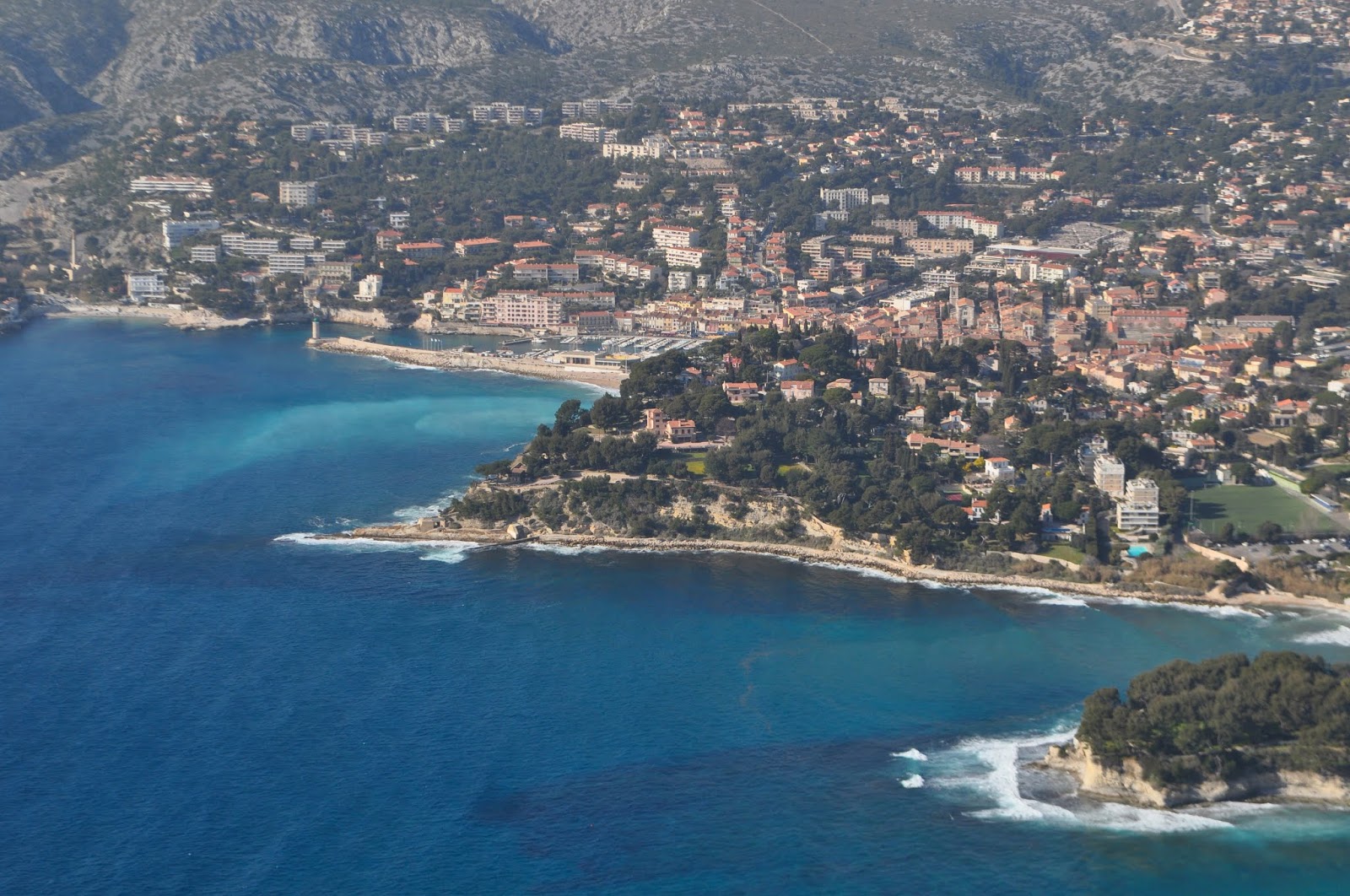
Cassis is a picturesque town a little over 1 and 1/2 hours from Sablet snuggled at the bottom of a steep bowl of land along the Mediterranean Sea between calanques (little coastal fjords with tall cliffs), about 25 km east of Marseille.

Cassis is on a steep hillside with vineyards and pastel-colored houses that tumble down to a seaside port lined with more pastel-colored houses, shops and restaurants with 8,000 inhabitants.

The area where Cassis now sits was first occupied between 500 and 600 BC by people from Liguria, a region of north-western Italy, who built a fortified habitation at the top of Baou Redon. These people lived by fishing, hunting, and farming.

If you go, I recommend you try to get to Cassis early in the morning since parking is often a challenge. From time to time, we have to park in a remote lot (Relais des Gourgettes) and hike or ride the navette (shuttle bus) to the port.

Port area where Quai des Baux and Quai Saint-Pierre meet

Cassis remains a small fishing port but the fishing boats now share the harbor with yachts and a collection of boats that tourists can book for visits to the nearby calanques. You will see traditional wooden fishing boats known as pointus tied up along the Quai des Baux.

Pointus, traditional wooden fishing boats tied up along Quai des Baux

The port is lined with tourist shops, terrace cafés and restaurants which offer a variety of food and prices. It's always great fun to watch people stroll down Quai des Baux while you soak up the sun in front of one of the cafes that line the port.

Restaurants along Quai des Baux

The fishermen sell their morning's catch quayside on tables near their boats. The selection changes daily as choice is selon arrivage (dependent on what they catch) that day.

Fisherman selling his morning catch quayside on the Quai des Baux

Over the years, many artists and writers have been attracted to Cassis. Frédéric Mistral, the Nobel Prize-winning author and defender of Provençal language and traditions, took a great fancy to Cassis, even though he was not a native of the town.

The writer famously declared, in Provençal, "Qu'a vist Paris, se noun a vist Cassis, pou dire, ‘n'ai rèn vist'." "He who has seen Paris but not Cassis can say, ‘I haven't seen anything'."

Cassis harbor

The Mediterranean coast near Cassis is known for the calanques ("fjords"), a series of white limestone rocks scored through with deep valleys that extend for almost 20 km (12.4 miles) along the Mediterranean between Cassis and Marseille.

A fun activity for Cassis visitors is a boat trip out to the calanques. There is a kiosk on Quai Saint-Pierre that sells tickets for all the charter boats that line the Cassis port for trips out to 3, 7 or 13 calanques. It takes about 45-minutes for a boat tour out and back to see 3 of the closest calanques.

Port Miou seen in the picture below is the closest calanques and easiest to reach from the center of Cassis. The Romans used Port Miou as a harbor. In fact, its name comes from the Latin portus melior: the best port. It's the deepest and most sheltered of the calanques between Cassis and Marseille.

The calanque of Port-Miou

Port Pin is the smallest and most intimate of the three calanques of Cassis. It is surrounded by Aleppo pine trees typical of this part of the Mediterranean.

The calanque of Port-Pin with its sandy beach surrounded by Pine trees

Port Pin boasts a small sand and shingle beach and the water here - emerald or turquoise depending on the light - is very clear and perfect for swimming.

A tourist boat leaving the calanque of Port-Pin

Limestone rock formation at the entrance to one of the calanques

En Vau is the most spectacular of the three calanques closest to Cassis and also the most difficult to get to. Extremely steep, it's popular with rock-climbers, there is a little shingle beach.

Entrance to En Vau calanque

Entrance to Cassis harbor

There are four public beach areas in Cassis. The Grand Mer beach is the main beach near the center of town and consists of sand and pebbles.

Cafes and houses along Quai Jean Jacques Barthélémy

Besides its stunning location and the calanques, Cassis is also famous for its wine. When you exit off the A50 auto route, the road down to Cassis is a winding road that goes past vineyards planted on steep hills between olive groves and country houses above Cassis.

The wineries of Cassis produce red, white and rosé wines but it's the white wines for which the appellation is best known. We like Cassis white and rosé wines a lot.

By the way, don't confuse the wines of Cassis with crème de cassis, a sweet black currant liqueur, a specialty of Burgundy which takes its name from black currants (cassis), not this town.


We have visited Cassis many times but never drove the route des Crêtes. So when Shirley and I went to Cassis last fall, we decided to drive to La Ciotat by way of the route des Crêtes and go back to Sablet that way.

The route des Crêtes (a generic term meaning "road across the crests"), is a 15 km (9 miles) stretch of road, that takes you between Cassis and La Ciotat, with 360 degree views over some of the most superb scenery in Provence along the way.

The route des Crêtes is closed to traffic (and hikers) on days of very strong wind and/or when fire risk is high. There are road signs as you approach it from Cassis and La Ciotat that will let you know if the road is open.

On the route des Crêtes between Cassis and La Ciotat

If you have comments or questions about Cassis, or elsewhere in Provence, please leave your comments below or send me an email at my address below.

If you are thinking about a trip to the South of France including spending time in Provence, we invite you to visit our website. Our house is available for rent by the week or more. We still have some weeks open in April, June, and August. You can reach us for further information by sending an email to chcmichel@aol.com.

Monday, April 22, 2013

Cassis, One of the Most Picturesque Seaside Towns in Provence

If you have been to Cassis, you won't be surprised to know that it's one of our favorite towns in Provence. Thank goodness, it's an easy drive of only 1 hour and half from Sablet to Cassis. The picturesque town is tucked into a curve along the Mediterranean Sea between the calanques (little coastal fjords with tall cliffs), about 20 kms east of Marseille.

In case you don't know, Cassis is a small fishing port on a steep hillside with vineyards and pastel-colored houses which tumble down to the seaside port lined with more pastel-colored houses and shops with 8,000 inhabitants. The port is filled with little fishing boats, yachts and a collection of charter boats that take visitors out to the calanques.

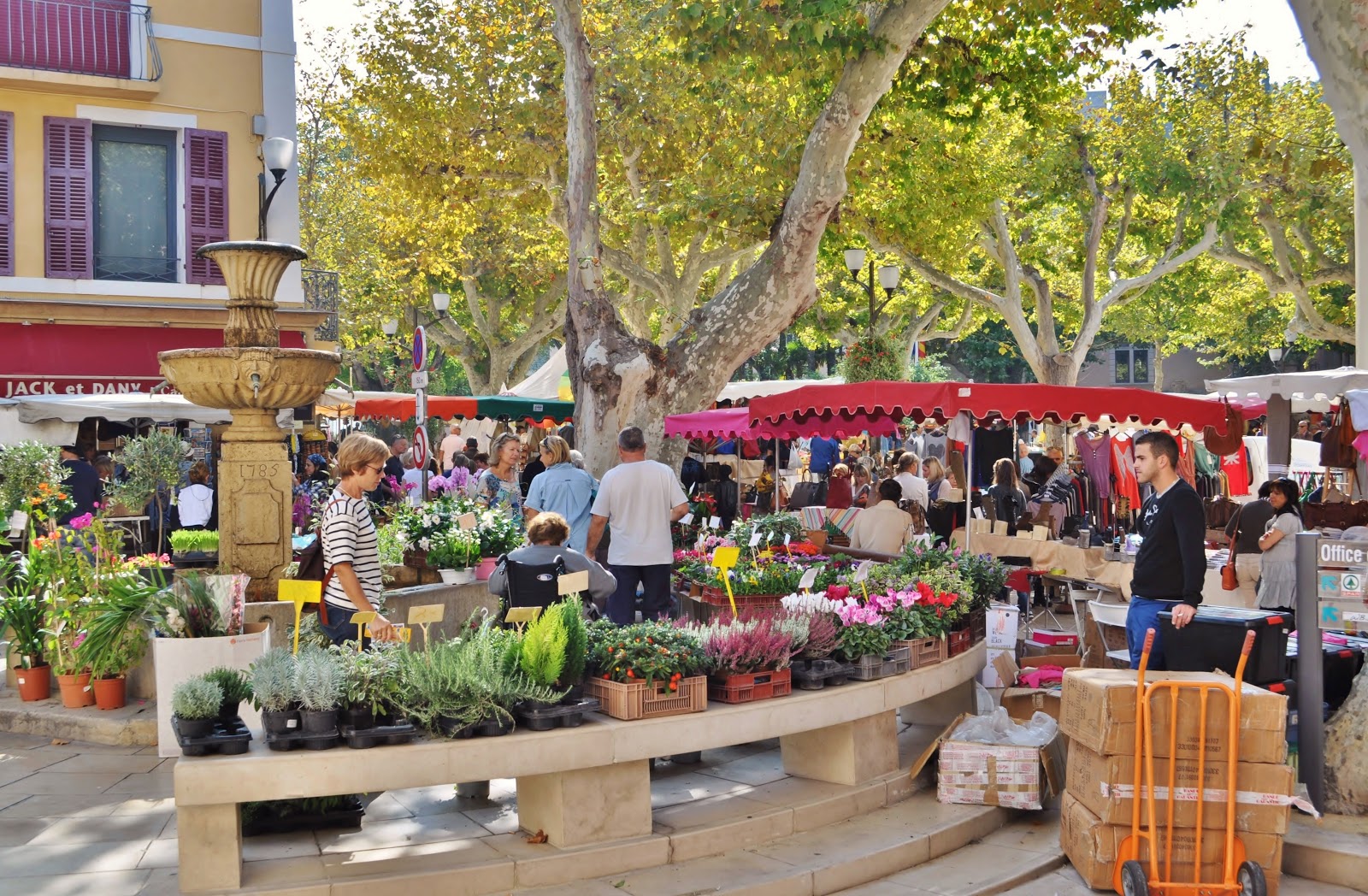
If you visit Sablet, we will take a day trip to Cassis. We like to go on Friday mornings since that is one of the days (Wednesday is the other) the Marché Provençal takes place. That is exactly what we did one Friday last fall, when Shirley's friends and work colleagues Liz, Yvette, and Jennifer, were visiting Provence for the first time.

Cassis Marché Provençal

We try to get to Cassis early in the morning since parking is often a challenge. From time to time, we have to park in a remote lot (Relais des Gourgettes) and hike or ride the navette (shuttle bus) to the port. I should say I get to hike or ride the navette, since I drop Shirley and visitors off close to the port and then I go and find parking.

Brightly colored peppers

I should tell you that the area where Cassis now sits was first occupied between 500 and 600 BC by people from Liguria, a region of north-western Italy, who built a fortified habitation at the top of the Baou Redon. These people lived by fishing, hunting, and farming.

Cyclamen

The sellers set up their stands for the Marché Provençal on the square around the Baragnon Fountain. This fountain pays tribute to Pierre Baragnon, owner of the Château de Fontcreuse and Counsellor General who brought fresh water to town via the Canal de Provence in 1892.

Here are a few pictures of the Marché Provençal.

Hat seller in front of the 19th century Baragnon Fountain

Soaps

Cheese lady

Cassis street

The port is lined with tourist shops, terrace cafés and restaurants which offer a variety of food and prices. As you can imagine, it's great fun to watch people stroll down Quai (dock) Jean-Jacques Barthélémy while you soak up the sun in front of one of the eateries that line the port. Unfortunately, the view is much better than the food so we usually just order drinks.

Tourists walk down Quai Jean-Jacques Barthélémy

As I mentioned, you can arrange for one of the charter boats that line the Cassis port to take you out to the calanques. The tourism office sells tickets for trips that will take you to 3, 7 or 13 calangues. It takes about 45-minutes for a boat tour out to 3 calanques.

A charter boat heads out to the calanques

The Romanesque style Saint Michel Church was built near the port just a short distance from the center of town between 1859 and 1867. Here are a few pictures of the pretty Cassis port.

Cassis port with the Saint Michel Church belltower in the distance

The shops and houses that line the port are all different colors and shapes

The port area in front of Place Mirabeau

Boats in the port

Fishing was the main industry for many years. Now there are only 8 fishing crews which still operate out of Cassis. The town holds a festival every year during June and July in the town and on the docks to celebrate the fishermen, the sea and their patron saint, St. Peter.

Fishing boat

Events include the procession of the "prud-hommes" (regulators of the local fishing industry), the blessing of the boats, water jousts, grilled sardines and anchovies and dancing.

Fishing nets

Shirley and friends pause for picture near the port

You often see locals playing intense games of the Provençal sport known as Boule near the harbor at Gilbert Savon Square.

Gilbert Savon Square

At the outer most tip of the port stands the statue of Calendal. Calendal was a humble anchovy fisherman and hero of a work by poet Frédéric Mistral that recounts Calendal's exploits to win the heart of his true love. His memory is now honored by this statue made of Cassis stone.

The statue of Calendal

There are more shops and restaurants on the narrow streets of Cassis away from the port.

Cassis Street

Thanks to a recommendation from Sara over at Sara in Le Petit Village, Le Bonaparte Restaurant has become our favorite restaurant in Cassis. The restaurant is located on a side street several blocks off the port. There is a small dining room and seating on the street. Le Bonaparte Restaurant is owned by the chef Jean-Marie who has been in business 23 years.

Le Bonaparte Restaurant

Here are some pictures of pretty houses away from the port.

Pretty shutters on a Cassis house

A window full of plants in Cassis

Pastel colored houses in Cassis

A view up Quai Jean-Jacques Barthélémy toward the center of Cassis

The Maison des Baux Castle was built in 1381 by the counts of Les Baux and refurbished last century by Mr. Michelin, the boss of the company that makes tires and publishes the famous Green Guides. Today it is privately owned and partially converted to a luxury B and B.

Maison des Baux Castle

Once you exit off of the A50 autoroute, you will descend to Cassis on a winding road that goes past vineyards planted on steep hills between olive groves and country houses above Cassis. The wineries of Cassis produce red, white and rosé wines but it's the white wines for which the appellation is best known. We like Cassis white and rosé wines a lot.

Don't confuse the wines of Cassis with crème de cassis, a sweet black currant liqueur, a specialty of Burgundy which takes its name from black currants (cassis), not this town.

A view down a Cassis street with Villa Maureque in the distance on the hill

The Cassis Appellation d'Origine Contrôlée wine region is unique in the Provençal wine region because 75% of its production is white wine. The soil is primarily limestone which is particularly suited to the cultivation of Clairette, Marsanne, Ugni Blanc and Sauvignon Blanc grapes which are the major varietals of the AOC. Grapes are harvested by hand.

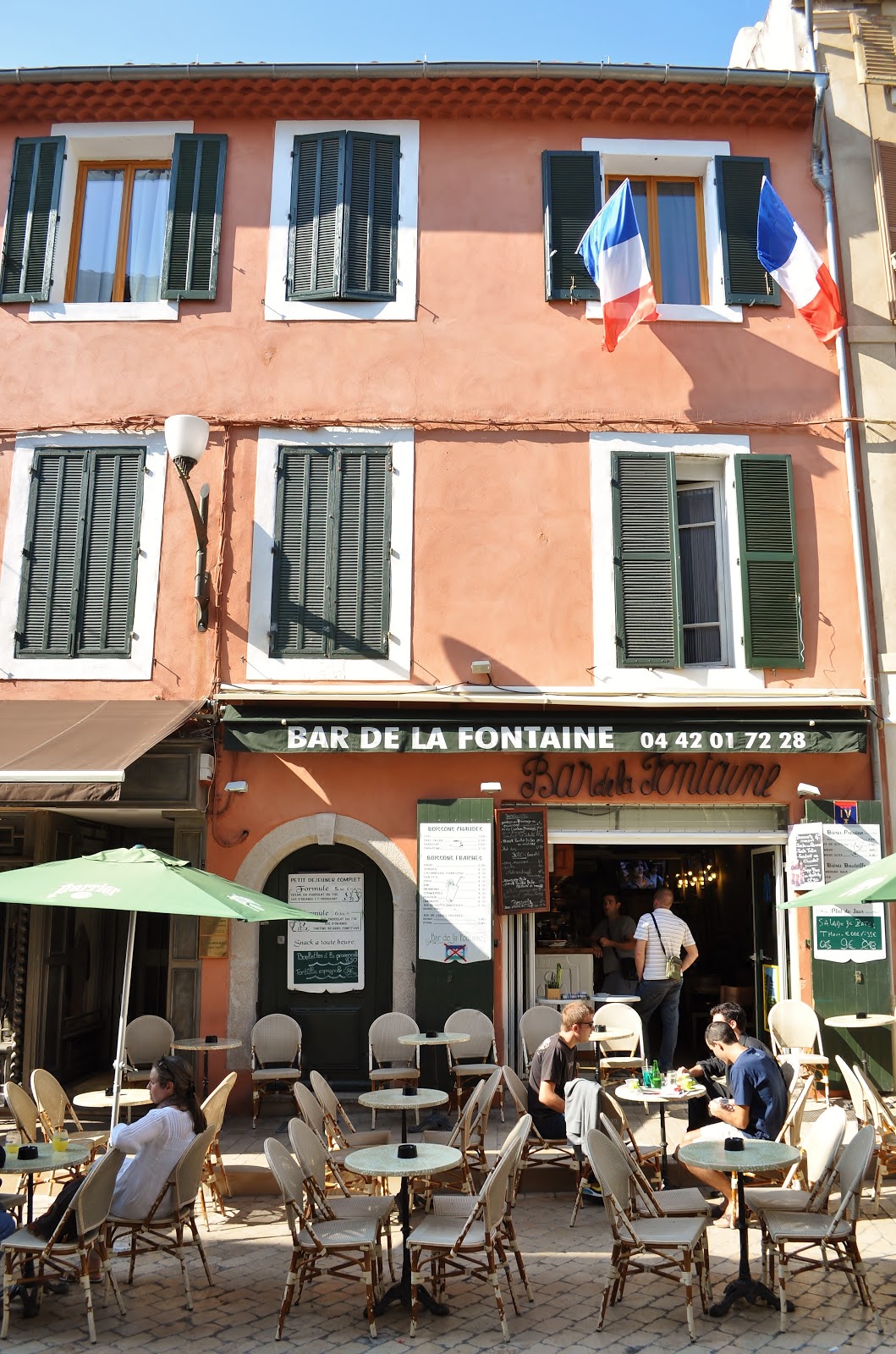
A pastel colored bar with flags festooned on the top floor

Cap Canaille which rises up between Cassis and La Ciotat, is one of the highest cliffs of Europe at 399 meters (1,309 feet) and the highest cliff in France.

There are four public beach areas in Cassis. The Grand Mer beach is the main beach near the center of town and consists of sand and pebbles. The beach pictured below with the great view of Cap Canaille is Bestouan beach and consist of pebbles and rocks.

Cape Canaille

Thanks for coming on my visit to Cassis. I can't wait to return to Cassis when we are back in Sablet in a few weeks. Have a great week. Bonne journée mes amis et à bientôt.